All Books
Self-Growth
Business & Career
Health & Wellness
Society & Culture
Money & Finance
Relationships
Science & Tech
Fiction
Topics
Blog
Download on the App Store

Why We Want You To Be Rich

Two Men One Message, Paperback

13 minDonald J. Trump, Robert T. Kiyosaki

What's it about

Are you worried about the shrinking middle class and your own financial future? Discover the powerful mindset and strategies two of the world's most successful entrepreneurs believe you must adopt to not just survive, but thrive in today's economy. This isn't just another finance book. It's a direct warning and a call to action from Donald Trump and Robert Kiyosaki. You'll learn why traditional advice like "go to school, get a good job, save money" is a recipe for financial struggle. Instead, you'll get their unfiltered secrets on thinking like an entrepreneur, leveraging debt, and building assets that create lasting wealth for you and your family.

Meet the author

Donald J. Trump is a legendary real estate developer and media personality, globally recognized for his unparalleled success in business and branding. Partnering with Robert T. Kiyosaki, the acclaimed author of Rich Dad Poor Dad, Trump brings his distinctive perspective on wealth creation to this powerful collaboration. Their combined experiences as entrepreneurs, investors, and educators offer a unique and compelling roadmap for anyone aspiring to achieve financial freedom and build lasting prosperity in today's world.
Listen Now

Opens the App Store to download Voxbrief

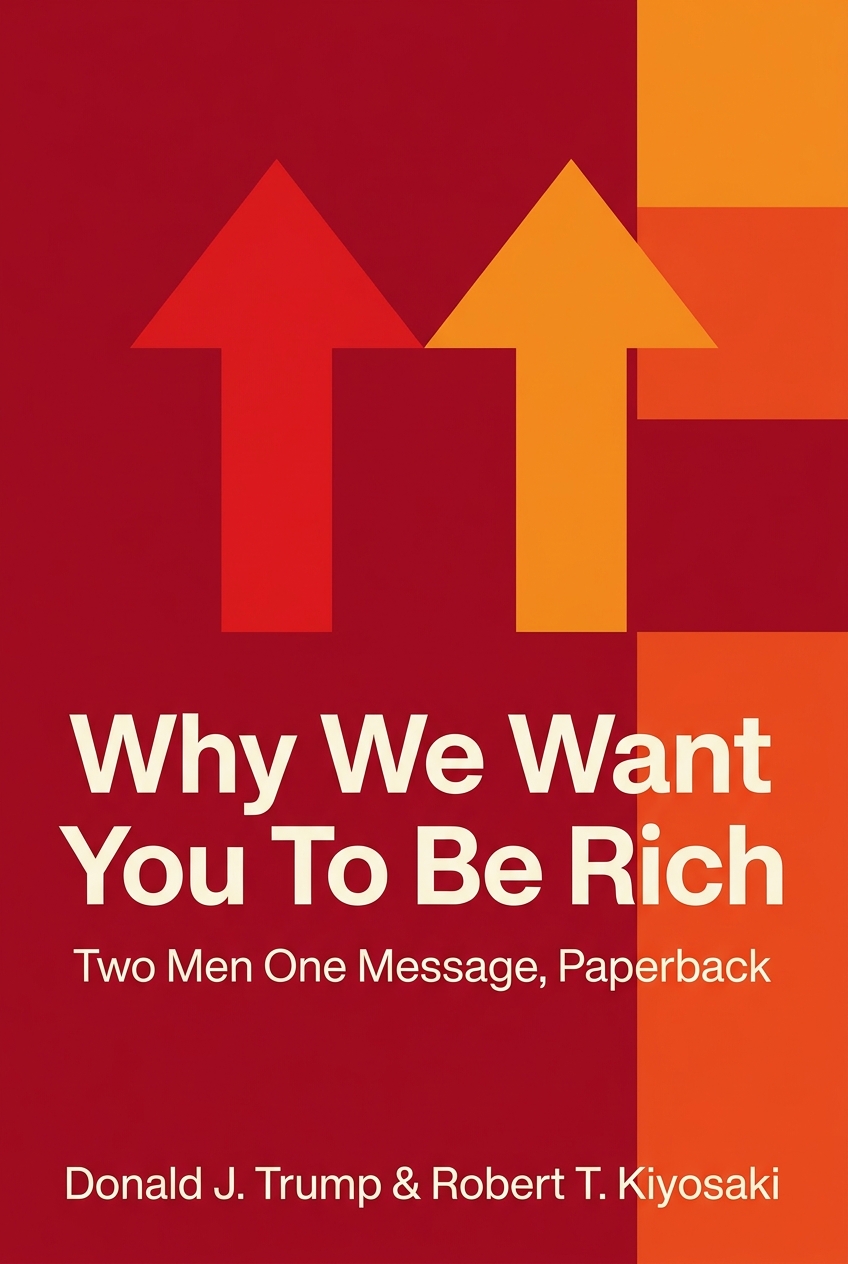
Why We Want You To Be Rich book cover

The Script

When director Francis Ford Coppola set out to make The Godfather, he was building an empire from the ground up, much like the Corleone family itself. Paramount Pictures, the studio financing the project, wanted a quick, low-budget gangster flick. Coppola, however, saw a sprawling, epic saga. He battled the studio for everything: the period setting, the casting of Marlon Brando and the unknown Al Pacino, even the film's somber, dark lighting. He was an owner, a founder, fighting for his vision with the ferocity of an entrepreneur protecting his most valuable asset. This was about creating something of lasting value, taking on immense personal and professional risk for a share of the outcome. Coppola’s high-stakes gamble paid off, creating a cultural and financial legacy that far outstripped the studio's initial, small-minded expectations. His fight exemplifies a core divide in mindset: the difference between working for a paycheck and building for equity.

This exact tension—the chasm between the employee mindset and the owner mindset—is what brought two titans of business and real estate together. Donald J. Trump, a celebrity billionaire synonymous with large-scale development, and Robert T. Kiyosaki, the author whose Rich Dad Poor Dad redefined personal finance for millions, saw a worrying trend. They noticed that the traditional advice—go to school, get a good job, save money—was no longer a reliable path to security, let alone wealth. It was a formula for creating employees, not owners. Concerned by the shrinking middle class and the widening gap between the rich and everyone else, they decided to combine their decades of experience as entrepreneurs and investors into a single, direct message. This book is their joint declaration, an explanation of why they believe the world needs more people to think like owners, take calculated risks, and build their own assets.

Module 1: The End of Old Money Rules

The world has changed. The financial advice your parents followed is now obsolete. The authors argue that a series of major global shifts created a "perfect storm" that makes traditional financial planning dangerously ineffective.

First, money itself is now currency. In 1971, the U.S. dollar was taken off the gold standard. This single event made "saving money" a losing strategy. Your savings are no longer a stable store of value. Instead, they are constantly being devalued by inflation. While savers see their purchasing power erode, smart investors use this system to their advantage.

This leads to the next point. The authors insist that you must shift from a saver's mindset to an investor's mindset. Savers work hard, live below their means, and try to get out of debt. They invest passively, hoping not to lose. But investors think differently. They work to expand their means. They understand that there is "good debt" and "bad debt." Good debt is money borrowed to acquire assets that generate cash flow, like a rental property. Bad debt is used to buy liabilities that lose value, like a new car. The rich use other people's money, a concept known as OPM, to build their wealth.

And here's the thing: this shift requires a new kind of education. Financial intelligence is your greatest asset and ultimate leverage. The authors define financial intelligence as the practical ability to solve financial problems. The school system trains you to be an employee. It teaches you to work for money. It does not teach you how to make money work for you. To succeed, you must take control of your own financial education. You have to learn the rules of the game the rich play. This means studying business, real estate, and tax law to understand the system well enough to make it work for you.

Module 2: The CASHFLOW Quadrant and Choosing Your Battlefield

To win the game of money, you first need to understand the field of play. Kiyosaki introduces a powerful framework for this: the CASHFLOW Quadrant. It divides the world into four types of people based on how they earn their income.

On the left side, you have 'E' for Employee and 'S' for Self-Employed.

  • E stands for Employee. Their core value is security. They trade their time for a steady paycheck and benefits.
  • S stands for Self-Employed or Specialist. Their core value is independence. They want to be their own boss and believe, "If you want it done right, do it yourself." Doctors, lawyers, and consultants often fall into this category.

On the right side, you have 'B' for Business Owner and 'I' for Investor.

  • B stands for Business Owner. They value building systems. They own a large business, often with 500 or more employees, that generates money even when they aren't physically present.
  • I stands for Investor. They value financial freedom. They make their money work for them, generating income from assets rather than labor.

So here's what that means. You must consciously choose which quadrant you will compete in. The school system is designed to produce Es and Ss. But the authors argue that true wealth is built in the B and I quadrants. Why? Because the B and I quadrants offer two things the others don't: leverage and control. An employee has little leverage. A business owner leverages the time and talent of hundreds of people. An employee has no control over their company's taxes. A business owner can use the tax code to their advantage.

Building on that idea, the authors stress that your success depends on aligning your actions with the values of your chosen quadrant. If you value security above all else, you'll struggle to take the risks necessary to become a B or an I. If you are an S-quadrant perfectionist who can't delegate, you'll never build a scalable B-quadrant system. The first step is self-honesty. You must understand your own core values. Do you prioritize security or freedom? Your answer will determine your path. It's about finding the battlefield where you are most likely to win.

Read More