All Books
Self-Growth
Business & Career
Health & Wellness
Society & Culture
Money & Finance
Relationships
Science & Tech
Fiction
Topics
Blog
Download on the App Store

Wishin' and Hopin'

A Novel

12 minWally Lamb

What's it about

Ever feel like your childhood was a movie you can't stop replaying? Get ready to travel back to 1964 and see the world through the eyes of ten-year-old Felix Funicello, as a new teacher and a Christmas play are about to turn his fifth-grade year upside down. You'll join Felix as he navigates the hilarious and heartfelt chaos of parochial school, family life, and pop culture in a small Connecticut town. Discover how a boy's simple wishes for a new bike and a taste of fame collide with the unpredictable magic of the holiday season.

Meet the author

Wally Lamb is a 1 New York Times bestselling author and a two-time Oprah's Book Club selection, celebrated for his deeply human and emotionally resonant storytelling. A former high school English teacher for 25 years, Lamb's profound understanding of character and community shines through in his work. His experience teaching creative writing at a maximum-security prison also informs the powerful empathy and authenticity that have become the hallmarks of his beloved novels, including the heartfelt and humorous Wishin' and Hopin'.
Listen Now

Opens the App Store to download Voxbrief

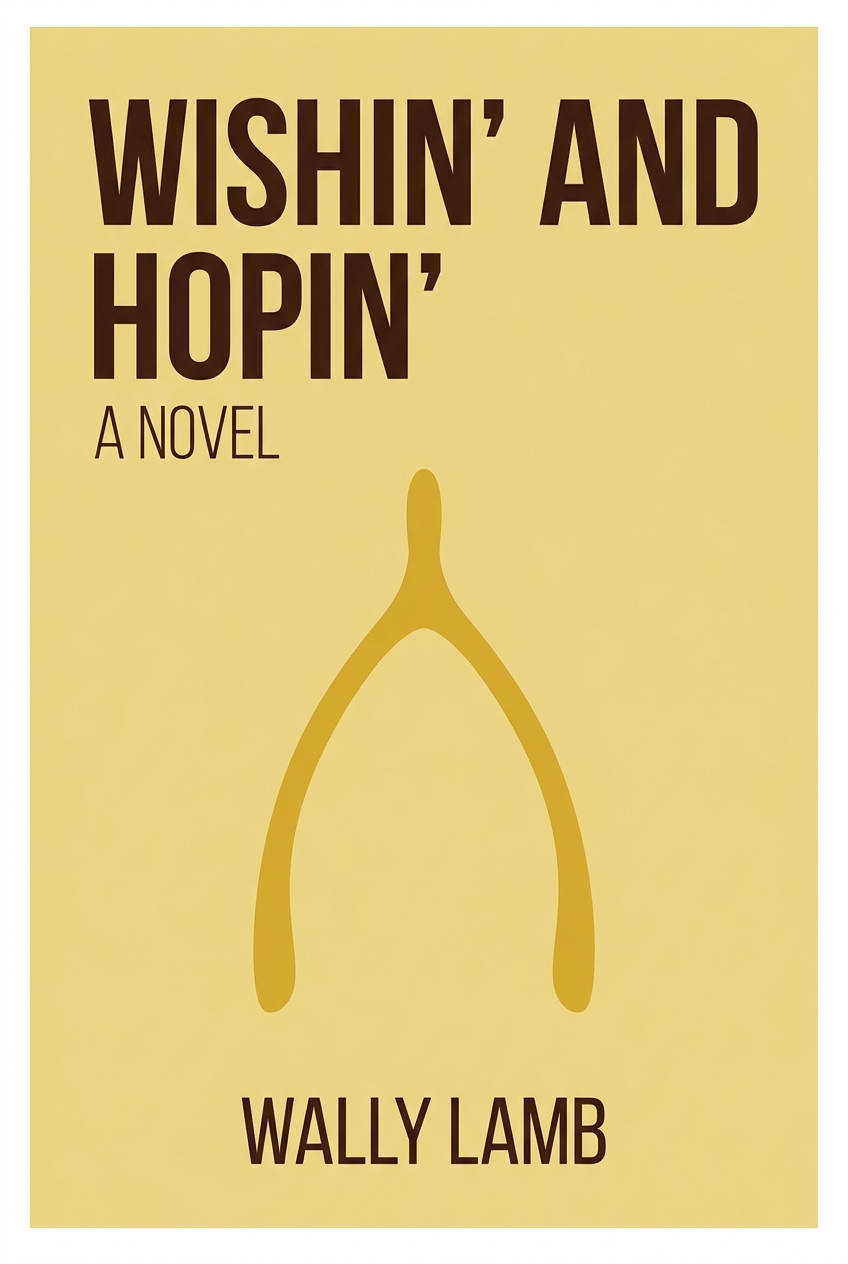
Wishin' and Hopin' book cover

The Script

Think back to the Christmas pageants of your childhood. Remember the scratchy wool of the shepherd’s costume, the blinding glare of the single spotlight, and the one kid who always forgot their lines? There was an official script, of course—the familiar story of mangers and wise men. But backstage, a completely different play was unfolding. This was a drama of whispered gossip, secret crushes, and the desperate, all-consuming mission to get the one toy you’d circled in the Sears catalog. The official story was simple and sacred, but the real story, the one happening in the hearts of the kids in bathrobes, was a chaotic, hilarious, and deeply human mess.

This gap between the public performance of Christmas and the private, often comical, reality of experiencing it as a child is the world Wally Lamb invites us into with "Wishin' and Hopin'". Lamb, a beloved novelist known for his sprawling, emotionally complex epics like "She's Come Undone" and "I Know This Much Is True," decided to write this story as a kind of gift. He wanted to step away from his usual weighty themes and create something lighter—a nostalgic, heartfelt novella that captured the specific magic and mayhem of being a fifth-grader in the 1960s. It’s his personal love letter to a bygone era, a story meant to be read in a single sitting, like watching a favorite holiday special from your youth.

Module 1: The World Through a Child's Eyes

The story is told by Felix Funicello. He’s a ten-year-old boy navigating the fifth grade at St. Aloysius Gonzaga Parochial School. The entire narrative is filtered through his naive, often hilarious, perspective. This creates a powerful tension. Felix sees the world in black and white. But the adult world around him is full of gray areas.

A core idea here is that childhood innocence creates humorous but profound misunderstandings of the adult world. Felix hears adults use complex or coded language. He then interprets it literally. For example, he hears about a local woman arrested for "lascivious carriage." He looks up "lascivious." Then he pictures her doing something dirty with a shopping cart, or a "carriage." He simply can't connect the dots. This shows how children build their understanding of the world from incomplete information. They fill in the gaps with their imagination.

This leads to another key insight. Formative childhood events, especially embarrassing ones, create lasting emotional echoes. The story opens with Felix as a successful adult. He’s a professor and a responsible citizen. Yet he’s haunted by a single memory. He believes he caused his fourth-grade teacher's nervous breakdown. A mischievous plan involving a BB gun and a bat went horribly wrong. This lingering guilt frames the whole story. It suggests that our adult identity is often a reaction to the unresolved business of our youth. We spend years trying to make up for the mistakes our ten-year-old selves made.

So what's the takeaway? Childhood social hierarchies are a powerful rehearsal for adult life. Felix's classroom is a perfect microcosm of society. You have Rosalie Twerski, the wealthy, insufferably perfect student. She is the teacher’s pet. Then there's Lonny Flood, the rebellious kid from a tougher background. Felix is stuck in the middle. He's the second-smartest kid, constantly vying for position. He resents Rosalie’s privilege. He’s also influenced by Lonny’s street smarts. These dynamics drive the plot. They lead to mischief, competition, and shifting alliances. It’s a reminder that the politics of the playground simply scale up into adult life.

Module 2: When Worlds Collide in the Classroom

We've established the childhood dynamics. Now, let's introduce a catalyst. A new student arrives from the Soviet Union. Her name is Zhenya Kabakova. Her arrival throws the entire classroom ecosystem into chaos. Remember, this is 1964. The Cold War is at its peak.

This brings us to a crucial point. Cultural differences are first seen as threats before they become strengths. The students are immediately suspicious of Zhenya. They've been practicing "duck-and-cover" drills their whole lives. The Soviet Union is the enemy. Rosalie Twerski immediately asks, "Is she a Communist?" Zhenya’s strange lunches of herring and her mayonnaise hair conditioner only deepen the suspicion. She is an outsider. She is "other."

But then something shifts. Zhenya doesn't try to fit in. She leans into her differences. And here's the thing. Authenticity and skill can dismantle social barriers. Zhenya is a phenomenal athlete. She dominates the boys at dodgeball and baseball. She’s not afraid to speak her mind. She even uses her broken English and Russian slang to her advantage. The very things that made her an outcast become her source of power. The other kids, especially the boys, start to respect her. The girls, seeing her newfound popularity, even start imitating her. They braid their hair and pierce their ears. She forced the culture of the classroom to change around her.

This dynamic escalates into a direct challenge to authority. The substitute teacher, Sister Mary Agrippina, is a tyrant. She rules through fear and physical punishment. One day, Zhenya has enough. She confronts the nun, tells her off in a mix of Russian and English, and even punches her. The result? The nun is transferred. And here is the insight: Challenging an unjust authority figure can unify a group and elevate a leader. Zhenya becomes a hero. Her act of defiance solidifies her status. She went from being the weird Russian girl to the undisputed leader of the fifth grade. She broke the ruler itself.

Read More