All Books
Self-Growth
Business & Career
Health & Wellness
Society & Culture
Money & Finance
Relationships
Science & Tech
Fiction
Topics
Blog
Download on the App Store

You Know Me Well

A Novel

11 minNina LaCour, David Levithan

What's it about

Ever felt like you're hiding your true self from everyone, even those closest to you? Discover what happens when two strangers, Mark and Kate, share their deepest secrets during one unforgettable Pride Week in San Francisco, forging an unexpected and powerful connection. This story explores the courage it takes to be vulnerable and the beautiful friendships that can blossom from honesty. You'll follow Mark and Kate as they navigate first loves, tough family dynamics, and the messy, wonderful journey of self-discovery, learning that sometimes the person who knows you best is someone you've just met.

Meet the author

Nina LaCour is a Michael L. Printz Award winner and bestselling author, while David Levithan is the New York Times bestselling author of over twenty acclaimed novels. Their collaboration on You Know Me Well stems from a shared passion for exploring the intricate bonds of friendship and the vibrant, transformative landscape of queer identity in San Francisco. Together, they weave a heartfelt narrative of connection, self-discovery, and the powerful moments that define us during one unforgettable Pride Week.
Listen Now

Opens the App Store to download Voxbrief

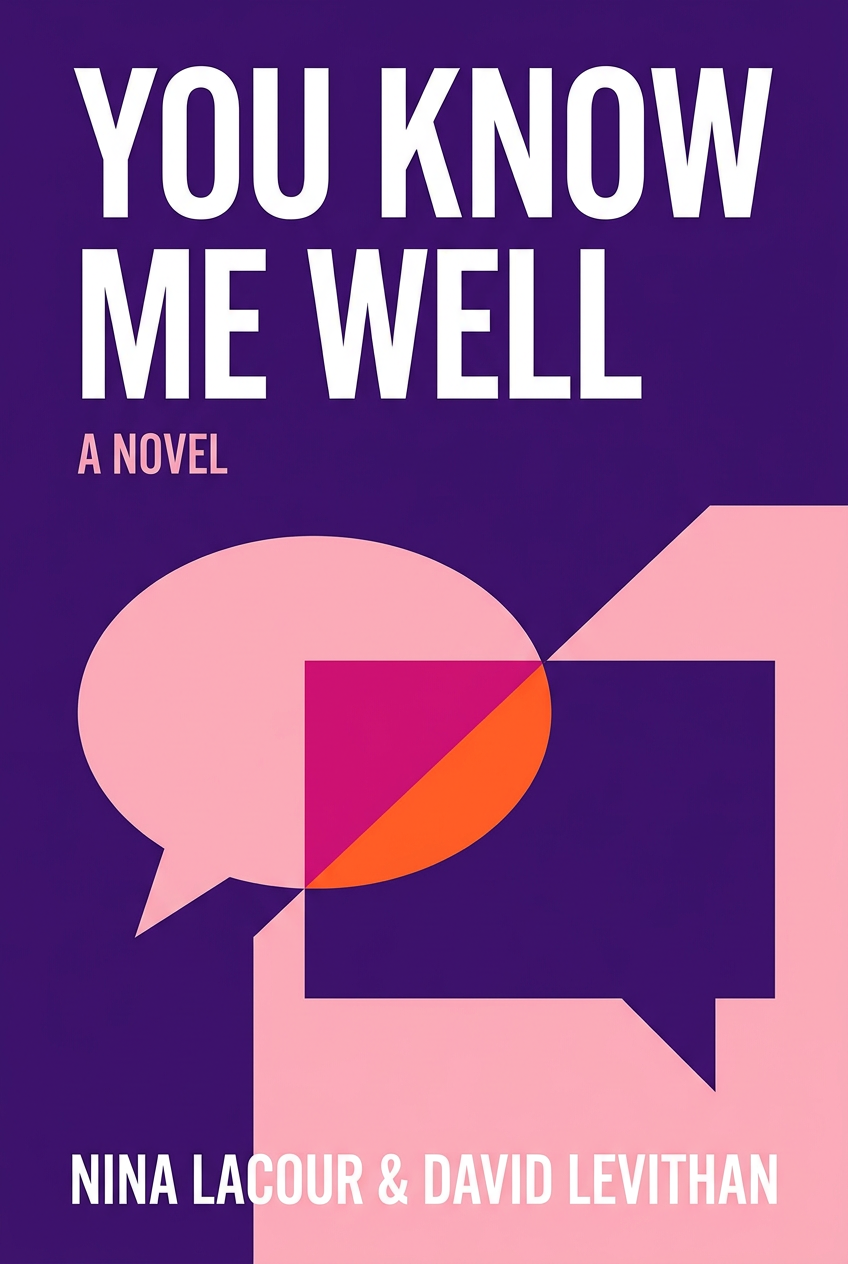
You Know Me Well book cover

The Script

There are two kinds of high school friendships. The first is a well-worn path, a gradual accumulation of shared classes, inside jokes, and a slowly built history that feels solid and dependable, like a fortress. The second kind is a flash flood. It’s born of timing. It happens in the margins—a chance encounter in an empty hallway after a school dance, a shared bench at a bus stop while the rest of the world is asleep, a moment of unexpected honesty with someone you thought you barely knew. These friendships erupt. They are the product of a single, intense night where the carefully constructed masks of high school identity fall away, revealing the raw, complicated, and lonely person underneath. It's the startling discovery that the person you've seen every day for years is a stranger you suddenly know better than anyone.

This exact dynamic, the sudden collision of two lonely orbits, is what inspired authors Nina LaCour and David Levithan to collaborate on a novel. They were fascinated by the idea of two characters who exist in the same social sphere but have never truly connected, each harboring secret anxieties and longings. LaCour, known for her poignant explorations of love and loss, and Levithan, a celebrated voice in young adult literature, decided to write from alternating perspectives. They wanted to capture the distinct inner worlds of a boy and a girl on the precipice of adulthood, exploring one transformative week in San Francisco through their separate, yet increasingly intertwined, points of view. The result is "You Know Me Well," a book born from the question of what happens when you finally let someone see the you that exists when no one else is watching.

Module 1: The Paradox of Longing and Self-Sabotage

The story kicks off during San Francisco's Pride Week. We meet Kate, who is consumed by one thing: meeting Violet. Violet is a girl she has obsessed over for months through photos and stories. The anticipation is electric. It's the moment she's been waiting for. So when Violet finally arrives at the party, what does Kate do? She runs. She literally walks out the door and into the night.

This introduces a core psychological tension. Intense desire often triggers an equally intense fear of unworthiness. Kate's flight isn't logical. It's a visceral reaction to vulnerability. The possibility of disappointment feels more threatening than the hope of connection. She later explains this impulse to a stranger, asking if he’s ever felt the need "to sabotage yourself" when something you want is about to happen. This is about the imposter syndrome that whispers you haven't earned your success, that you’re not "enough" for the opportunity in front of you.

From there, the authors show how this fear manifests. Kate fabricates parts of her identity to seem more impressive. Her friend invents a story about Kate having a solo art show, and Kate goes along with it. She feels she needs to "fake it for a little while" to be worthy of Violet's attention. We often believe we must present an idealized self to be accepted. This creates a chasm between our authentic self and the curated version we show the world. The pressure to maintain this facade is exhausting. It fuels anxiety and makes genuine connection nearly impossible. When you believe you're not good enough as you are, any potential success feels like a lie you'll eventually be caught in.

Here's where it gets interesting. Kate’s act of self-sabotage leads her directly to Mark, a classmate she barely knows. Their connection forms in a moment of shared, unexpected vulnerability. This reveals a crucial insight. Authentic connection is forged in moments of shared vulnerability. Kate has just run from her dream girl. Mark has just danced on a bar in his underwear on a dare. They are both exposed. They are both outside their comfort zones. And in that shared space, they don't have to perform. Kate confesses she might not even like her friends. Mark admits he’s completely consumed by thoughts of one person. Their honesty creates an instant, powerful bond. It’s a reminder that our real strengths are often revealed when we let our guards down.

Module 2: The Complex Dynamics of Friendship and Identity

The book masterfully explores the messy, beautiful, and sometimes painful evolution of friendship. It’s about navigating the relationships you already have, especially the ones with deep history.

We see this clearly with Kate and her lifelong best friend, Lehna. Long-term friendships can become rigid, resisting personal growth. Lehna still calls Kate "Katie," a name she has outgrown. This small act is a symbol of a larger dynamic. Lehna is comfortable with the "Katie" she has always known. She is less comfortable with the "Kate" who is changing and evolving. This isn't malicious. It’s a common human tendency to hold onto the familiar. But it can feel stifling for the person who is trying to grow. The book suggests that true friendship requires allowing each other to change, even if it disrupts the comfortable dynamic you once shared.

Now, let's turn to Mark and his best friend, Ryan. Their story explores a different, but equally complex, facet of friendship. They have a history of secret, intimate moments. But Ryan refuses to define their relationship, insisting his sexuality is "nobody’s business." This creates a painful ambiguity for Mark, who is openly gay and deeply in love with Ryan. Unspoken feelings create a destructive tension in any relationship. Mark constantly finds himself justifying Ryan's actions. He tells himself, "He’s not doing it to hurt me. He’s doing it to make himself happy. Which just happens to hurt me." This is the classic trap of unrequited love within a friendship. You rationalize the other person’s behavior to protect the bond, but you slowly erase your own needs in the process.

This leads to a powerful realization for Mark. He reaches a breaking point and confesses his love for Ryan, not to win him over, but to save himself. He declares, "I can’t continue to trample over my own feelings just to keep things okay with you." This is a pivotal moment. Prioritizing your own emotional truth is an act of self-preservation. Sometimes, the only way to save a relationship—or save yourself from it—is to speak the difficult truth. It may not lead to the outcome you want. In Mark's case, it leads to heartbreak. But it also leads to clarity. It frees him from the exhausting cycle of hope and disappointment. He chooses authenticity over ambiguity, even at the cost of the friendship he once cherished.

Read More