Top Behavioral Economics Books
Ever wonder why we make irrational choices? That’s the core question of what is behavioral economics. This field combines psychology and economics to reveal the hidden biases that guide our decisions. By understanding these mental shortcuts, you can develop effective behavioral economics strategies to improve your habits, productivity, and financial well-being. This list of the top behavioral economics books offers powerful insights from the world's leading experts. We've selected some of the best books on behavioral economics to help you master your mind and make better choices. Curated by the VoxBrief team.
The Psychology of Money
Learn why your financial success is driven by psychology, not spreadsheets.
- True wealth is what you don't see, like unspent money in a bank account.
- Harness the slow, powerful magic of compounding over the long term.
- Your personal experience with money shapes your financial worldview.
Anyone looking to build lasting wealth with a healthier money mindset.
Learn why your financial success is driven by psychology, not spreadsheets.
Thinking, Fast and Slow
Discover the two systems of thinking that govern your mind's choices.
- Your mind has two systems: an intuitive System 1 and a logical System 2.
- Cognitive biases like overconfidence and loss aversion lead to errors in judgment.
- What you see is all there is (WYSIATI) causes you to ignore missing information.
Decision-makers seeking to understand and overcome their cognitive biases.
Discover the two systems of thinking that govern your mind's choices.
Predictably Irrational
Uncover the hidden forces that make your choices surprisingly irrational.
- The 'decoy effect' shows how a third option can change your preference.
- We overvalue what we own, a bias known as the endowment effect.
- The concept of 'free!' can lead us to make illogical decisions.
Marketers and individuals curious about why people make illogical choices.
Uncover the hidden forces that make your choices surprisingly irrational.
Influence, New and Expanded
Master the seven universal principles of persuasion to guide decisions.
- Reciprocity compels us to give back what we have received from others.
- Social proof makes us follow the actions of others in uncertain situations.
- Unity, the newest principle, involves shared identities and belonging.
Salespeople, leaders, and anyone wanting to be more persuasive ethically.
Master the seven universal principles of persuasion to guide decisions.
Fooled by Randomness
Learn to distinguish between true skill and dumb luck in life and markets.
- Randomness plays a much larger role in success and failure than we admit.
- Avoid the 'narrative fallacy,' our tendency to create stories for past events.
- Focus on your decision-making process, not just the random outcome.
Investors and thinkers who want to navigate uncertainty with a clearer mind.
Learn to distinguish between true skill and dumb luck in life and markets.
Thinking in Bets
Make smarter choices by treating every decision like a poker bet.
- Separate decision quality from outcome quality; a good bet can still lose.
- Embrace uncertainty and express confidence in probabilities, not certainties.
- Learn from all outcomes, good and bad, to continuously improve your process.
Leaders who need to make high-stakes decisions under pressure and uncertainty.
Make smarter choices by treating every decision like a poker bet.
Misbehaving
Explore the birth of behavioral economics from a Nobel laureate's view.
- Humans are not always rational 'Econs'; we are 'Humans' prone to biases.
- The pain of losing is psychologically about twice as powerful as the pleasure of gaining.
- Mental accounting causes us to treat money differently based on its source.
Beginners who want an inside story on the origins of the field's core ideas.
Explore the birth of behavioral economics from a Nobel laureate's view.
Nudge
Discover how small environmental changes can steer you to better choices.
- Choice architecture guides behavior without restricting freedom.
- Defaults are extremely powerful because people often stick with the pre-set option.
- Simple nudges can improve savings rates, health outcomes, and organ donations.
Policymakers, managers, and parents who want to help others choose wisely.
Discover how small environmental changes can steer you to better choices.
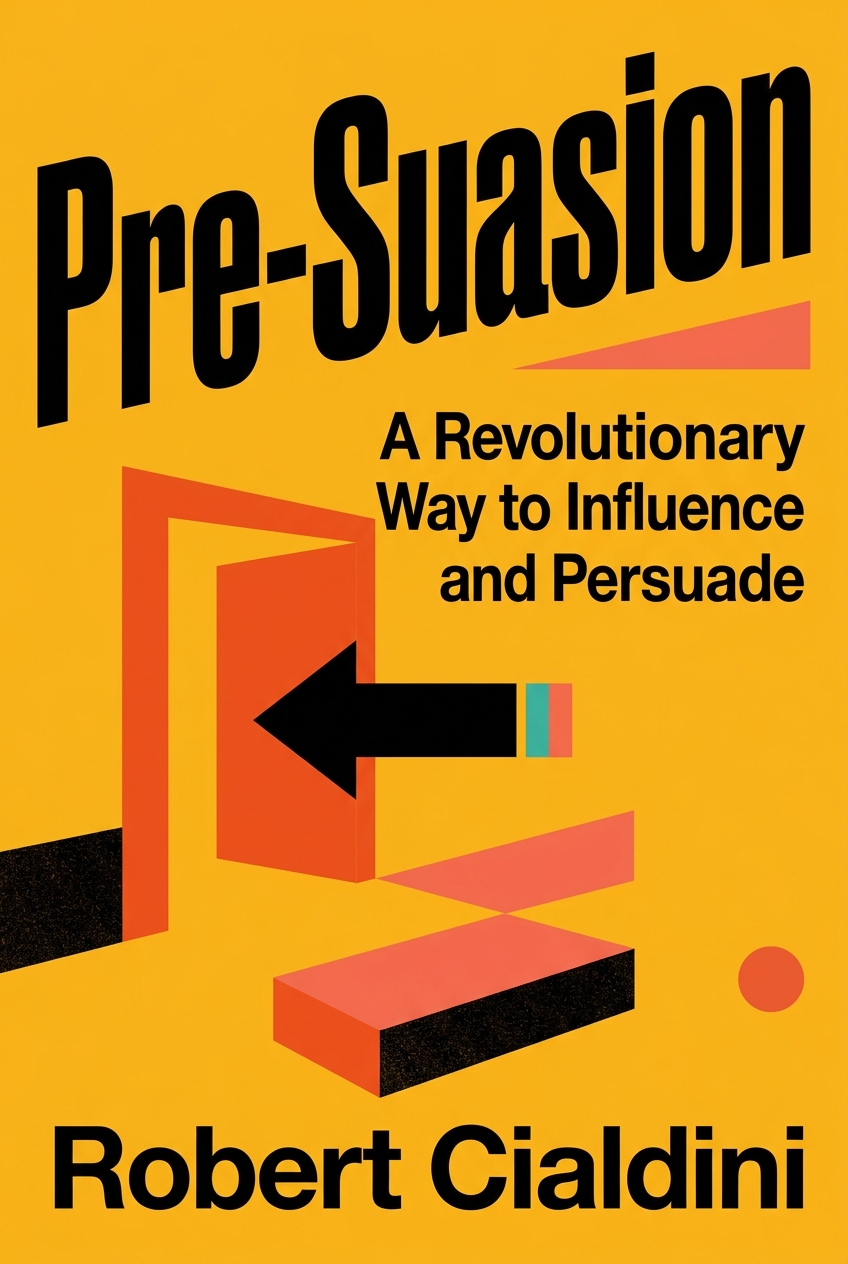
Pre-Suasion
Prime your audience to be receptive *before* you deliver your message.
- What you present first shapes how people experience what comes next.
- Directing attention to a specific concept makes it seem more important.
- Creating associations can prime people to be more open to your influence.
Marketers, negotiators, and speakers aiming to maximize their message's impact.
Prime your audience to be receptive *before* you deliver your message.
Frequently Asked Questions
A great starting strategy is focusing on 'choice architecture.' This means designing your environment to make good decisions easier. For example, place healthy snacks at eye level or set up automatic monthly savings transfers. It’s a powerful and simple way to use nudges on yourself.
Behavioral economics is about mindset, not money. You can start by identifying biases like the 'sunk cost fallacy' to avoid wasting resources on failing projects. Using techniques like 'temptation bundling' by pairing a task you dislike with one you enjoy costs nothing and boosts productivity.
It provides a more realistic model of human decision-making than traditional economics. It helps us understand why we save too little, eat unhealthily, or procrastinate. These insights can be used by individuals, companies, and governments to design better products and policies.
Not at all. The field is about understanding and mitigating the risks caused by our own irrational biases. By recognizing cognitive errors that lead to poor financial decisions or bad habits, you are actively reducing risk in your life. The core principles help you make more rational, beneficial choices.