Best Books For Entrepreneurs
Building a business from the ground up requires a unique blend of vision, resilience, and practical knowledge. To succeed, you need to master core entrepreneurship skills and develop effective entrepreneurship strategies. This curated list offers the best entrepreneurship books to provide the essential insights you need, whether you're launching a startup or scaling an existing company. Our entrepreneurship book recommendations cover everything from startup strategy to financial discipline and leadership, all designed to give you actionable wisdom fast. Curated by the VoxBrief team.
The Psychology of Money
Learn why wealth is more about your behavior than your intelligence.
- Financial success is a soft skill, tied to psychology and behavior.
- Harness the power of compounding for true, long-term wealth growth.
- Understand that luck and risk play significant roles in financial outcomes.
Anyone wanting to build a healthier, long-term relationship with money.
Learn why wealth is more about your behavior than your intelligence.

The Richest Man in Babylon
Master timeless financial wisdom through simple parables from ancient Babylon.
- Pay yourself first by saving at least 10% of everything you earn.
- Make your money work for you through wise, informed investments.
- Protect your principal from loss by avoiding overly risky schemes.
Beginners seeking foundational principles for personal finance and investing.
Master timeless financial wisdom through simple parables from ancient Babylon.

Think and Grow Rich
Unlock the 13-step formula for wealth used by history's top achievers.
- Cultivate a burning desire as the starting point for all achievement.
- Use auto-suggestion to program your subconscious mind for success.
- Form a 'Master Mind' alliance to amplify your knowledge and power.
Goal-setters looking for a mental framework to achieve their ambitions.
Unlock the 13-step formula for wealth used by history's top achievers.
The 4-Hour Workweek
Escape the 9-to-5 by automating your income and redesigning your life.
- Focus on the 20% of tasks that yield 80% of your results.
- Create an automated online business ('muse') for passive cash flow.
- Use outsourcing and mini-retirements for a lifestyle of freedom.
Aspiring digital nomads and anyone tired of the traditional 9-to-5 grind.
Escape the 9-to-5 by automating your income and redesigning your life.

The Coaching Habit
Lead better by talking less and asking more powerful questions.
- Use seven essential questions to empower your team in minutes.
- Stop being the advice-giver and foster problem-solving skills in others.
- Increase focus and drive action by asking 'And what else?'.
Managers and leaders who want to be more effective, empowering coaches.
Lead better by talking less and asking more powerful questions.
The 7 Habits of Highly Effective People
Achieve your goals with a principle-centered approach to life and work.
- Shift from being reactive to proactive by focusing on your circle of influence.
- Prioritize tasks based on importance, not just urgency, to achieve goals.
- Seek synergy by aiming for win-win solutions in all interactions.
Individuals seeking a holistic framework for personal and professional growth.
Achieve your goals with a principle-centered approach to life and work.
Build
Get brutally honest, actionable advice on building great products and companies.
- Focus on solving real problems for customers, not just selling technology.
- Storytelling is as critical as engineering in achieving product success.
- Embrace the messy, difficult realities of management and decision-making.
Product managers and startup founders building physical or digital products.
Get brutally honest, actionable advice on building great products and companies.
Kid Start-Up
Learn the first essential steps to turn your great idea into a real business.
- Find and validate a great business idea before investing too much time.
- Create a simple but solid business plan to guide your first steps.
- Learn how to pitch your vision and find early funding with confidence.
Young or first-time entrepreneurs looking for a simple starting guide.
Learn the first essential steps to turn your great idea into a real business.
The Young Entrepreneur's Guide to Starting and Running a Business
Get a practical launchpad for turning a business idea into reality.
- Understand the fundamental mindset of a successful entrepreneur.
- Learn the basics of business planning, finance, and marketing.
- Validate your concept before committing significant resources.
Aspiring founders who need a no-fluff guide to business fundamentals.
Get a practical launchpad for turning a business idea into reality.
Dream Big and Win
Adopt a 'no limits' mindset to build a global empire from scratch.
- Embrace a fearless, 'no limits' attitude to overcome immense challenges.
- Build a winning company culture based on passion, respect, and drive.
- Master high-stakes negotiation to succeed entirely on your own terms.
Ambitious founders who want to scale their business to a massive level.
Adopt a 'no limits' mindset to build a global empire from scratch.
The Lean Startup
Build a successful company faster by testing ideas and learning from customers.
- Use the Build-Measure-Learn feedback loop to innovate quickly and reduce waste.
- Create a Minimum Viable Product (MVP) to test core business assumptions.
- Use validated learning from data to decide whether to pivot or persevere.
Startup founders who want to reduce risk and build what customers want.
Build a successful company faster by testing ideas and learning from customers.
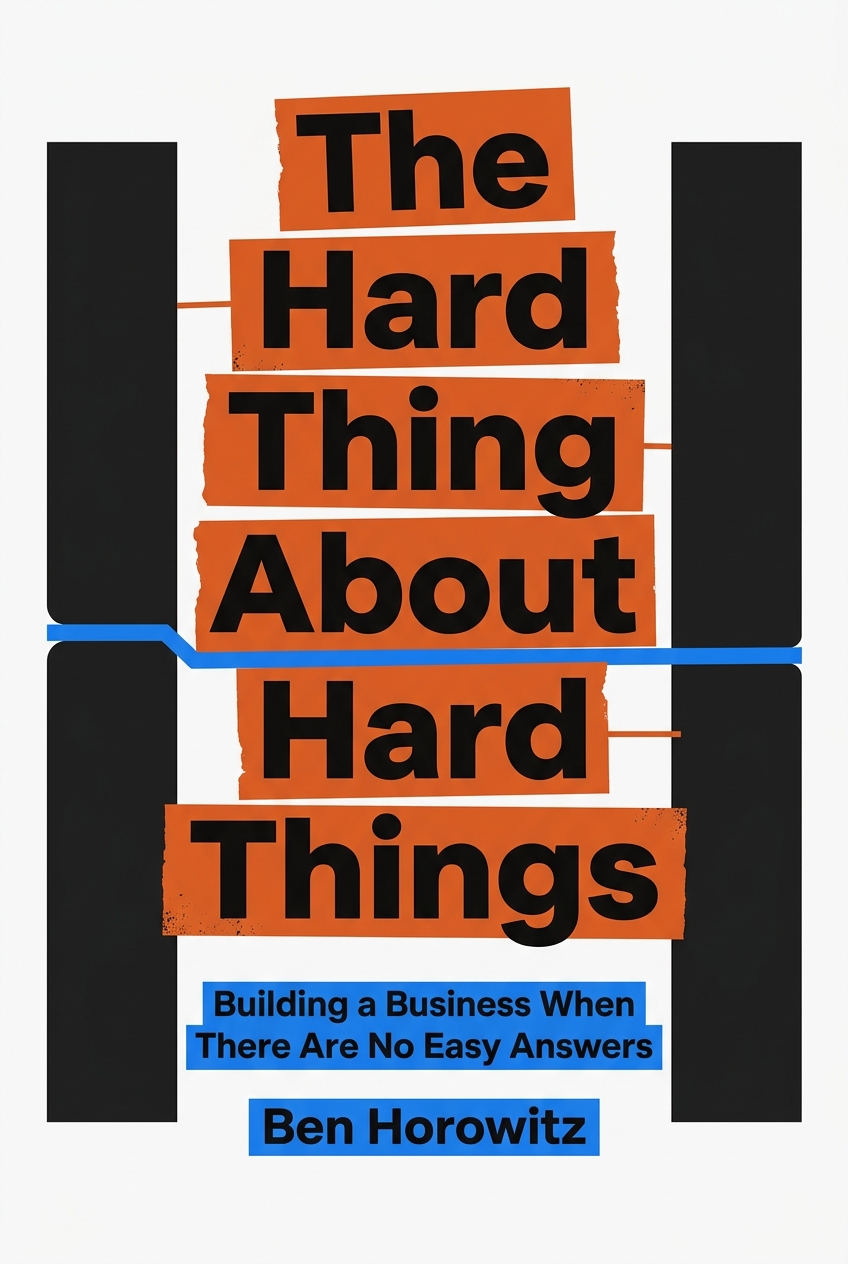
The Hard Thing About Hard Things
Get CEO-level wisdom for navigating the toughest leadership crises.
- There are no silver bullets; focus on making the lonely, hard calls.
- Manage your own psychology to lead effectively through chaos and uncertainty.
- Build a resilient company culture that can withstand immense pressure.
CEOs and founders facing the brutal, lonely realities of leadership.
Get CEO-level wisdom for navigating the toughest leadership crises.
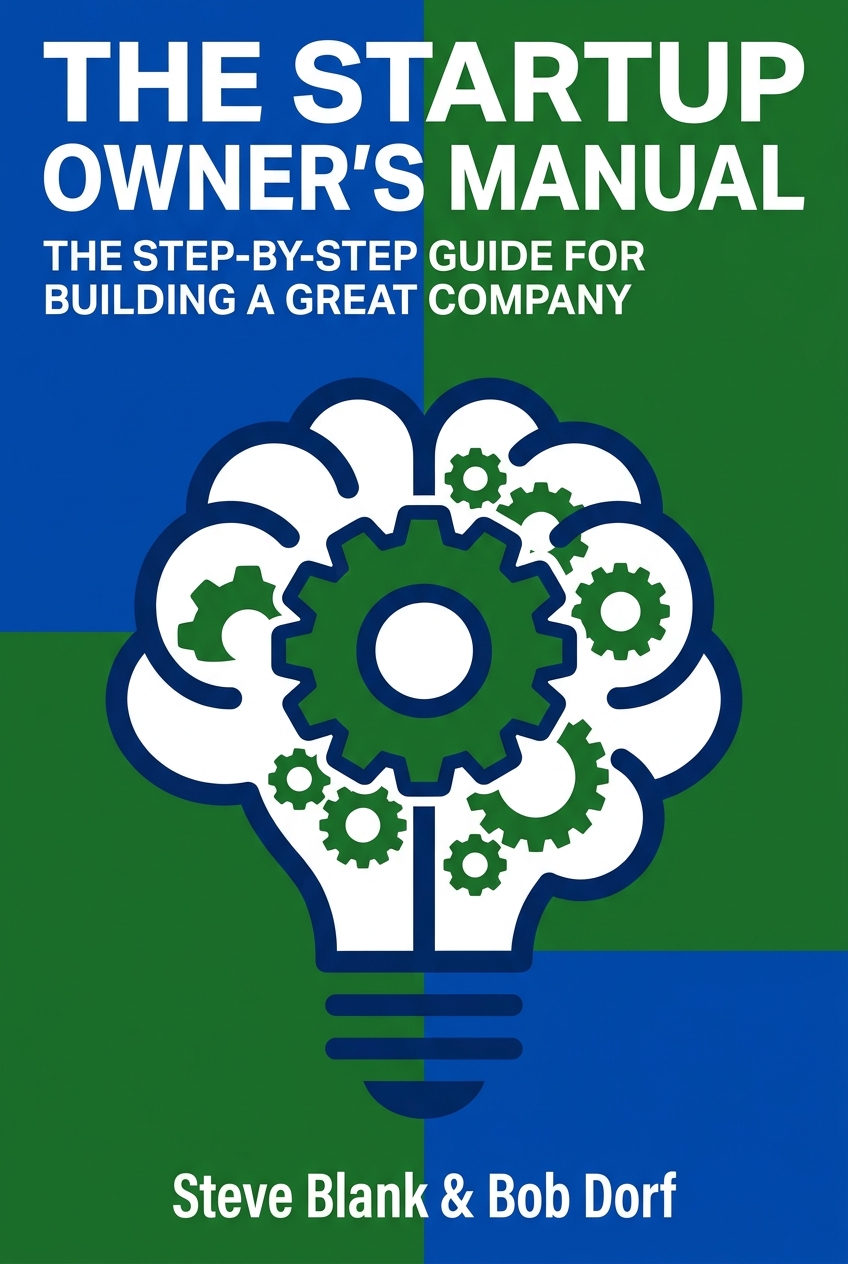
The Startup Owner's Manual
Follow a step-by-step roadmap for turning an idea into a profitable venture.
- Use the Customer Development process to find your market before you build.
- Get 'out of the building' to test your hypotheses with real customers.
- A business plan is less important than a rigorously tested business model.
Founders who want a tactical, process-driven guide to building a startup.
Follow a step-by-step roadmap for turning an idea into a profitable venture.

The Mom Test
Learn how to get honest customer feedback to see if your idea is good.
- Ask about your customers' past behaviors and problems, not your idea.
- Avoid compliments and fluff questions to get to the useful truth.
- Focus on specific past events instead of generic future hypotheticals.
Entrepreneurs in the idea stage trying to validate their concept.
Learn how to get honest customer feedback to see if your idea is good.

Rework
Challenge traditional business rules for a faster, smarter way to work.
- You don't need meetings, long-term plans, or outside investors to succeed.
- Embrace constraints and obscurity as advantages, not weaknesses.
- Do less than your competition to be more effective and focused.
Small business owners and rebels looking for a counterintuitive business path.
Challenge traditional business rules for a faster, smarter way to work.

Shoe Dog
Discover the chaotic, unfiltered story of how Nike was built from nothing.
- Your mission and belief in your idea is the most important currency you have.
- Embrace constant uncertainty and crisis as a natural part of the journey.
- Assemble a loyal team of misfits who are deeply invested in the vision.
Anyone who wants an honest, inspiring look at the messy path to success.
Discover the chaotic, unfiltered story of how Nike was built from nothing.
Frequently Asked Questions
Entrepreneurship is vital because it drives innovation, creates jobs, and fuels economic growth. It pushes industries forward by challenging existing norms, introducing new products or services, and finding more efficient ways to solve problems. This mindset also fosters resilience and adaptability within a company culture.
Developing these skills involves a mix of learning and practice. Reading some of the top books for aspiring entrepreneurs, like *The Lean Startup*, provides frameworks, while taking action—even on a small scale—builds practical experience. Key skills include financial literacy, sales, problem-solving, and resilience, which are honed through continuous effort.
Many of these books are direct memoirs of great entrepreneurship. *Shoe Dog* details Phil Knight's chaotic journey building Nike, while *Build* offers Tony Fadell's lessons from creating the iPod. *Dream Big and Win* shares how Liz Elting built a billion-dollar company, providing a powerful modern example.