We’ve all been there: the awkward silence at a networking event, the meeting where our great idea gets lost in translation, or the tense family dinner where a simple disagreement spirals into an argument. These moments can leave us feeling frustrated and disconnected. The good news is that great conversationalists aren’t born; they’re made. Conversation is a skill, and like any skill, it can be learned, practiced, and mastered. This guide explores the fundamental principles for transforming your interactions, drawing insights from some of the best books on conversation to help you communicate with clarity and confidence.
So, what is conversation, really? It’s more than just an exchange of words. At its heart, conversation is the collaborative process of creating a shared pool of meaning. It’s about connection, understanding, and moving forward together. Whether you're a student trying to participate more in class, a professional aiming to lead a team, or simply someone wanting deeper relationships, learning how to improve conversation is a life-changing investment.
Understanding the Core of Conversation: It’s Not Just About Talking
The biggest barrier to effective communication is often our own perspective. We spend so much time focused on what we want to say that we forget the most important person in any dialogue: the listener. In his book Simply Said, Jay Sullivan highlights that the most fundamental shift you can make is to realize that communication is not about you. It’s an act of service to your audience. This means moving from a self-focused mindset (“What do I want to say?”) to an audience-focused one (“What do they need to hear? And how do they need to hear it?”).
This principle applies everywhere, from a one-on-one chat to a major presentation. Before you speak, consider the other person’s context, priorities, and existing knowledge. Are you providing them with information they need in a way they can easily understand? This simple change in perspective is a cornerstone of developing powerful conversation skills and is especially crucial for professionals looking to make an impact.
The Role of Active Listening
Great listeners are not passive receivers of information; they are active participants in the conversation. Active listening is one of the most powerful conversation techniques because it does two things simultaneously: it ensures you fully understand the other person’s message, and it makes them feel valued and respected. This is more than just staying quiet while someone else talks. It involves:
- Paying full attention: Put away your phone, make eye contact, and focus on the speaker.
- Showing you're engaged: Use nonverbal cues like nodding and verbal affirmations like “I see” or “that makes sense.”
- Reflecting and clarifying: Paraphrase what you heard to confirm your understanding. For example, “So, if I’m hearing you correctly, the main issue is the timeline, not the budget?”
Mastering active listening builds a foundation of trust and psychological safety, making it easier to transition from simple small talk to more deep conversations.
The Best Books on Conversation Teach How to Navigate High-Stakes Dialogue
Some of the most important moments in our lives hinge on our ability to handle difficult conversations. These are the talks where stakes are high, opinions differ, and emotions run strong. In their landmark book, Crucial Conversations, Kerry Patterson and her co-authors provide a framework for navigating these exact scenarios. They argue that the ability to skillfully manage crucial conversations is a key driver of success in every aspect of life, from personal relationships to professional performance.
One of the most vital concepts from the book is the importance of safety. The authors explain that dialogue—the free flow of meaning—can only happen when people feel safe. The moment someone feels attacked, defensive, or disrespected, they retreat into silence or violence (verbal attacks, defensiveness). The key to a productive conversation, therefore, is to constantly monitor the level of safety and do what’s necessary to restore it if it falters.
From Blame to Contribution
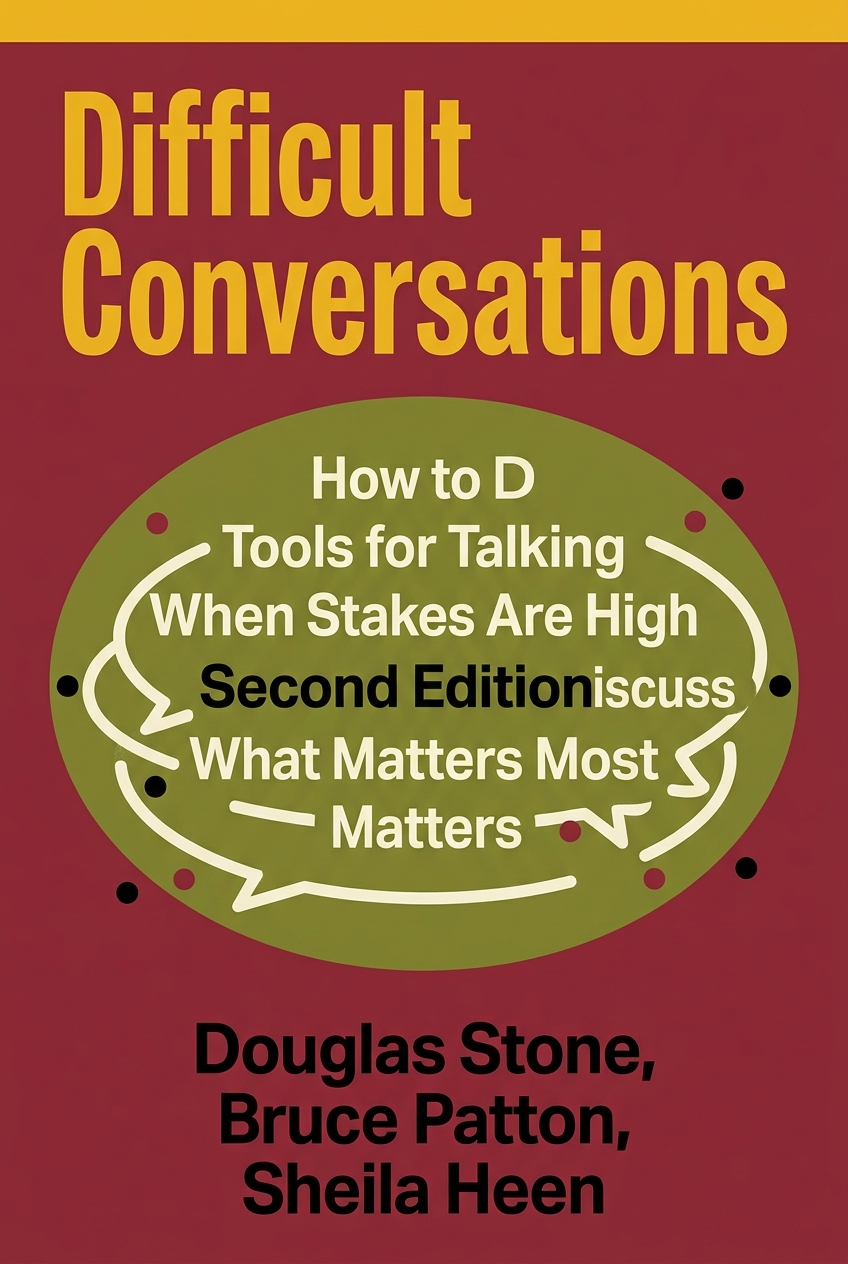
A major reason conversations become unsafe is our natural tendency to play the blame game. As Douglas Stone, Bruce Patton, and Sheila Heen explain in Difficult Conversations, we instinctively get stuck in the “What Happened?” conversation, where our primary goal is to determine who is at fault. This blame frame is a dead end. It forces people to defend themselves rather than solve the problem.
A more productive approach is to shift from a framework of blame to one of contribution. Instead of asking, “Who did this?” you ask, “How did we each contribute to this situation?” This approach acknowledges that most problems are the result of a system where multiple people have played a part. It depersonalizes the issue and allows everyone to look at the problem without feeling personally attacked, opening the door for genuine problem-solving. This shift is one of the most powerful conversation tips for anyone regularly involved in conversation at work.
Mastering Your Inner State
Even with the best intentions, our emotions can hijack a conversation. As Jefferson Fisher points out in The Next Conversation, arguments often spiral out of control because of our physiological response to conflict. When we feel threatened, our fight-or-flight response kicks in, flooding our bodies with adrenaline and shutting down the logical parts of our brain. In this state, it’s nearly impossible to listen, empathize, or think clearly.
This is why mastering your inner state is a prerequisite for mastering difficult dialogue. Fisher suggests focusing on grounding techniques—like deep breathing or taking a brief pause—in the critical first five seconds before a conflict erupts. By managing your own physiology, you can remain calm and centered, allowing you to choose a constructive response instead of a reactive one. This internal work is fundamental to any effort to develop conversation skills.
Developing Practical Conversation Skills for Everyday Success
While handling high-stakes dialogue is critical, the bulk of our interactions are everyday conversations that build the foundation of our relationships. Improving in this area can have a massive impact on your career and personal life. Here, we can look at pragmatic conversation examples and techniques to use daily.
The Power of Nonverbal Cues
Before you utter a single word, you are already communicating. In How to Talk to Anyone, Leil Lowndes emphasizes that nonverbal communication is the first and most critical step to making a positive impression. Your posture, eye contact, and even the way you walk into a room send powerful signals. Projecting confidence and warmth through your body language makes others more receptive to you and your message.
This is particularly helpful for beginners or students who might feel intimidated in social or professional settings. Practice standing tall, offering a genuine smile, and maintaining steady eye contact. These small adjustments build an aura of credibility and likability before the conversation even begins.
Creating Connection with Small Talk and Conversation Starters
Many people dismiss small talk as trivial, but it serves a vital social function. It’s a low-risk way to build rapport and discover common ground, acting as a bridge to more meaningful discussions. The key to effective small talk is curiosity.
Instead of relying on generic questions like “What do you do?”, try using more open-ended conversation starters that invite a story. Observe your shared environment (“This is a great venue. Have you been to an event here before?”) or ask about something you genuinely find interesting about the other person. The goal isn’t to be clever; it’s to show you’re interested in learning about them as a person.
How to Improve Conversation Skills at Work
Clarity is king in a professional setting. Misunderstandings cost time, money, and morale. To improve conversation in the workplace, it’s essential to be both clear and concise. Drawing again from Simply Said, a powerful technique is to structure your communication for your audience. For example, when presenting information, use a simple framework like “What? So What? Now What?”
- What? State the key point or fact clearly and upfront.
- So What? Explain why this information is important to your listener.
- Now What? Propose a clear next step or call to action.
This structure ensures your message lands with impact and that everyone leaves the conversation aligned on the path forward. It transforms ambiguous updates into actionable dialogue, a skill that is invaluable for professionals at all levels.
In the end, dialogue is the foundational skill for human connection and progress. As technology continues to automate tasks, our uniquely human ability to communicate, empathize, and collaborate will only become more valuable. The lessons from these great books show us that anyone can learn to transform their conversations from a source of anxiety into a source of connection and opportunity. The journey begins with a single, intentional conversation.
Master key ideas in 15 minutes
Listen to audio summaries of these books on VoxBrief
Download Free