What Are the Best European History Books? A Guide for Beginners
By VoxBrief Team··6 min read
Why do our governments work the way they do? Where do modern ideas about borders, human rights, and global trade come from? The answers to these fundamental questions are not found in today's fleeting headlines, but are deeply embedded in the sprawling, dramatic, and often violent story of European history. For any individual seeking to truly understand the foundations of the modern world, exploring the best european history books is not just an academic exercise—it's an essential journey. This guide serves as an introduction to European history for beginners, moving beyond a simple European history timeline to explain not just what happened, but why it still matters so profoundly today. We will delve into key themes and pivotal moments, demonstrating how the continent's past continues to shape our present reality.
What Is European History, and Why Is It So Important?
When we ask, "what is european history?", many people first picture a dry and dusty list of kings, queens, and battles. While those elements are part of the story, they are merely the surface. True European history is the dynamic narrative of how foundational ideas, disruptive technologies, transformative cultures, and complex power structures evolved, clashed, and spread across the world. It’s a story of connection and conflict, of innovation and catastrophe, tracing a path from the ashes of ancient empires to the interconnected global society we inhabit now.
So, why is european history important to study? Simply put, the continent’s past provides the essential source code for our present global operating system. The legal systems in North and South America, the seemingly arbitrary borders drawn across Africa and the Middle East during colonial eras, the very existence of a global financial system—all have deep and undeniable roots in European exploration, expansion, conflict, and philosophy. European history explained in this context reveals that it's not a story confined to one continent; it's a critical lens for understanding global power, culture, and economics. The most important european history facts are not just trivia; they are pivotal data points that help us decode how our modern societies were constructed, for better and for worse.
Studying this history provides crucial lessons. It teaches us about the fragility of peace, the incredible power of ideas to transcend borders, and the ways in which societal structures can be both resilient and susceptible to sudden, radical change. It is a vital field for anyone who wants to be an informed citizen of the world.
The Medieval Crucible: Forging the Foundations of Modern Europe
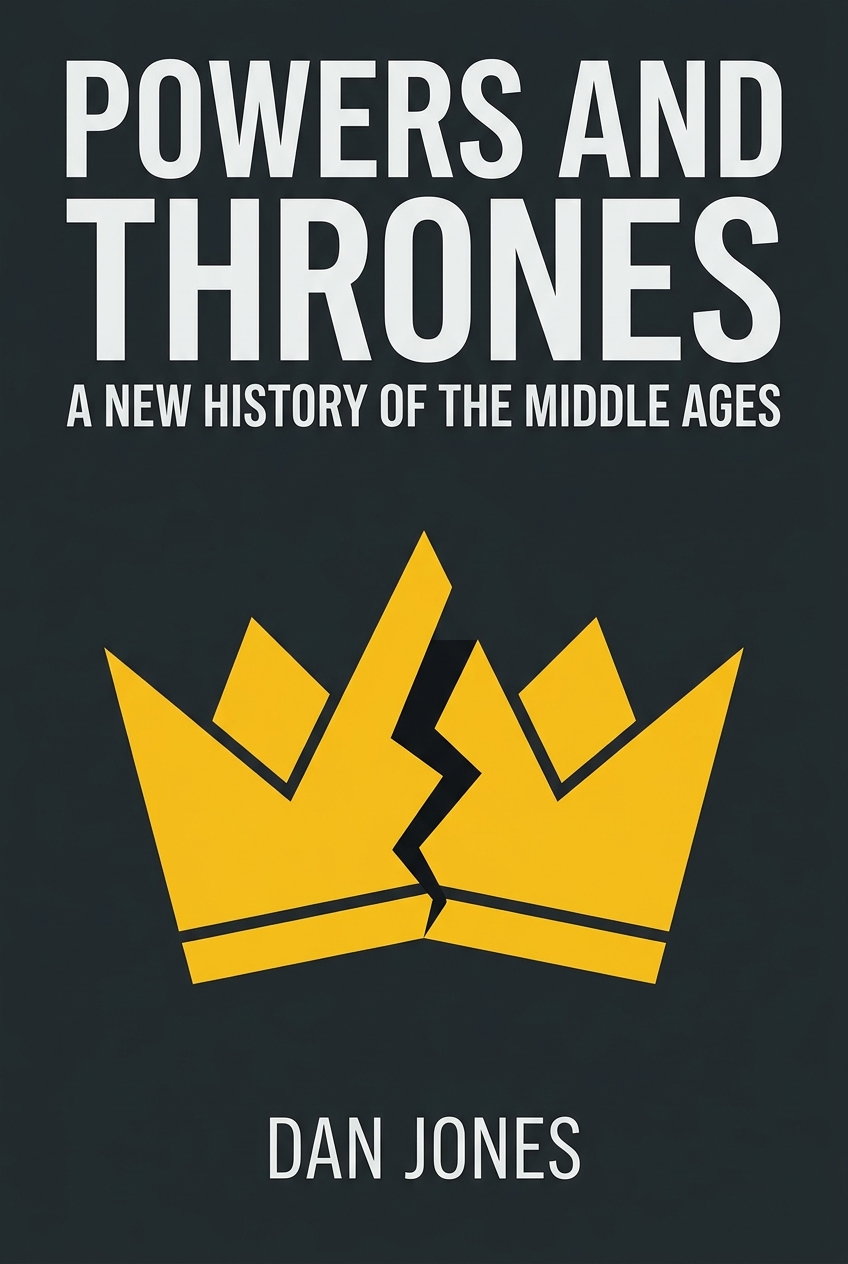
Many still hold the outdated view of the thousand years after Rome's fall as the "Dark Ages"—a stagnant and ignorant interlude before the brilliance of the Renaissance. However, modern scholarship reveals this period as a dynamic and formative crucible where the essential components of the modern West were forged. In his compelling book Powers and Thrones: A New History of the Middle Ages, historian Dan Jones powerfully argues that this era was anything but dormant. He explains that even after the Western Roman Empire collapsed in the 5th century, its "ghost haunted Europe for the next millennium." This memory of a unified, centrally administered empire provided a powerful, aspirational model that future kings, emperors, and popes would endlessly strive to replicate.
The Software of a Fractured Society
In the absence of a unified Roman state, how does a continent organize itself? Jones introduces a fascinating and accessible framework, explaining that medieval society ran on three powerful, interconnected forms of "software": faith, feudalism, and finance.
Faith: The Christian Church became the single most dominant force, creating a shared cultural, moral, and legal framework that spanned dozens of fragmented and warring kingdoms. It wasn't just a spiritual guide; the Church was a political and administrative superpower, preserving literacy, commissioning art, and wielding the power of excommunication as a political weapon.
Feudalism: This complex web of loyalties and obligations between lords and vassals provided a decentralized system of governance and military protection. While often brutal and inefficient, it created a semblance of order in a violent world.
Finance: As trade routes slowly re-emerged, new financial instruments and networks began to take shape, particularly in the Italian city-states. This nascent capitalism would eventually grow to challenge the power of both kings and the Church.
This framework offers one of the key European history lessons: powerful ideologies and systems can unify people and organize society just as effectively as powerful armies, creating a shared identity where none existed before.
An Age of Upheaval and Unforeseen Transformation
The Middle Ages were also relentlessly defined by massive, continent-spanning disruption. European history key events from this era, like the Crusades and the Black Death, did not just cause immense suffering; they fundamentally rewired society. As detailed in Powers and Thrones, the Crusades were not simply holy wars. They were vast logistical, financial, and military enterprises that massively accelerated trade, technology transfer, and cultural exchange between a relatively isolated Europe and the more advanced civilizations of the East.
Generations later, the plague arrived, carried along the very trade routes the Crusades had helped expand. The Black Death wiped out at least a third of Europe's population in a few short years, a demographic catastrophe of unimaginable scale. This devastation, however, had profound and unexpected consequences. It led to severe labor shortages, which empowered the surviving peasantry, eroded the old feudal order, and forced rulers to experiment with new forms of taxation and governance. Amid this upheaval, the single most revolutionary development was technological. Dan Jones calls the printing press "the 15th-century internet," a stunningly apt description. This disruptive technology shattered the Church's long-held monopoly on information, allowed radical ideas to spread like wildfire, and directly fueled the Protestant Reformation—an event that would permanently fracture European Christendom and set the stage for the rise of the modern nation-state.
The Turbulent 20th Century: Conflict, Ideology, and Change
The 20th century saw Europe, then the undisputed center of the world, plunge into an unprecedented period of self-destruction. To understand this turbulent era—with two devastating world wars and a subsequent Cold War that redrew the global map—turning to the best european history books is essential. They provide the critical context and deep analysis that news headlines alone cannot, explaining how these events killed tens of millions and irrevocably changed the course of human history.
A World in Flames: Leadership in Crisis
As journalist A. J. Baime masterfully chronicles in The Accidental President, Harry S. Truman inherited a "world on fire" upon Franklin D. Roosevelt's sudden death in April 1945. Truman, a man who had been kept largely in the dark about major strategic initiatives, was thrust into the presidency as Allied armies were closing in on Berlin. They were not only fighting a war but also uncovering the full, sickening horror of the Holocaust, a moral crisis that stunned the world. Simultaneously, the war in the Pacific was raging with increasing ferocity.
Baime’s gripping narrative demonstrates how European history is inextricably linked with global history. Truman's decisions—from confronting a belligerent Stalin at the Potsdam Conference over the fate of postwar Europe to the agonizing calculus that led to the use of the atomic bomb—were made under almost unimaginable pressure. This account vividly illustrates that history isn’t a neat, predetermined narrative. Instead, it is a messy, chaotic process shaped by incredibly difficult choices made by imperfect people in real-time, with the fate of millions hanging in the balance.
Challenging the Narrative: The Rise and Shifting Dominance of the West
For centuries, European history has been taught as the primary story of human progress, with the rest of the world cast in a supporting role. But how did Europe achieve this dominance in the first place? Historian Peter Frankopan offers a compelling and necessary counter-narrative in his landmark book, The Silk Roads: A New History of the World. He argues that for most of recorded history, the world’s economic, scientific, and cultural center of gravity was not in Europe, but in Central Asia—the crossroads connecting East and West.
Frankopan posits that Europe was largely a peripheral, backwater player until the late 15th century. It was then that a "great reversal" was triggered by the Age of Exploration and the discovery of the Americas. Powered by new naval technologies and an insatiable hunger for resources, Europe violently repositioned itself at the hub of new global networks of trade, colonization, and empire. Anyone searching for the best books european history offers should actively seek out works like this that challenge traditional, Eurocentric narratives and reveal a bigger, more complex picture. Frankopan’s continuing analysis of the emerging "New Silk Roads" also explains how, in the 21st century, the world’s economic and political center of gravity is once again shifting back toward Asia, a monumental process with profound implications for Europe's future role in the world.
These historical accounts help us answer the question, how did european history shape today? It did so through the creation of international institutions like the United Nations and NATO, designed to prevent another global catastrophe; through the ideological fault lines between capitalism and communism that defined the Cold War and still echo today; and through the legacy of colonialism that continues to influence politics and society across the globe. The key lessons from European history are not about memorizing dates, but about grasping these deep, underlying forces of change, conflict, and connection. It’s a story that is still being written, and understanding its past is the only way to responsibly navigate its future.
Master key ideas in 15 minutes
Listen to audio summaries of these books on VoxBrief
Studying European history is crucial because it provides the source code for our modern world. Key global systems, from law and government to finance and culture, have deep roots in Europe's past, and understanding this history helps explain present-day global dynamics.
Key lessons include understanding how conflicts reshape borders and societies, how powerful ideas like democracy evolve, and the critical role technology plays in societal change. It also teaches that progress is rarely a straight line and that historical patterns can repeat in surprising ways.
European history shaped today through colonialism that drew modern borders, philosophies that formed our governments, and conflicts that led to the creation of international institutions like the UN. The continent's scientific, industrial, and cultural developments became the foundation for our interconnected global society.