What is science? For many, the word conjures images of lab coats, complex equations, and concepts so abstract they seem beyond reach. The truth, however, is far more exciting and accessible. Science is a story—the grand story of how we came to understand the universe and our place in it. The best scientific books don't just present facts; they invite you on a journey, transforming the intimidating into the awe-inspiring and offering a powerful new lens through which to see the world.
This guide is for the curious mind, for anyone who has looked at the stars and wondered, or questioned why things are the way they are. This is an introduction to science for beginners, showing how reading about it can be one of the most rewarding intellectual adventures you'll ever undertake. We'll explore what science really is, how it shapes our tangible reality, and how it tackles the biggest questions of existence.
What is Science, Anyway? A Process of Revolution
One of the most common myths about science is that it's a linear march toward absolute truth, with each generation simply adding new facts to an ever-growing pile. The reality is more dynamic, more human, and far more interesting. To truly grasp how science works, we need to understand it not as a static body of knowledge, but as a process of discovery, debate, and sometimes, outright revolution.
No book explains this better than Thomas S. Kuhn's landmark work, The Structure of Scientific Revolutions. Kuhn dismantled the old view of scientific progress and introduced a powerful new framework. He argued that science operates in two distinct phases: "normal science" and "scientific revolutions."
Normal Science: The Art of Puzzle-Solving
According to Kuhn, most scientists spend their careers engaged in "normal science." This isn't groundbreaking, paradigm-shattering work. Rather, it's a process of puzzle-solving within an established framework, or "paradigm." A paradigm is a set of shared assumptions, theories, and methods that define a scientific field at a given time—like Newton’s laws of motion or the theory of evolution.
During periods of normal science, researchers work to refine the existing paradigm, fill in the details, and solve problems that the paradigm predicts should be solvable. It's incredibly efficient work that deepens our understanding. However, its very precision is what sows the seeds of its own potential destruction.
Anomaly and Crisis: When the Puzzle Pieces Don't Fit
By defining expectations so clearly, a paradigm makes it glaringly obvious when an observation doesn't fit. Kuhn called these stubborn, unexplainable results "anomalies." At first, scientists may try to dismiss them or tweak the existing theory to make them fit. But as anomalies pile up, the field can enter a state of "crisis."
This is when the foundations of normal science begin to crack. The old rules no longer seem to work, and the community becomes more willing to entertain radical new ideas. It's in this fertile ground of crisis that a new paradigm can emerge, one that not only explains what the old one did but also elegantly solves the anomalies that broke it. The shift from an Earth-centered to a Sun-centered cosmos wasn't just a new fact; it was a revolution that changed the entire framework of astronomy.
Kuhn's model teaches a vital lesson: science is a profoundly human endeavor, characterized by tradition and upheaval. It moves forward not by adding bricks to a wall, but by periodically tearing the whole structure down and rebuilding it on a new foundation. This understanding demystifies the scientific process, showing it to be an evolving conversation rather than a finished encyclopedia.
The Tangible World: How Science Shapes Everything You See
While the philosophy behind scientific progress can feel abstract, its results are anything but. Science is responsible for the very fabric of our modern world. From the smartphone in your hand to the concrete building you're in, every object tells a story of scientific discovery. Understanding this connection is a key part of answering the question: why is science important?
Mark Miodownik's Stuff Matters: Exploring the Marvelous Materials That Shape Our Man-made World provides a perfect entry point into this topic. He reminds us that the mundane is miraculous. We are surrounded by materials—steel, plastic, glass, paper—that we take for granted, but each one is a testament to our understanding of the physical world.
The Inner Life of Materials
Miodownik explains that the properties of any material—why steel is strong, why glass is transparent, why an elastic band is stretchy—are determined by its invisible internal structure. He delves into the "inner life of materials," revealing the world of atoms and molecules and the bonds that hold them together. It’s this deep understanding that allows us to manipulate matter to create things that serve our needs.
For example, learning about the crystalline structure of metals allowed humans to develop alloys like steel, which is strong yet malleable, forming the backbone of our infrastructure. By contrast, the disordered, amorphous structure of glass is what makes it brittle but transparent. Stuff Matters transforms a simple teacup or paperclip into a marvel of materials science, demonstrating how fundamental scientific principles have a direct and tangible impact on our daily lives.
The Future of Stuff
This field is not just historical; it’s at the forefront of innovation. Miodownik touches on the future, exploring the exciting domain of biomaterials—materials designed to interact with our own bodies. From self-healing concrete inspired by biology to biocompatible implants that our immune systems won't reject, materials science is one of the most dynamic areas of research today. It highlights how science doesn't just explain the world; it actively builds the future.
By exploring the science of "stuff," we gain a new appreciation for our man-made environment. We learn that technology and innovation aren't magic; they are the result of a deep, patient, and systematic investigation of how the physical world works.
Exploring the Big Questions
Science doesn't just help us build better tools; it also helps us grapple with the most profound questions of existence. Where did the universe come from? What are we made of? What does it mean to be a conscious being? By pushing the boundaries of knowledge, science offers perspectives that are both humbling and exhilarating.
A Journey Through Spacetime
Few topics feel more inaccessible than modern physics, with its talk of curved spacetime and quantum uncertainty. Yet, in Seven Brief Lessons on Physics, Carlo Rovelli proves that these ideas can be made stunningly clear and beautiful. His work is a masterclass in science explained simply, without sacrificing the wonder of the core concepts.
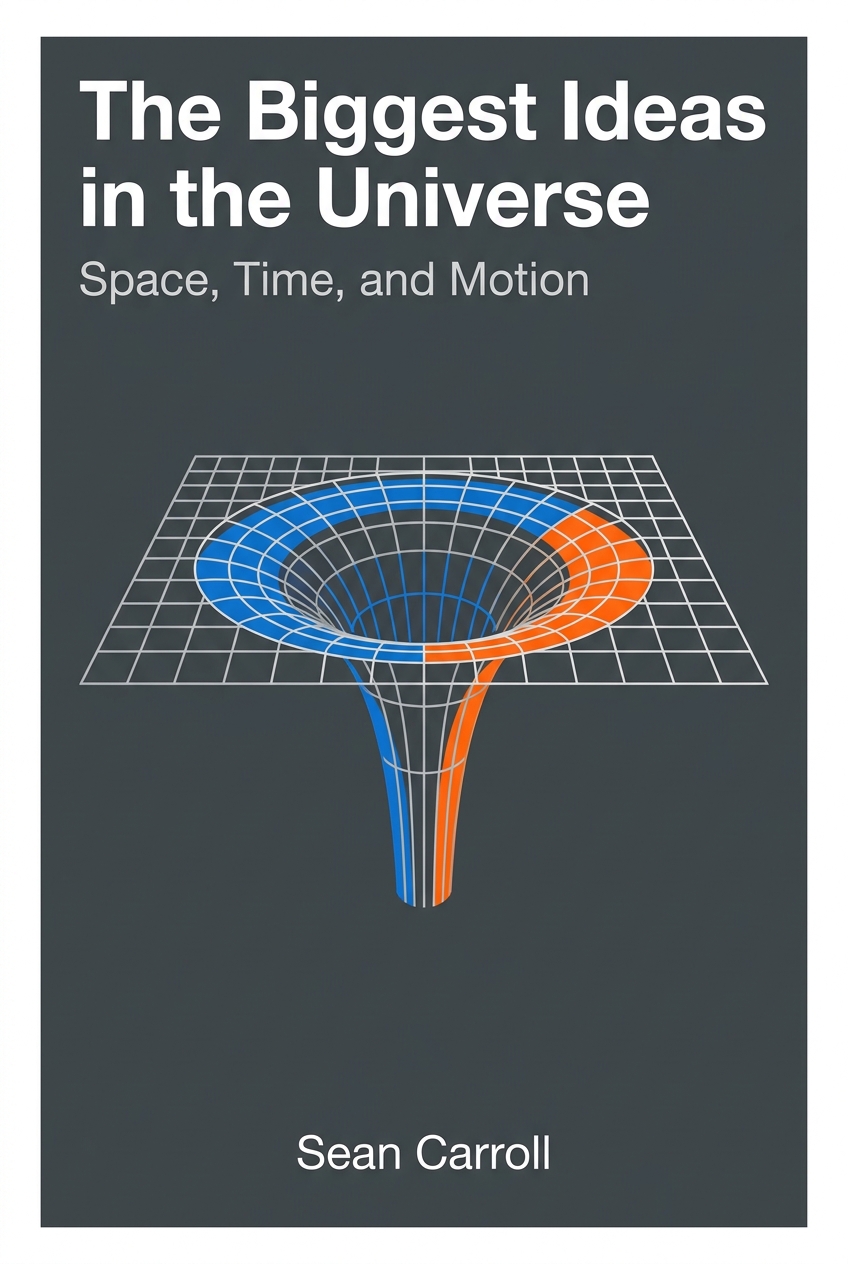
He starts with what he calls "the most beautiful theory": Einstein’s general relativity. Rovelli explains how Einstein, during a year spent loafing and reading for pleasure, had the insight that gravity is not a force pulling objects together, but a curvature in the fabric of spacetime itself. Massive objects like the sun literally bend the space around them, and planets are just following the straightest possible path through that curved geometry.
Then he pivots to the second pillar of modern physics, quantum mechanics, which describes the grainy, probabilistic world of the very small. It’s a theory so strange it defies common sense, yet it is the foundation of every computer and smartphone. Rovelli highlights the central conflict in modern physics: general relativity and quantum mechanics are both spectacularly successful, yet they seem to contradict each other. The quest to unify them is one of the greatest challenges in science today.
Perhaps Rovelli's most profound takeaway is that science has consistently "dethroned humanity from the center of the universe." We learned we are not at the center of the solar system, not made of special matter, and are just one fleeting branch on the vast tree of evolution. This is not a demotion but a liberation. It connects us to the universe, showing we are not separate from it but a part of a vast, interconnected natural world.
The Start of Your Own Journey
From the revolutionary nature of scientific progress to the tangible materials that build our world and the cosmic questions that define our place in the universe, the story of science is humanity's greatest adventure. It is a story of curiosity, ingenuity, and a relentless desire to understand. It shows us a universe far more strange, beautiful, and complex than we could ever have invented.
The journey into this world doesn't require a lab coat or a PhD—just a curious mind and one of the many excellent scientific books available today. Every book is a doorway to a new way of thinking, offering frameworks and insights that can enrich your understanding of everything. By engaging with these ideas, you are participating in one of the oldest and most noble human traditions: the quest for knowledge.
Master key ideas in 15 minutes
Listen to audio summaries of these books on VoxBrief
Download Free