You stand at a crossroads. On one path lies the person you are today, governed by routines and reactions you may not have consciously chosen. On the other path is the person you aspire to become—more disciplined, productive, and fulfilled. The gap between these two selves isn't bridged by sheer willpower alone; it's paved with the small, consistent actions we call habits. To truly transform, you must become an architect of your own behavior. This article serves as an introduction to the psychology of forming habits, drawing key insights from landmark habit formation books to give you a foundational understanding of how real change happens from the inside out. For anyone looking into the psychology of forming habits for beginners, this guide will provide a clear roadmap.
Why do we mindlessly scroll through our phones, or automatically reach for a snack when we're bored? The answer lies in the brain's relentless pursuit of efficiency. Any action you repeat creates a neurological shortcut, saving mental energy. This process is often described as a three-step loop: the cue, the routine, and the reward. Understanding this is central to the psychology of forming habits explained in countless texts.
The Cue: This is the trigger that tells your brain to go into automatic mode and which habit to use. It could be a time of day (morning alarm), a location (the kitchen), an emotional state (stress), or the preceding action in a sequence (finishing dinner).
The Routine: This is the behavior itself, whether physical, mental, or emotional. It’s the action you take in response to the cue, like brewing coffee, opening a social media app, or lacing up your running shoes.
The Reward: This is what satisfies the craving that the cue initiated. The reward tells your brain that this particular loop is worth remembering for the future. The feeling of caffeine hitting your system, the brief social validation from a notification, or the endorphin rush after a run all serve as powerful rewards that solidify the habit.
Why is the psychology of forming habits important? Because once this loop is established, the behavior becomes largely unconscious. You no longer need to exert conscious effort; the action just happens. This automation is a double-edged sword. It can entrench destructive behaviors, but it can also be harnessed to build a life of positive, constructive action. By learning how to identify and re-engineer these loops, you shift from being a passenger to being the driver of your own life.
True transformation isn't about finding the right life hack or productivity app. It's about building a solid internal foundation upon which good habits can stand. The most effective habit formation books don't just offer tips; they provide profound psychological frameworks for changing how you see yourself and the world. Instead of chasing superficial changes, they guide you to address the core principles that govern your behavior.
From the Inside-Out: The Character Ethic
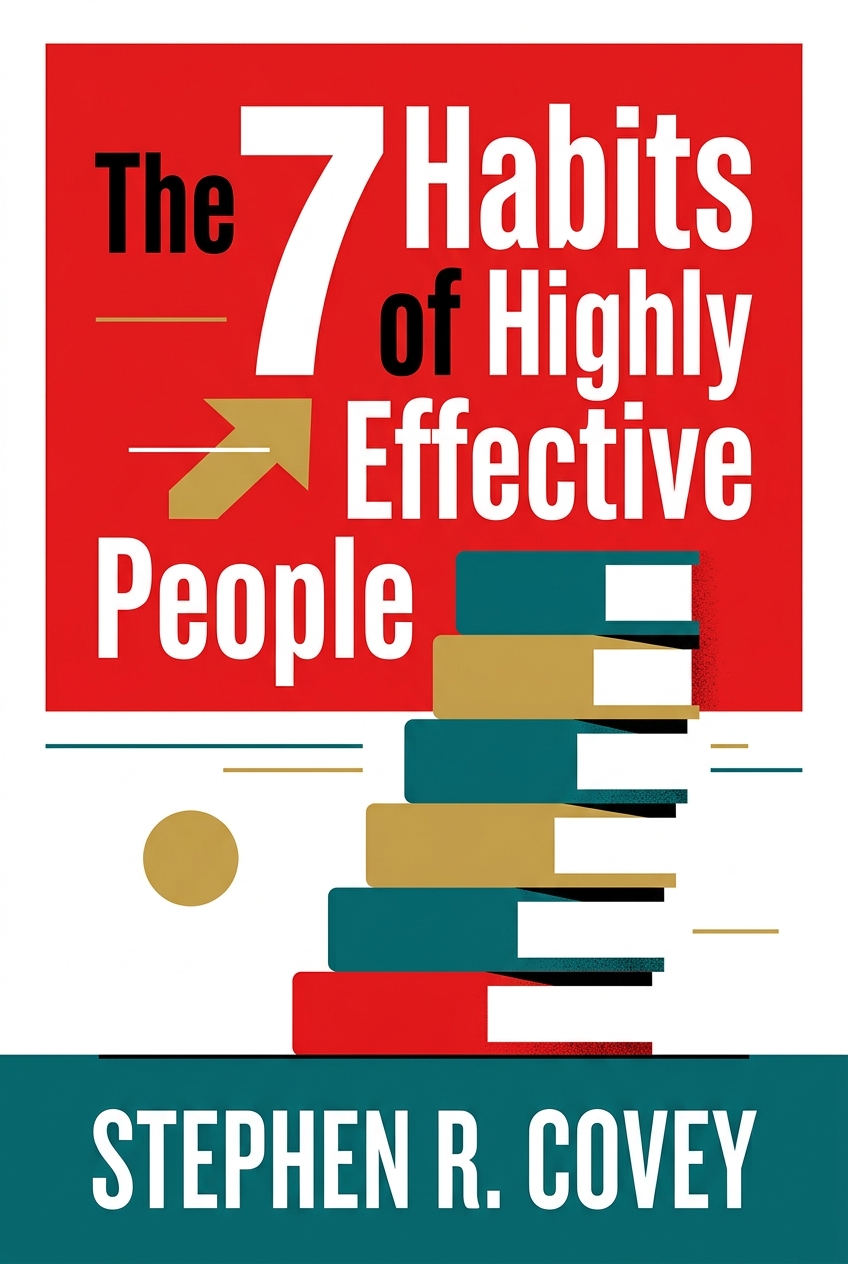
In his timeless classic, The 7 Habits of Highly Effective People, Stephen R. Covey makes a critical distinction that serves as the starting point for any meaningful change. He contrasts the "Personality Ethic" with the "Character Ethic." The Personality Ethic is focused on quick fixes, public image, and manipulative tactics to achieve success. It's about looking good, not necessarily being good. This approach, Covey argues, is like trying to fix a deep-rooted problem with a band-aid—it's superficial and ultimately fails.
In contrast, the Character Ethic is an "inside-out" approach. It posits that sustainable success and fulfillment come from aligning your life with timeless principles like integrity, responsibility, and purpose. Before you can build effective habits (the what), you must first clarify your core values and paradigms (the why). Covey’s framework teaches that the journey to effective interdependence with others begins with the "Private Victory"—the mastery of self. This inner work is the bedrock upon which all lasting habits are built. Without it, new routines are just temporary adjustments, doomed to fail when motivation wanes.
Adopting Responsibility in a World of Chaos
While not a traditional habit guide, Jordan B. Peterson’s 12 Rules for Life offers a powerful psychological argument for the initial actions that spark personal transformation. The book is subtitled "An Antidote to Chaos," and its core premise is that meaning is found not in comfort, but in adopting responsibility. Peterson argues that our brains are wired for hierarchy and competence; we are biologically rewarded for bringing order to chaos. This insight is crucial for habit formation.
One of his most famous rules, "Set your house in perfect order before you criticize the world," is a direct call to action that functions as a meta-habit. It’s a directive to start with what you can control. Don't try to solve world hunger today; instead, clean your room. Make your bed. Organize your desk. These small, concrete acts of ordering your immediate environment have a profound psychological effect. They prove to yourself that you are capable of combating chaos, building a sense of agency and competence. This initial momentum makes tackling bigger, more complex habits feel less daunting. By first creating order in your physical space, you begin to create the mental space necessary for disciplined, intentional living.
The Dance Between Order and Chaos
In his follow-up, Beyond Order, Peterson further develops the psychological landscape in which our habits operate. He describes human experience as a constant negotiation between two fundamental forces: Order and Chaos. Order represents the known—your schedules, routines, stable relationships, and existing habits. It's predictable and secure. Chaos, on the other hand, is the unknown—the realm of novelty, potential, and threat.
We need Order to function. Good habits create a stable platform of predictability that keeps our lives from dissolving into anxiety and confusion. This is the value of a consistent morning routine or a disciplined work schedule. However, living entirely within Order leads to stagnation and fragility. We must also periodically venture into Chaos to learn, grow, and adapt. The key, Peterson suggests, is to have one foot firmly planted in Order while extending the other into Chaos. Your habits are the anchor that keeps you secure, giving you the courage to confront the unknown, take on new challenges, and transform yourself. A person with no solid habits is adrift in Chaos; a person with overly rigid habits is trapped in a sterile Order. The goal is to build a foundation of habits that serves you, freeing you up to engage creatively with the world.
Practical Tips for Lasting Change
Understanding the deep psychology is the first step. The next is application. Armed with the insights above, you can approach habit formation with a strategy that goes beyond simple repetition. Here are some of the most essential the psychology of forming habits tips.
Start with Your Principles
Before you decide to wake up at 5 a.m. or run three times a week, ask yourself why. As Stephen R. Covey emphasizes with his second habit, "Begin with the End in Mind," effective action is driven by a clear vision. What kind of person do you want to be? What values do you want your life to represent? A habit that isn't connected to a deeper principle or goal is like a rootless plant—it will quickly wither. Take time to define your personal mission. When a habit is an expression of your deepest values, your motivation to maintain it becomes intrinsic, not dependent on external rewards.
Master Your Environment
Your environment is a constant stream of cues telling your brain what to do. If you want to stop eating junk food, don't keep it in your house. If you want to read more, place a book on your pillow. This is the practical application of Peterson’s rule to "set your house in order." Consciously design your surroundings to make good habits the path of least resistance and bad habits difficult. You can't rely on willpower to constantly fight against a hostile environment. Make your space work for you, not against you.
The Power of Consistency Over Intensity
Many people fail at habit formation because they try to do too much, too soon. They feel a burst of motivation, commit to a grueling gym routine, and burn out within a week. The key to wiring a habit into your brain is not intensity, but consistency. An action performed for two minutes every single day is far more powerful than a two-hour action performed once a month. This approach is reinforced by Covey's seventh habit, "Sharpen the Saw," which is about the importance of consistent, balanced renewal. Make your new habit so small and easy that you can't say no. Once the behavior becomes automatic, you can gradually increase its duration or intensity.
Ultimately, building better habits is not about a rigid, joyless pursuit of self-optimization. It's about reclaiming your agency. It's about understanding the deep psychological currents that shape your daily life and learning to navigate them with intention and purpose. By shifting your focus from quick fixes to foundational principles, from chaotic reaction to deliberate action, you can begin to architect a life that aligns with your highest aspirations. The journey starts not with a giant leap, but with a single, small, and intentional step.
Master key ideas in 15 minutes
Listen to audio summaries of these books on VoxBrief
Download Free