A Beginner's Guide to the Best Parenting Books and Their Core Ideas
By VoxBrief Team··6 min read
Navigating the world of parenting advice can feel like trying to drink from a firehose. With countless articles, social media influencers, and unsolicited tips from family, it’s easy to feel overwhelmed and unsure of which direction to go. This is where the best parenting books offer a lifeline. They aren't just collections of quick fixes; they provide foundational frameworks for understanding your child, your role as a parent, and the dynamics that shape your family. This introduction to top books in parenting will explain some of their core concepts, helping you move from a reactive to a more intentional and confident parenting style.
Why Top Books in Parenting Are More Than Just Advice Columns
The most significant shift offered by great parenting literature is the move from simply managing behavior to actively nurturing a developing mind. Instead of asking, "How do I stop my child from doing X?" you start to ask, "Why is my child doing X, and what does their brain need in this moment?" This is a game-changer. Understanding why top books in parenting is important lies in their ability to provide this deeper context, often grounded in decades of research in child psychology and neuroscience.
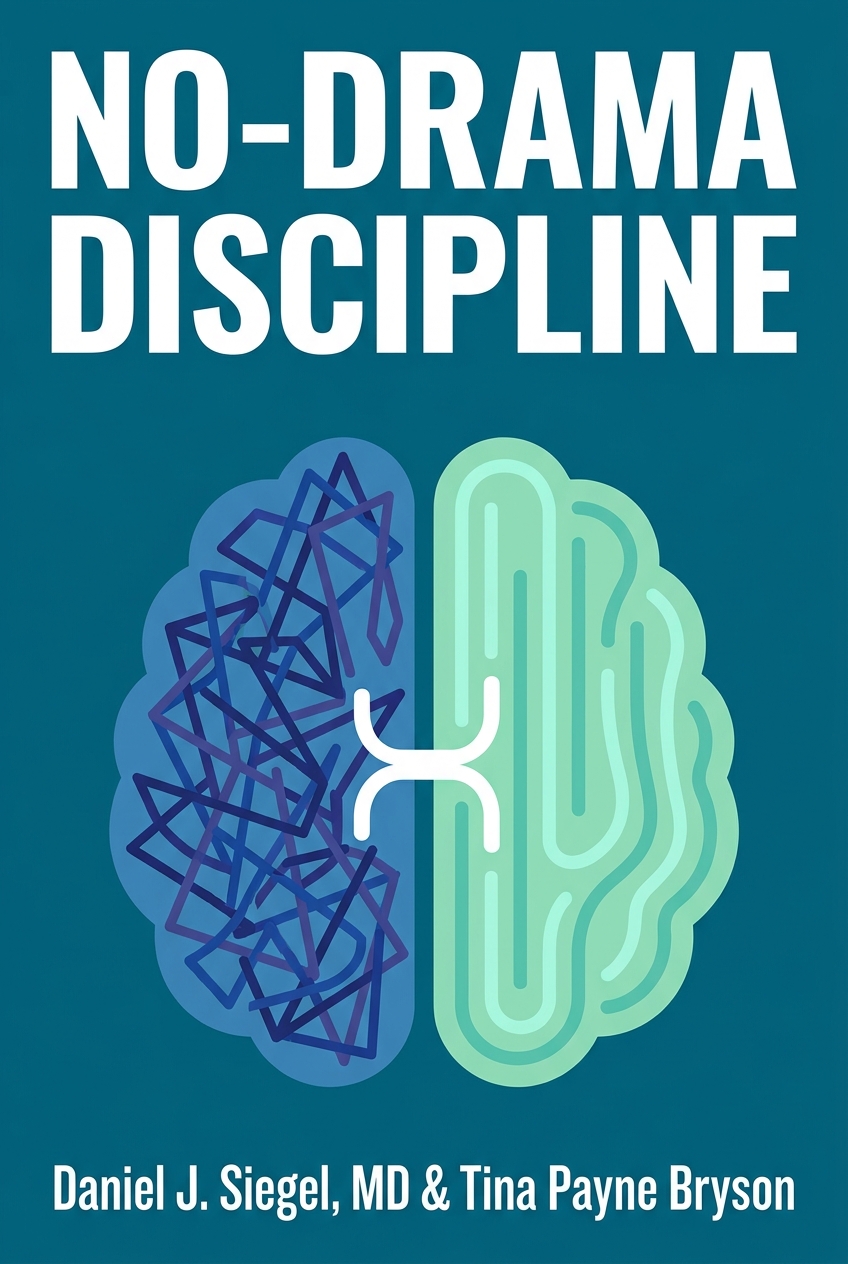
A perfect example of this is the concept of brain integration, a cornerstone of The Whole-Brain Child by Drs. Daniel J. Siegel and Tina Payne Bryson. They explain that a child's brain is still under construction. A child in the middle of a tantrum isn't being manipulative; they are often overwhelmed by their primitive "downstairs brain," which handles big emotions and fight-or-flight responses. Their logical, problem-solving "upstairs brain" is temporarily offline. A parent who understands this can shift their goal from punishment to connection. Instead of sending the child away, they might use a strategy called "Connect and Redirect." First, they connect with the emotional right brain by acknowledging feelings ("You are so angry that we have to leave the park!"). Only after the child feels heard and begins to calm down can the parent engage the logical left brain to reason and find a solution. This one concept alone reframes discipline from a battle of wills into an opportunity for brain-building.
Foundational Concepts from the Best Parenting Books
Beyond just one book, a survey of the parenting landscape reveals several powerful, overlapping themes. These ideas represent some of the most helpful top books in parenting tips available, offering practical ways to improve communication, set boundaries, and foster emotional health. For any parent who is a beginner in this field, these concepts serve as an excellent starting point.
Understanding Behavior: Discipline vs. Connection
How we respond to misbehavior is one of the most stressful parts of daily parenting. Many books offer systems to bring calm and consistency to these moments. In 1-2-3 Magic, Dr. Thomas Phelan presents a remarkably simple system for what he calls "Stop" behaviors—actions like whining, hitting, or arguing. His method involves a calm, non-negotiable counting sequence: "That's one... That's two... That's three, take five." There's no yelling or long-winded lectures. The counting itself is the warning, and the consequence is immediate and predictable. This method is effective because it removes parental emotion from the equation, teaching children that their behavior has a clear, logical consequence without escalating the drama.
However, Phelan is careful to note that this method is only for "Stop" behaviors. For encouraging "Start" behaviors, like doing homework or cleaning a room, a different approach is needed. This highlights a crucial point: no single technique works for every situation. While the structure of 1-2-3 Magic is brilliant for establishing boundaries, the connection-first approach of The Whole-Brain Child is better suited for moments when a child is emotionally dysregulated and needs empathy before correction. The wisest parents learn how to learn top books in parenting by building a toolkit, recognizing when to deploy a firm boundary and when to offer a compassionate ear.
Healing Your Own Past to Parent in the Present
One of the most profound and often overlooked aspects of parenting is how our own childhood experiences shape our reactions to our children. Your child’s tantrum might trigger an outsized response in you not because of their behavior, but because of your own unresolved history with helplessness or anger. This is where insights from books that aren't exclusively about parenting become essential tools for parents.
For instance, The Body Keeps the Score by Dr. Bessel van der Kolk explains that trauma isn't just a bad memory but a physiological imprint on the body and brain. If a parent grew up in a chaotic environment, their nervous system might be wired for high alert. A child's normal, boisterous behavior can then be perceived as a threat, causing the parent to react with a harshness that doesn't match the situation. Understanding this allows a parent to reframe their response: "This isn't about my child; this is my own history showing up. I need to regulate myself first."
Similarly, Adult Children of Emotionally Immature Parents by Dr. Lindsay C. Gibson sheds light on why some parents struggle to provide consistent emotional warmth. Dr. Gibson describes a core wound of "emotional loneliness" that develops in children whose parents were physically present but emotionally unavailable. Adults who carry this wound may find it hard to connect with their own child's emotional needs. The book's path forward involves learning to become a "detached observer" of your parents' and your own patterns, allowing you to consciously choose a different, more emotionally engaged way of being with your own family, breaking the generational cycle.
Adopting a Cultural Mindset: The Power of the Frame
Sometimes, the best insights come from looking outside our own cultural bubble. In Bringing Up Bébé, author Pamela Druckerman does just that, exploring how French parents seem to raise well-behaved, happy children without the anxiety and over-parenting common in the United States. One of the central concepts she discovers is le cadre, or "the frame."
The frame is the idea that parents provide a firm, consistent set of boundaries—around food, sleep, and respect—but within that frame, the child has immense freedom. French parents don't negotiate about core rules ("You must say 'hello' and 'thank you'"), but they also don't micromanage their children's play. This clarity helps children feel secure and paradoxically more independent.
Another key French parenting tool is "the pause." When a baby cries in the night or a toddler demands a snack, French parents don't immediately rush in. They wait a moment, observe, and give the child a chance to self-soothe or figure it out. This simple habit teaches patience and frustration tolerance from a very young age. It also respects the child as a capable, rational being, a core tenet of the French philosophy.
How to Apply Wisdom from Top Parenting Books
Reading about these concepts is the first step. The real challenge is integrating them into the messy reality of daily life. Here are a few tips on how to effectively apply the wisdom from the best parenting books explained in this article.
First, start with one core idea. Don't try to become a French, whole-brained, emotionally mature zen master overnight. Pick one concept that resonates with you—perhaps it's implementing "the pause" or trying the "Connect and Redirect" strategy. Focus on just that one thing for a week or two until it starts to feel more natural. Small, consistent changes are far more sustainable than a complete overhaul.
Second, remember that context is everything. A strategy that works wonders with your easy-going five-year-old might fail completely with your strong-willed two-year-old. The goal is not to blindly follow a script but to understand the underlying principle. The 1-2-3 Magic count is for setting a clear limit, while an empathetic conversation is for building emotional intelligence. Your job as the parent is to discern what the moment calls for.
Finally, the goal is progress, not perfection. You will still yell. You will still lose your patience. You will forget to "connect before you redirect." The purpose of these books is not to add another item to the list of things you can fail at. It's to provide a map and a compass so that when you get lost—and you will—you have a way to find your bearings and get back on track, hopefully with a little more self-compassion and understanding than before.
Master key ideas in 15 minutes
Listen to audio summaries of these books on VoxBrief
Top books in parenting aren't just a single definitive list, but a collection of influential works that provide evidence-based frameworks for understanding child development. They move beyond simple tips to offer deep insights into psychology, neuroscience, and family dynamics, empowering parents to make more informed choices.
Learning from these books is important because it equips parents with a diverse toolkit for navigating challenges. It reduces parenting stress by replacing reactive guesswork with proactive strategies, ultimately fostering stronger, healthier relationships with your children.
A great starting point is understanding brain integration from 'The Whole-Brain Child,' which teaches you to connect with your child's emotional right brain before reasoning with their logical left brain. Another is the simple counting method from '1-2-3 Magic,' which provides a calm, effective way to stop unwanted behaviors.