All Books
Self-Growth
Business & Career
Health & Wellness
Society & Culture
Money & Finance
Relationships
Science & Tech
Fiction
Topics
Blog
Download on the App Store

China Rich Girlfriend

A Novel

10 minKevin Kwan

What's it about

Ever wondered what happens after the fairytale wedding? For Rachel Chu, marrying into Asia's elite isn't the end of the story—it's the explosive beginning. Get ready to dive into a world where new money clashes with old, and family secrets are the most dangerous currency. You'll follow Rachel's search for her long-lost father, a journey that catapults her into the scandalous, ultra-exclusive circles of Shanghai's super-rich. This summary unpacks the outrageous drama, jaw-dropping luxury, and complex family dynamics of the global elite. Discover the hidden rules of a society where everyone has something to hide and being "China rich" changes everything.

Meet the author

Kevin Kwan is the internationally bestselling author of Crazy Rich Asians, which was adapted into a major motion picture and became a global phenomenon. Born into an established Singaporean family, Kwan moved to the United States as a child, giving him a unique insider-outsider perspective on the rarefied world of Asia's dynastic families. His intimate knowledge and sharp, witty observations of extreme wealth and tradition provide the authentic, captivating detail that brings his beloved novels to life.
Listen Now

Opens the App Store to download Voxbrief

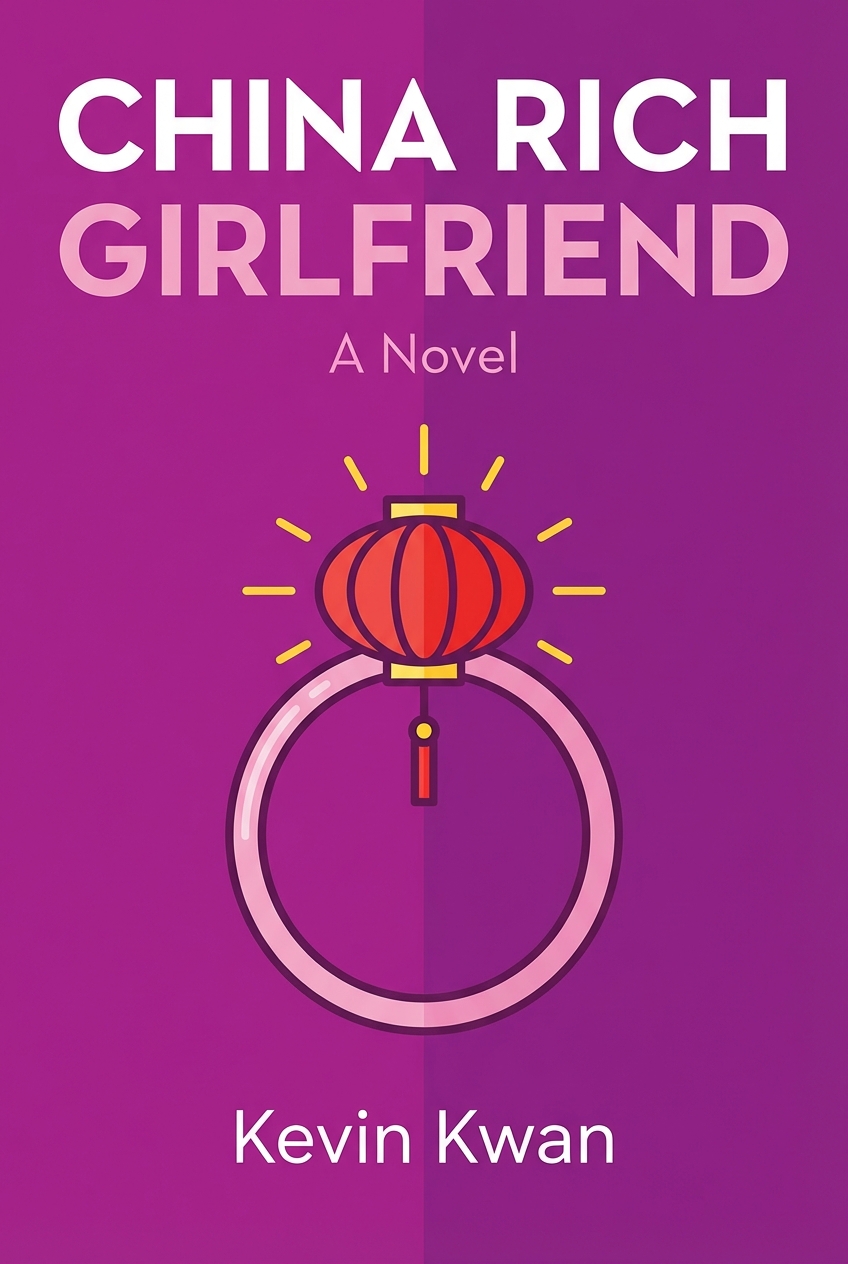
China Rich Girlfriend book cover

The Script

A young woman, a fashion icon in her own right, stands before a wall of bespoke handbags in a private Parisian boutique. Each bag is a masterpiece of leather and hardware, costing more than a luxury car. The sales associate, with the hushed reverence of a museum curator, presents the crown jewel of the collection. The woman barely glances at it. Instead, her eyes are drawn to a small, unassuming clutch on a lower shelf—a vintage piece from a forgotten designer. The associate dismisses it as a trifle, an afterthought. But the woman sees something else: a story, a specific shade of blue that reminds her of a long-lost childhood memory. She asks for that one, leaving the associate bewildered. The true currency of the ultra-wealthy is the narrative—the access to something no one else can have because of its meaning.

This world of incomprehensible extravagance, where emotional value trumps astronomical price, is the natural habitat of author Kevin Kwan. Growing up in Singapore, he was an insider, a quiet observer in a family that belonged to the established old-money elite. He witnessed firsthand the subtle codes, the unspoken hierarchies, and the sheer spectacle of a society where private jets are as common as taxis and a casual shopping trip could fund a small country's GDP. He wrote China Rich Girlfriend as a storyteller cataloging the vibrant, often hilarious, and deeply human dynamics of the life he knew, translating its hidden language for a global audience that could scarcely believe it was real.

Module 1: The Performance of Wealth and Status

The world of "China Rich Girlfriend" operates on a simple, yet brutal, premise. Wealth must be performed. Simply having money is not enough. Your status is determined by how you spend it, what you buy, and who sees you doing it. This performance is a constant, high-stakes game.

For example, the novel opens with a crisis meeting. Carlton Bao, the son of a powerful Chinese politician, has crashed his Ferrari in London. The first priority is managing the scandal. His family’s advisors immediately plan to bribe the press and police. They budget ten million pounds to control the narrative. This shows that for the ultra-rich, reputation is an asset worth protecting at any cost.

A key insight here is that conspicuous consumption is a language. Characters use brands, art, and real estate to communicate their power. When social climber Kitty Pong wants to break into Hong Kong high society, she announces a $20 million gift during another man's award speech. It’s a power move designed to steal the spotlight and force her way into the conversation. Her social advisor, Corinna, later explains that this was a mistake. It was too blatant. Too desperate. This leads to a deeper rule of the game.

The most powerful players understand that true status is signaled through subtlety and invisibility. Corinna teaches Kitty that the "old guard" prizes discretion. She must trade her flashy Rolls-Royce for a common Mercedes. She must swap her avant-garde wardrobe for elegant but forgettable dresses. The goal is to stop appearing in gossip magazines. Corinna explains that the people Kitty wants to impress value invisibility above all else. This is the paradox of extreme wealth. You spend millions to look like you're not trying at all.

This module shows us that navigating elite social circles requires a deep understanding of unwritten rules. Your clothes, your car, even your punctuality are all part of a calculated performance. To succeed, you must learn the local dialect of luxury.

Module 2: The Clash of Old Money vs. New Money

We’ve seen how wealth is performed. But the novel digs deeper, exploring a fundamental tension within these elite circles. It’s the clash between old money and new money. This is about culture, taste, and deeply ingrained values.

A central idea is that pedigree and heritage often outweigh new money. In these circles, lineage matters more than the number in your bank account. One character explains that someone with ten billion dollars could still be seen as "a speck of dirt" by an old family with less money but a direct lineage to a historical figure like Confucius. This is the world of inherited status, where your family's history is your most valuable asset.

This creates constant friction. For example, Eleanor Young, a character from a prominent Singaporean family, privately criticizes the "China Rich" Bao family. She finds their high-tech apartment with its private car elevator to be frivolous. She dismisses it as typical of "Mainlanders with too much money." In return, she brings them a gift of homemade Nyonya cakes. It’s a traditional, understated gesture rooted in her local heritage. This simple act highlights the vast cultural gap between her world of quiet luxury and their world of ostentatious display.

And here's the thing. This clash can destroy relationships. The marriage between Astrid Leong, from an old-money Singaporean dynasty, and Michael Teo, a self-made tech entrepreneur, is a case study in this conflict. As Michael becomes more successful, he grows insecure. He feels his success is devalued by her family's immense, inherited wealth. He starts pushing Astrid to display their money more openly. He wants her to wear flashier jewelry and trade her vintage finds for recognizable luxury brands. He believes this performance is necessary to be taken seriously in the business world. But for Astrid, whose family values discretion, this is a profound violation of her identity. The pressure to perform affluence strains their marriage to the breaking point. It shows how different attitudes toward wealth can create fundamental, and often irreconcilable, differences.

Read More