All Books
Self-Growth
Business & Career
Health & Wellness
Society & Culture
Money & Finance
Relationships
Science & Tech
Fiction
Topics
Blog
Download on the App Store

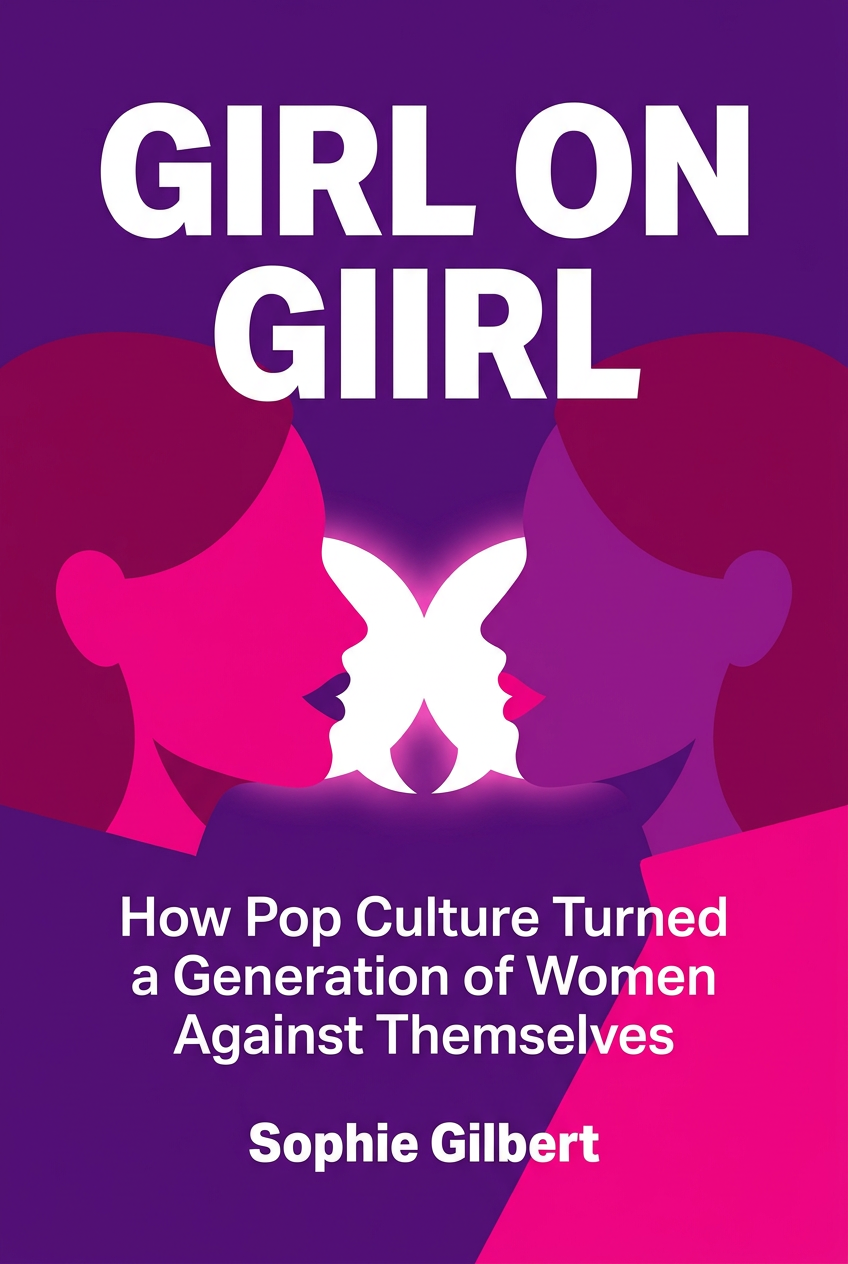
Girl on Girl

How Pop Culture Turned a Generation of Women Against Themselves

17 minSophie Gilbert

What's it about

Ever wonder why so many of your favorite shows and movies pit women against each other? From reality TV feuds to high-school dramas, this dynamic is everywhere. Discover the surprising ways pop culture has shaped female competition and what it means for your own relationships. You'll learn how media tropes have historically fueled jealousy, rivalry, and self-doubt among women. Uncover the hidden messages in everything from classic films to modern social media, and gain powerful insights to break free from these toxic narratives and build stronger, more supportive connections.

Meet the author

Sophie Gilbert is a Pulitzer Prize-winning staff writer at The Atlantic, where she covers culture, entertainment, and the intersection of gender and power. Drawing on more than a decade of cultural criticism and reporting on feminist issues, Gilbert's work explores the subtle and pervasive ways media shapes identity. Her unique perspective as a leading cultural critic provides the sharp analysis found in her examination of how pop culture has influenced a generation of women.
Listen Now

Opens the App Store to download Voxbrief

Girl on Girl book cover

The Script

We often treat the stories of women on screen as a simple reflection of reality, a mirror held up to the times. The plucky career woman, the manic pixie dream girl, the long-suffering wife—these are seen as characters born from the cultural air we breathe. But this assumes that these on-screen personas are passive creations, echoes of a pre-existing social script. The far more unsettling truth is that these characters are active architects. The stories we watch are quietly, persistently teaching women how to see themselves, building the very cages of expectation they pretend to merely observe. The performance of femininity on television is one of its most potent causes, shaping the internal monologues and external ambitions of millions who don't even realize they're in a classroom.

This subtle, powerful feedback loop is what fascinated Sophie Gilbert, a staff writer at The Atlantic who covers culture. For years, she watched as television evolved from the sanitized sitcoms of the past to the complex, often dark, antiheroines of the streaming era. She noticed that the evolution concerned identity itself. The characters were becoming more complicated, but the pressure to perform a certain kind of womanhood—even a 'strong' or 'liberated' one—remained. Gilbert wrote "Girl on Girl" to decode the unwritten curriculum these characters have been teaching us all along, revealing how a medium we consume for entertainment has profoundly shaped our own reality.

Module 1: The Commercialization of "Girl Power"

In the early 1990s, the culture felt electric. The riot grrrl movement exploded out of the punk scene with bands like Bikini Kill. Their version of "Girl Power" was a political demand. It was a call for safety, respect, and a revolution against a sexist system. But that raw, activist energy didn't last long on the main stage. A different force was coming.

This leads us to a pivotal shift. Mainstream media co-opted feminist language to sell a narrow, depoliticized vision of female empowerment. The Spice Girls burst onto the scene in the mid-90s, taking the "Girl Power" slogan and rebranding it. Suddenly, empowerment was about friendship, fun, and buying things. It was a sleepover turned into a career. This new "postfeminism" used words like "liberation" and "choice" to market a highly sexualized and consumer-driven femininity. You could show your power by shouting back at a catcaller or by choosing which platform shoes to buy. As Fortune magazine noted in 1997, teenage girls "just love to shop," and brands were eager to frame consumption as a form of self-expression.

And here's the thing. This wasn't just happening in music. Popular films and TV shows of the 90s reinforced a vision of women as either empowered consumers or pathetic trainwrecks. Think of Carrie Bradshaw in Sex and the City, a character defined by her consumerism, or Bridget Jones, perpetually torn between independence and a desperate need for male approval. These archetypes presented a paradox. They celebrated female freedom while simultaneously trapping it within very narrow, often self-destructive, boundaries. The message was clear. Your power came from what you bought and who you dated, not from collective action.

Building on that idea, the music industry itself became a battleground. Hip-hop in the 90s exposed a deep cultural fissure, with rampant misogyny on one side and the rise of hip-hop feminism on the other. Artists like Dr. Dre and Too $hort released tracks with violently misogynistic lyrics, normalizing hateful language against women. Record labels reportedly preferred this content over politically charged music. In response, a powerful counter-movement emerged. Artists like Queen Latifah and Salt-N-Pepa fought back. In her 1993 song "U.N.I.T.Y.," Queen Latifah directly challenged the culture with the line, "Who you calling a bitch?" These women were carving out a space for Black feminist voices within a hostile landscape, demanding respect and redefining power on their own terms.

Module 2: The Rise of Porno Chic and the Sexualized Trap

As the 90s bled into the 2000s, a new aesthetic took hold of mainstream culture. It was cynical, provocative, and deeply influenced by pornography. This aesthetic involved a specific, often degrading, visual language seeping into everything from fashion to art to politics.

Here's where it gets interesting. The aesthetics of pornography became mainstream, training culture to see women as objects and encouraging female self-objectification. This "porno chic" was everywhere. You saw it in the high-flash, explicit photography of Terry Richardson, whose work appeared in major fashion magazines. You saw it in music videos, like Fiona Apple's "Criminal" or Snoop Dogg arriving at the VMAs with two women on leashes. You even saw it in politics, when a porn parody film was made about Sarah Palin and Hillary Clinton. This was front and center, celebrated as edgy and subversive. The problem, as Gilbert points out, is that self-objectification is linked to a decrease in political activism. When you're taught to see yourself as an object, you're less likely to fight for social change.

So what happens next? The pressure on young women intensified. Early 2000s culture created an impossible "sexy virgin" trap for young female stars. Power, for a young woman in the public eye, was presented as exclusively sexual. It was rooted in youth, attention, and a willingness to be "in on the joke" of your own objectification. The 1999 Rolling Stone cover of Britney Spears, lying in bed in lingerie while clutching a Teletubby, perfectly captured this contradiction. She was presented as both a sexual object and a child, a carefully baited commercial trap. The 2003 Vanity Fair headline "It's Totally Raining Teens!" celebrated this trend, commodifying the youth of stars and turning up the heat on this unsustainable balancing act.

But flip the coin. While mainstream culture was pushing this narrow ideal, female artists were using their work to push back. Avant-garde female creators used explicit imagery to critique patriarchal power. In France, a movement called the "New French Extremity" emerged. Directors like Catherine Breillat used unsimulated sex and themes of degradation in films like Romance to make porn tropes psychologically explosive and deeply unsexy. The goal was to expose the grim reality of desire in a male-dominated world. These artists were asking a different question: What does it feel like to exist in a body that culture constantly tries to define for you?

This principle extends to the real world. The most shocking example came in 2004 with the Abu Ghraib prison scandal. The Abu Ghraib photos revealed a horrifying fusion of real-world torture and pornographic tropes. Photos showed U.S. soldiers forcing Iraqi prisoners into humiliating sexual poses, with one soldier leading a naked prisoner on a leash in a scene straight out of "classic dominatrix imagery," as Susan Sontag noted. The soldiers were staging their cruelty using a visual language they had learned from pornography. It was a chilling confirmation that the aesthetics of objectification and violence had deeply penetrated the culture, with devastating real-world consequences.

Read More