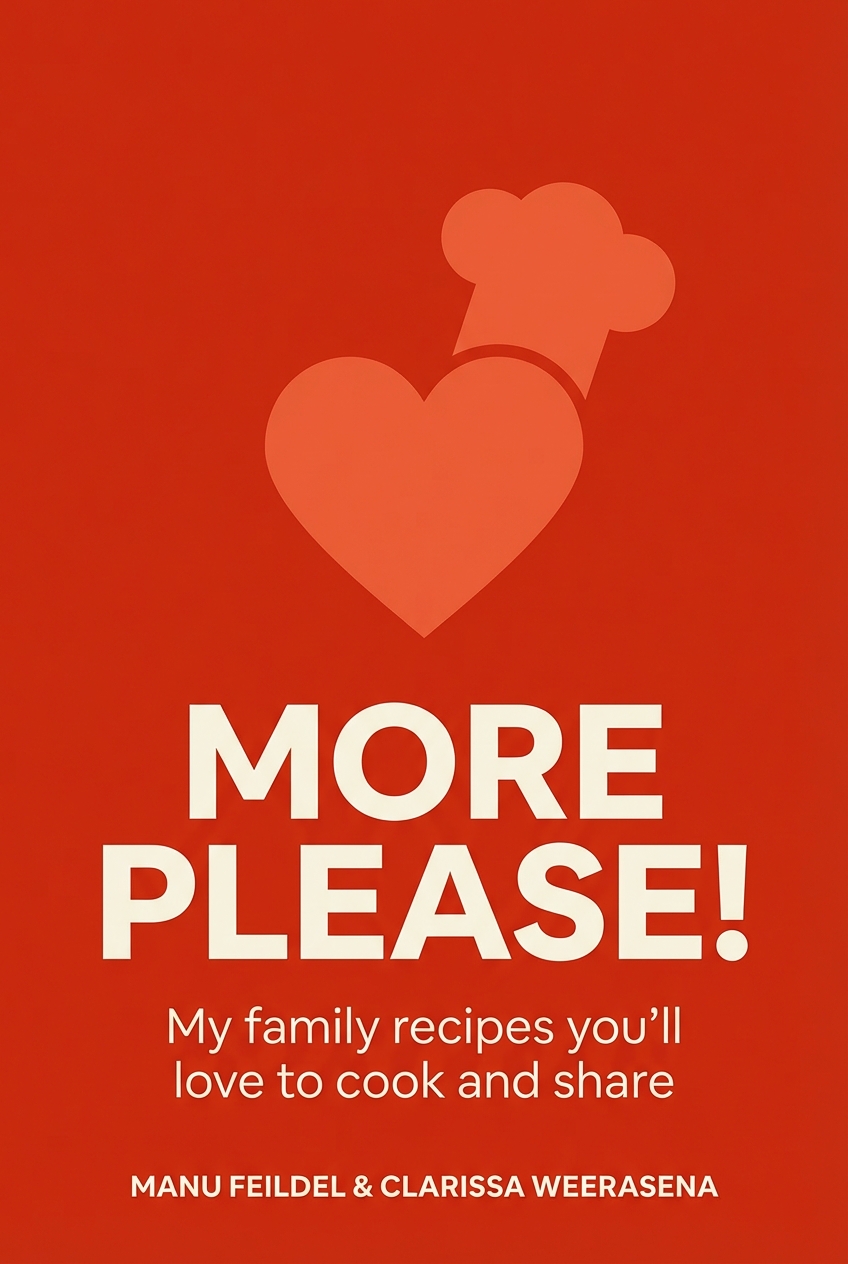
More Please!
My family recipes you'll love to cook and share
What's it about
Tired of complicated recipes that leave you stressed in the kitchen? Imagine effortlessly whipping up delicious, family-friendly meals that have everyone asking for seconds. This collection brings the joy back to cooking with simple, crowd-pleasing dishes you can master tonight. Discover the secrets behind celebrity chef Manu Feildel's most cherished family recipes. You'll learn how to transform everyday ingredients into standout meals, from comforting weeknight dinners to impressive weekend feasts. Get ready to cook with confidence and create food that's made to be shared.
Meet the author
As the discerning palate behind one of Australia's most celebrated chefs, Manu Feildel, Clarissa Weerasena is the home-cooking expert who keeps his family asking for more. Her Malaysian-Chinese and Sri Lankan heritage, combined with her life in Australia, has cultivated a unique culinary perspective shared in this book. These are the cherished, flavour-packed family recipes she has perfected over years, designed for connection and pure enjoyment around the dinner table.
Opens the App Store to download Voxbrief

The Script
The kitchen counter is a blizzard of flour, a small bowl of melted butter glows under the overhead light, and a tiny pair of hands is diligently, if messily, trying to fold a piece of pastry. There’s a smear of chocolate on a cheek, a giggle that erupts when a dusting of flour lands on a nose, and the warm, sweet smell of baking starts to fill the room. This is a scene of beautiful, happy chaos. It’s the kind of cooking where the process is just as important as the result, where the memories being made are the most vital ingredient. It’s about creating food that is celebrated—the kind of food that brings everyone to the table and leaves them asking for more.
This exact scene of joyful, sometimes messy, family cooking is the heart of Manu Feildel and Clarissa Weerasena's home. Manu, a celebrated French-born chef and beloved television personality, is known for his refined technique and passion for classic flavors. Clarissa, with her vibrant Malaysian and Sri Lankan heritage, brings a world of spice, color, and exciting new combinations to the table. They realized that the food they cooked for themselves and their children—a lively blend of their two distinct culinary worlds—was about creating a shared language of love and connection, one delicious meal at a time. They wrote "More Please!" to invite everyone into their kitchen, sharing the recipes that bridge their backgrounds and consistently make their own family smile.
Module 1: The Fusion Kitchen Philosophy
The core idea of "More Please!" is that your kitchen's greatest asset is your own unique story. For Manu and Clarissa, this means blending their diverse backgrounds—French technique meets Malaysian tradition. This is about creating a personal culinary language. Their approach shows that your family's heritage is a source of limitless culinary inspiration. Instead of searching for exotic, complicated recipes, they suggest looking inward. For example, Manu’s French training combines with Clarissa’s Nyonya roots, a culture that is itself a blend of Chinese and Malay influences. This results in dishes that are both familiar and surprising, like "My Asian-style Mussels." Manu admits this recipe is far from traditional. It's his personal interpretation, proving that authenticity can come from your own delicious spin on an idea.
This leads to a powerful realization. You can create restaurant-quality flavor. The book demystifies dishes that seem intimidating. Take the "My Easy SALMON TERRINE." A terrine sounds complex and labor-intensive, something reserved for a fancy bistro. But their version is designed for the home cook. It’s described as a dish that "couldn't be simpler," making it an accessible way to impress guests without spending hours in the kitchen. The secret is using good ingredients and a straightforward method.
So what's the first step to unlock this? Embrace simplicity and let high-quality ingredients do the work. A recurring theme is that the best meals often come from the simplest ideas. The recipe for "SARDINE Rillettes" is a perfect example. The authors call it possibly the "easiest, quickest and cheapest" recipe in the entire book. Yet, they praise it as being far better than a simple snack like beans on toast. This proves a vital point. Creating something deeply satisfying comes from focusing on quality. By focusing on quality—like using a good variety of mushrooms for a simple "MUSHROOMS on Toast"—you elevate the dish from basic to brilliant. The flavor is already in the ingredients; your job is just to bring it out.
Module 2: Redefining Weeknight and Weekend Meals
We've explored the philosophy of fusion cooking. Now, let's get practical and see how it applies to the daily grind. The book makes a clear distinction between the quick, flavorful meals needed for a busy week and the more leisurely dishes perfect for the weekend. The authors suggest that weeknight cooking can be both delicious and manageable through smart planning. They understand that after a long day, the last thing anyone wants is a complicated, multi-step recipe. Their solution is to front-load the work. For instance, a dish like "My Spaghetti Bolognese" takes a long time to cook to develop its rich flavor. The authors recommend making a large batch over the weekend. You can then freeze the leftovers in portions. This transforms a time-intensive meal into a quick, satisfying dinner for a busy Tuesday night.
Building on that idea, the book shows how to make classic dishes more accessible. You can adapt traditional recipes to suit modern tastes and ingredient availability. Many classic European dishes use ingredients that might not appeal to everyone. A great example is the "Pork Sausage and Mustard in Brik Pastry." The traditional French version uses andouillette, a type of tripe sausage. Recognizing that tripe "is not to everyone’s taste," Manu substitutes it with a more approachable pork and fennel sausage. The dish retains its French soul but becomes instantly more appealing to a wider audience. This is about intelligently reinterpreting a recipe so more people can enjoy it.
But what about those weekends when you have more time and want to create something special? Here's where the book encourages you to celebrate tradition. Lean on classic recipes that have stood the test of time for a reason. Some dishes are classics because their genius lies in simplicity and quality. Consider "Asparagus with Light Hollandaise." The recipe is incredibly simple, but its success depends entirely on one thing: seasonality. It's meant to be made in the spring, when asparagus is at its absolute peak. Paired with a well-made hollandaise, it’s a perfect dish. Similarly, "The Best Cheese Fondue" is about using the right cheeses—Emmental and Gruyère—and melting them carefully. These recipes remind us that sometimes, the best cooking is about honoring an ingredient and a tradition, without needing to reinvent the wheel.
And here's the thing. Every recipe, whether simple or complex, is an opportunity for connection. Cooking is a shared, joyful activity. Manu and Clarissa portray their kitchen as a place of collaboration. When one cooks, the other helps with prep or cleanup. They see meal planning as a shared passion. They extend this to their children with a simple rule: "taste before you judge." This fosters an open-minded approach to food from a young age. It transforms the act of eating from a necessity into a moment of shared discovery and joy.