All Books
Self-Growth
Business & Career
Health & Wellness
Society & Culture
Money & Finance
Relationships
Science & Tech
Fiction
Topics
Blog
Download on the App Store

On the Fence

14 minKasie West

What's it about

Ever felt caught between who you are and who you think you should be? Imagine juggling your tomboy identity with the sudden pressure to be more "girly," all while navigating a secret crush on one of your best friends—who also happens to be your neighbor. Dive into a story about self-discovery, friendship, and the hilarious, awkward moments that come with first love. You'll learn how embracing your true self, even when it’s complicated, is the key to figuring out what you really want in life and love, especially when it’s been right next door the whole time.

Meet the author

Kasie West is a bestselling author renowned for crafting relatable and swoon-worthy contemporary young adult romances that have captivated millions of readers worldwide. Growing up in a family with four brothers, she drew from her own life experiences of navigating sports, friendships, and family dynamics to write the authentic story of Charlie in On the Fence. West continues to live in California, where she finds inspiration for her heartwarming stories of love, self-discovery, and finding your own voice.
Listen Now

Opens the App Store to download Voxbrief

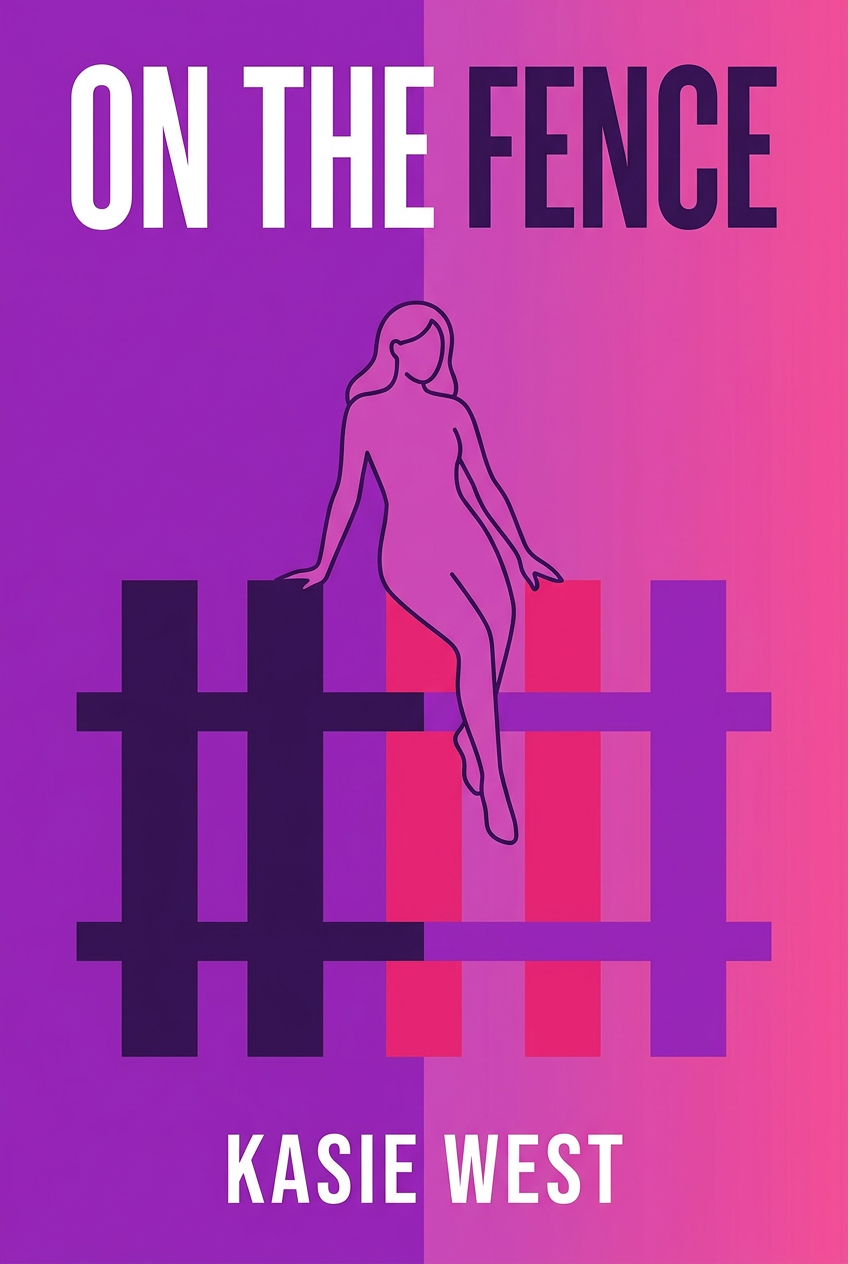
On the Fence book cover

The Script

There’s a strange, unspoken agreement that comes with growing up in a house full of boys. You learn to speak their language—a dialect of head-nods, video game slang, and sports statistics. You adopt their uniform of baggy t-shirts and worn-out jeans, not as a costume, but as camouflage. It’s a practical adaptation, a way to belong, to be one of the guys. You’re the honorary brother, the built-in teammate, the one they can talk to about anything… except for the things that matter. The problem is, camouflage is designed to make you blend in, to render you invisible. What happens when you want to be seen? What happens when the girl who has been hiding in plain sight all along starts to feel things that don't fit into the easy, platonic box her brothers—and their infuriatingly handsome best friend—have put her in?

This exact tension, the feeling of being caught between two identities—the 'one of the guys' and the girl who secretly wants the fairytale—is the world Kasie West brings to life. She grew up surrounded by an all-male household, with a father and three brothers, an experience that directly shaped her understanding of this unique dynamic. West noticed how this environment could forge incredible bonds of friendship and loyalty, but also create bewildering blind spots, especially when it came to romance. She channeled that personal history, the humor and the heartache of being the only girl in a boy's world, into the story of a character who has to figure out how to get off the fence of her own making and finally be seen for who she truly is.

Module 1: The Authenticity Dilemma

We often believe we must present a polished, curated version of ourselves to be accepted. This is especially true in professional settings. We might downplay our niche hobbies or suppress strong opinions to fit a certain corporate mold. Charlie’s story begins here. She is completely at home in her world of sports, playful competition, and casual banter with her brothers. But when forced to get a job, she enters a new social arena where her authentic self feels out of place. This introduces a powerful insight: Conforming to external expectations often creates an internal conflict that erodes self-confidence.

Charlie’s first instinct is to resist. She deliberately wears old, worn-out clothes to job interviews, hoping to fail. When she lands a job at a boutique, she feels like a fraud. Her boss, Linda, asks her to wear more fashionable clothes. Her new coworker, Amber, talks about makeup and social events. Charlie feels immense pressure to adapt. She starts hiding her new, more feminine clothes from her brothers. She fears their ridicule. She worries they will see her as "playing pretend." This creates a split. There is "home Charlie" and "work Charlie." This duality is exhausting and makes her feel lopsided and disconnected from herself.

The professional parallel is clear. Think about the last time you were in a meeting and held back a good idea because it felt too unconventional. Or the time you adopted a more formal, less authentic communication style to impress a senior leader. These small compromises can accumulate. They create a gap between your true self and your professional persona.

So, how do you bridge this gap? The book suggests that true connection requires vulnerability. Charlie’s most meaningful interactions happen when she drops the act. She has late-night talks with her neighbor, Braden, over the fence that separates their yards. In the dark, without the pressure of being seen, she can be honest. She admits her fears, her lies, and her grief over her mother's death. This "fence" becomes a sanctuary for authenticity. It's in these moments of vulnerability that their bond deepens. The lesson here is to find your own version of "the fence." It might be a trusted mentor, a close colleague, or even a journaling practice. You need a space where you can process your experiences without a filter.

Furthermore, suppressing your true self can make others feel you are inauthentic or untrustworthy. When Charlie starts dating a boy named Evan, she pretends to know less about baseball than she does. She sits on the sidelines during a football game she would normally play in. She believes this makes her more appealing. Braden calls her out on it. He tells her, "If you can’t be yourself around him, then you shouldn’t be dating him." Her inauthenticity creates conflict. It sends mixed signals and ultimately undermines the potential for a real connection. People can sense when you're not being genuine. It creates a subtle distance, even if they can't pinpoint why. Authenticity, even when it feels risky, is the foundation of trust.

Module 2: Navigating Grief and Emotional Avoidance

Everyone has unresolved issues. It could be a past failure, a difficult relationship, or a personal loss. We often develop coping mechanisms to avoid dealing with the pain directly. For some, it's overworking. For others, it's distraction. In "On the Fence," Charlie's primary coping mechanism is physical activity. This brings us to a crucial observation about human behavior: We often use physical or professional exertion to avoid confronting deep emotional pain.

Charlie’s mother died in a car accident when she was a young child. She has very few memories of her, and the family rarely speaks of it. Instead of processing her grief, Charlie runs. She runs until her chest no longer feels tight. She plays sports with an intense, all-consuming focus. This physical exhaustion helps her sleep without the recurring nightmares she has about her mother's death. When her new job disrupts her running schedule, the nightmares return. Her emotional distress surfaces.

This is a pattern many high-achievers will recognize. Faced with a personal crisis, do you lean in or do you bury yourself in your work? Launching a new product or closing a major deal can feel more manageable than confronting a painful emotion. But here’s the thing: Avoidance is a delay tactic. The unresolved emotions don't disappear. They manifest in other ways, like anxiety, burnout, or strained relationships. Charlie’s avoidance leads her to lie. When her boss asks about her mother, Charlie impulsively says she's still alive. This lie creates a mountain of guilt, which only adds to her emotional burden.

So what's the path forward? The book suggests that healing begins when you allow yourself to confront the uncomfortable truth. For years, Charlie’s family protected her from the full story of her mother's death. They believed they were shielding her from pain. But this secrecy only created more confusion and isolation. The healing process could truly begin when Charlie was ready to demand the truth—and her family was ready to share it. She learns her mother's death was a suicide. The revelation is devastating. It shatters the idealized image she had of her mother. But it also allows her to grieve the real person she lost, not a fantasy.

This leads to a final, powerful point on this topic. Allowing others to support you is a sign of strength. After learning the truth, Charlie’s brother Jerom finds her at their mother's grave. He tells her, "This isn’t our family. This is something that happened to our family... Let us be here for you." For the first time, the family begins to talk about their mother, sharing memories and processing their collective grief. Charlie realizes that carrying the burden alone was a choice. Opening up to her family and friends, like Braden, provides the support she needs to move forward. In a professional context, this means building a support network you can lean on during tough times. Vulnerability with the right people is a critical resource.

Read More