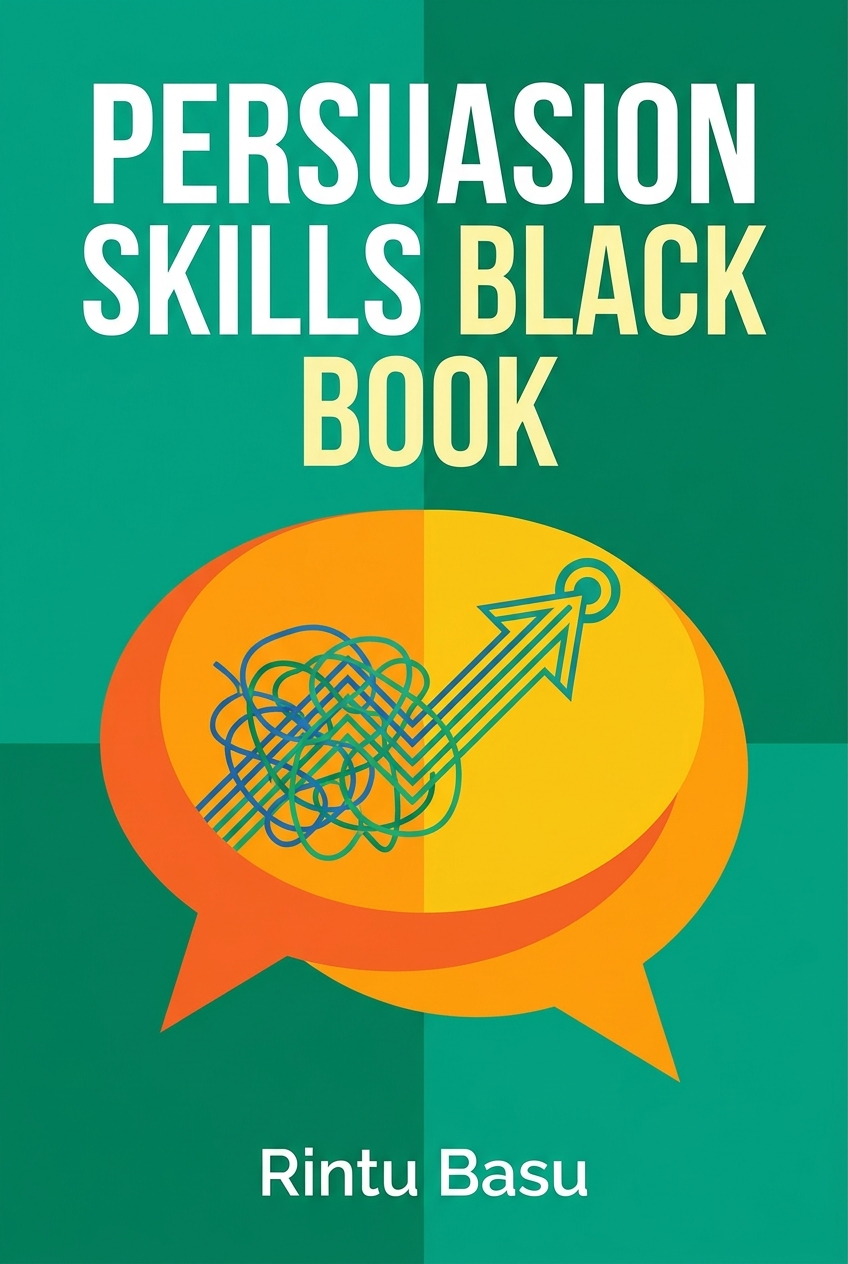
Persuasion Skills Black Book
Practical NLP Language Patterns for Getting The Response You Want
What's it about
Have you ever felt like your great ideas get ignored? Learn how to make people not only listen but enthusiastically agree with you. This guide unlocks the subtle art of persuasion, ensuring you get the "yes" you want in any conversation, negotiation, or presentation. Discover the secret language patterns of master persuaders, drawn from the world of Neuro-Linguistic Programming NLP. You'll learn how to bypass resistance, build instant rapport, and frame your message so compellingly that others feel your idea was their own. Stop wishing for influence and start creating it.
Meet the author
Rintu Basu is an international NLP trainer and coach, personally certified by co-creator Dr. Richard Bandler as one of the world's few Licensed Master Trainers of NLP. For over two decades, he has demystified complex persuasion techniques, translating them from the world of therapy and covert influence into practical, everyday language. His unique focus is on making these powerful communication skills accessible and ethical for professionals in business, sales, and management to achieve their desired outcomes with integrity.
What's it about
Have you ever felt like your great ideas get ignored? Learn how to make people not only listen but enthusiastically agree with you. This guide unlocks the subtle art of persuasion, ensuring you get the "yes" you want in any conversation, negotiation, or presentation. Discover the secret language patterns of master persuaders, drawn from the world of Neuro-Linguistic Programming NLP. You'll learn how to bypass resistance, build instant rapport, and frame your message so compellingly that others feel your idea was their own. Stop wishing for influence and start creating it.
Meet the author
Rintu Basu is an international NLP trainer and coach, personally certified by co-creator Dr. Richard Bandler as one of the world's few Licensed Master Trainers of NLP. For over two decades, he has demystified complex persuasion techniques, translating them from the world of therapy and covert influence into practical, everyday language. His unique focus is on making these powerful communication skills accessible and ethical for professionals in business, sales, and management to achieve their desired outcomes with integrity.
The Script
You've reached the end of the free preview.