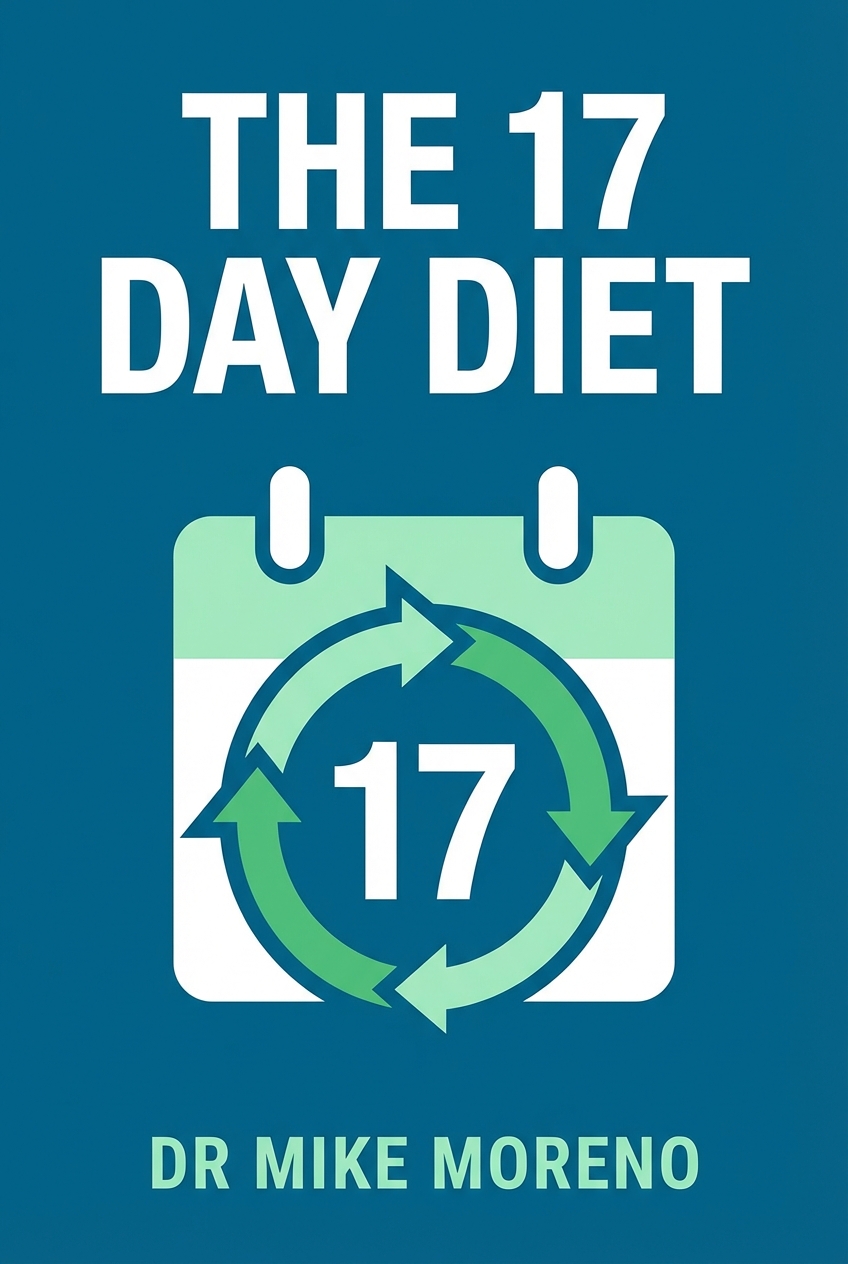
The 17 Day Diet
What's it about
Tired of diets that promise the world but deliver slow, frustrating results? What if you could safely lose weight and see a difference on the scale in just the first few days? Get ready to jump-start your metabolism and shed pounds faster than you thought possible. Discover Dr. Mike Moreno’s revolutionary four-cycle plan, designed to keep your body guessing and prevent plateaus. You'll learn which foods burn fat, which ones to avoid, and how to cycle your eating habits every 17 days to maximize weight loss and keep it off for good.
Meet the author
Dr. Mike Moreno is a board-certified family medicine physician and graduate of the University of California, Irvine, College of Medicine, trusted by millions for his practical approach to health. Frustrated by seeing patients struggle with complex diets, he developed his signature 17-day cycles to prevent the boredom and metabolic plateaus that derail weight loss. His method combines his medical expertise with a deep understanding of human motivation, creating a plan that is both effective and sustainable for real people with busy lives.
Opens the App Store to download Voxbrief

The Script
In the world of nutrition and weight loss, one number stands out for its frustrating consistency: 95%. That's the estimated percentage of people who regain all the weight they lost, and often more, within one to five years. This is a failure of design. Traditional diets often demand prolonged deprivation, leading to metabolic slowdown and psychological burnout. The human body is hardwired to resist starvation, a survival mechanism that turns long-term, low-calorie plans into a battle against our own biology. When initial results are slow and the finish line is months or years away, motivation plummets, and the cycle of yo-yo dieting continues, leaving people feeling more defeated than when they started.
The initial phase of any diet is a critical window. Studies on habit formation show that early, visible success is a powerful predictor of long-term adherence. Seeing the number on the scale drop quickly is tangible feedback that fuels commitment. When a plan delivers rapid results in the first couple of weeks, it reinforces the new behaviors and provides the psychological momentum needed to push through plateaus. This is where the concept of metabolic confusion comes in—strategically varying caloric intake to prevent the body from adapting and slowing down its fat-burning processes.
This exact frustration with the 95% failure rate is what drove Dr. Mike Moreno, a family practice physician in San Diego, to develop a new approach for his patients. He saw countless individuals start strong on conventional diets only to give up when progress stalled and motivation waned. He realized the problem was the protocol, not the person. Drawing on his medical understanding of metabolism and the psychology of motivation, he engineered a system built on 17-day cycles. This structure was designed specifically to produce rapid initial results, use metabolic confusion to keep the body guessing, and break the entire weight loss journey into manageable, motivating sprints instead of an endless marathon.
Module 1: The Four-Cycle System for Metabolic Reset
Most diets fail because of two things: boredom and plateaus. Your body is an incredibly efficient machine. It adapts. Give it the same low-calorie diet for too long, and your metabolism slows down to conserve energy. Weight loss grinds to a halt. Dr. Moreno designed a system to prevent this.
The core of the book is a four-part cyclical structure. Each cycle lasts 17 days. This short duration makes the diet feel manageable. It’s a series of short sprints. The real genius, however, is how the cycles work together. The diet intentionally confuses your metabolism to accelerate fat loss. By changing calorie counts and food types every 17 days, the program prevents your body from adapting. Your metabolism is kept on its toes, constantly working to adjust. This strategy of "body confusion" is the engine driving the entire system.
Let's look at the first two cycles.
Cycle 1: Accelerate. This is the rapid-results phase. It's designed to deliver a significant loss, up to 12 pounds in 17 days. This cycle is strict. It cleanses your system by eliminating sugar, processed foods, and most carbs. You focus on unlimited lean proteins and "cleansing" vegetables. The goal here is twofold. First, to improve digestion and flush excess water. Second, to provide a powerful motivational win right at the start.
Cycle 2: Activate. Here's where body confusion kicks in. In this cycle, you alternate days. One day you follow the higher-calorie "Activate" plan, which reintroduces some healthy starches. The next day, you return to the lower-calorie "Accelerate" plan. This zig-zag approach resets your metabolism. It prevents the slowdown that causes plateaus. This is based on the concept of alternate-day calorie restriction, which studies show can promote sustained fat loss.
Moving on from rapid loss, the diet transitions you toward a sustainable lifestyle. The program systematically reintroduces food groups to build lasting habits.
Cycle 3: Achieve. This phase focuses on habit formation. You learn portion control as more food groups are added back. This includes more starches, fruits, and even a small, optional allowance for alcohol. Weight loss slows to a more steady pace. The exercise recommendation also increases. This cycle teaches you how to eat in a balanced way for the long term.
Cycle 4: Arrive. This is the maintenance plan. It’s a new way of living. From Monday to Friday lunch, you follow the rules of one of the earlier cycles. Then, from Friday dinner through Sunday, you can enjoy your favorite foods in moderation. This "strategic cheating" keeps your metabolism fired up and prevents the psychological burnout from total restriction.
And here's the thing. The diet prioritizes whole, nutrient-dense foods over processed fads. There are no magical pills or pre-packaged meals. The food lists across all cycles emphasize lean proteins, fresh vegetables, low-sugar fruits, and healthy fats. Dr. Moreno argues that excess weight is a sign of metabolic imbalance. The diet works by optimizing digestion and retraining your metabolism to burn fat efficiently. It’s about giving your body the right fuel.
Module 2: The Science of What to Eat and Why
Dr. Moreno doesn't just tell you what to eat. He explains the metabolic logic behind each food group. This empowers you to make smart decisions, even when you're off-script.
First, protein is positioned as the primary fat-burning nutrient. This is a key principle. Your body uses more energy to digest protein than it does for fats or carbs. This is called the thermic effect of food. Eating lean protein like chicken or fish actually boosts your calorie burn. Protein also stimulates glucagon, a hormone that signals your body to use stored fat for energy. It preserves muscle mass during weight loss, which is critical for keeping your metabolism high. Finally, it keeps you feeling full, which helps control your appetite.
Next up, the book clarifies the role of carbohydrates. You must manage carbohydrate intake based on your body’s sensitivity. Many people are "carbohydrate sensitive." This means their bodies are highly efficient at converting excess carbs into fat. This can be due to genetics, chronic stress, or hormonal changes. The diet addresses this by starting with very low carbs in Cycle 1. It then gradually reintroduces "good carbs" like whole grains and legumes in later cycles. A crucial rule is to avoid carbs after 2 p.m. The logic is simple. Carbs eaten earlier provide fuel for your day. Carbs eaten at night are more likely to be stored as fat while you sleep.
But flip the coin. Not all macronutrients are villains. Healthy fats and probiotics are essential tools for weight loss. The diet encourages "friendly fats" from sources like olive oil and fish. Omega-3 fatty acids, found in salmon, have been shown to boost metabolism and help people lose more weight on a reduced-calorie diet. Probiotics, the friendly bacteria in foods like yogurt and kefir, are also a major focus. Dr. Moreno explains that your gut microbiome plays a huge role in digestion and even how many calories you absorb from food. A healthy gut can be a powerful ally in weight management.
Finally, let's talk about hydration. Water and green tea are non-negotiable for metabolic function. The book is strict about this. You need at least eight glasses of water a day. Dehydration slows down your liver's ability to metabolize fat. Proper hydration helps your kidneys function, flushes out waste, and even reduces water retention. Green tea is also highly recommended. It contains compounds called catechins that increase thermogenesis, your body's rate of burning calories to produce heat. It's a simple habit with a measurable metabolic benefit.