All Books
Self-Growth
Business & Career
Health & Wellness
Society & Culture
Money & Finance
Relationships
Science & Tech
Fiction
Topics
Blog
Download on the App Store

The Baby on My Doorstep

An utterly unputdownable psychological thriller full of suspense

12 minMiranda Smith

What's it about

What would you do if a baby appeared on your doorstep, with a note claiming it's your husband's child? For Georgie, this nightmare becomes a reality, threatening to shatter her perfect life. This discovery is just the beginning of a twisted path into her husband's secret past. You'll uncover the dark secrets and lies that bind this seemingly perfect couple together. As Georgie digs for the truth, you'll question everything you think you know about her, her husband, and the mysterious woman who left the baby. Can you piece together the clues before it's too late?

Meet the author

Miranda Smith is a former criminal psychologist with over a decade of experience working with the UK’s most notorious offenders, lending chilling authenticity to her bestselling thrillers. This unique insight into the darker side of human nature inspired her to write, exploring the complex motivations that drive ordinary people to do extraordinary things. After years of analyzing real-life cases, Miranda now channels her expertise into crafting suspenseful stories that are as psychologically compelling as they are unputdownable, all from her quiet home in the English countryside.
Listen Now

Opens the App Store to download Voxbrief

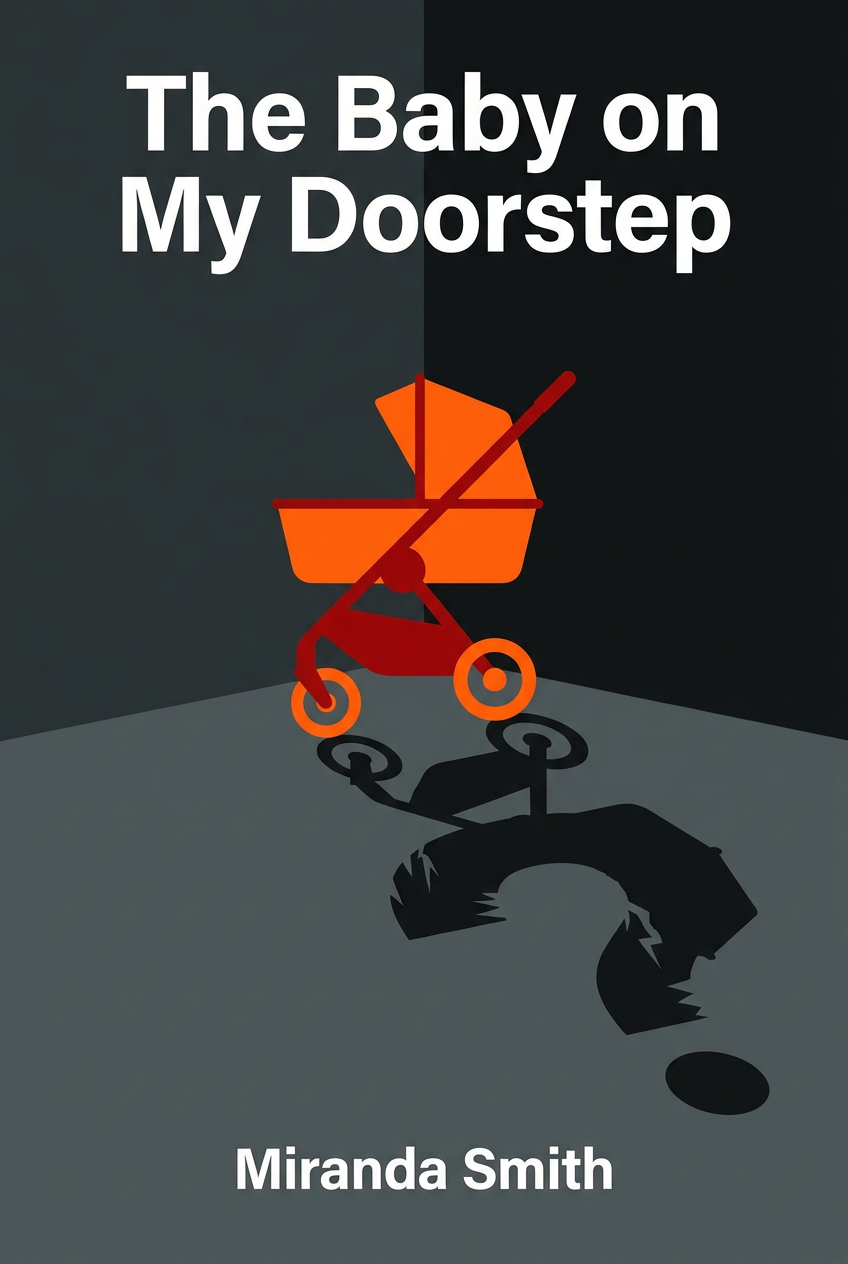
The Baby on My Doorstep book cover

The Script

The floor of the nursery is an obstacle course of good intentions. One parent, armed with a developmental psychology textbook, arranges a set of high-contrast, non-toxic wooden blocks into a perfect, stimulating arc. Every placement is precise, a lesson in spatial reasoning. The other parent, guided by a whisper of intuition, simply sits on the floor and gently knocks one block into another, making a soft 'clonk' sound that elicits a gurgle of delight from their infant. Both parents love their child. Both want the best for them. Yet, one is building a curriculum, while the other is building a connection. In the quiet moments of parenthood, these two approaches can feel like they exist in different worlds, one driven by what we’re told is right, and the other by a feeling we can’t quite name.

This subtle tension—between doing things 'by the book' and trusting an unspoken, instinctual bond—is the landscape Miranda Smith explores. As a clinical social worker specializing in family dynamics and attachment, Smith spent years observing the silent conflicts that arise even in the most loving homes. She noticed how often the pressure to be a 'perfect' parent created invisible walls, drowning out the quieter, more essential language of care. Frustrated by clinical case studies that felt detached and cold, she decided to write a story that would give this internal struggle a pulse. She wanted to place readers directly inside the heart of a woman forced to listen to the faint, terrifying, and ultimately life-changing rhythm of her own intuition when a stranger’s baby appears on her doorstep.

Module 1: The Echoes of Trauma

The story opens with Emily, a woman hollowed out by grief. Her sister, Erin, was murdered a year ago, and the case remains unsolved. This single event has become the gravitational center of Emily's life, pulling everything else into its orbit. The author shows how unresolved trauma fundamentally alters your perception of the world. Emily describes her sister's death as taking "any semblance of happiness in my own life, stripping away all the good things about me like sandpaper against wood." This is a complete erosion of self. Her marriage to Byron has collapsed under the weight of her obsession with the case. He wanted her to move on. She couldn't. The arrival of divorce papers is just another piece of wreckage in a life already in ruins.

This trauma sharpens her every fear. So, when a knock comes at the door of her isolated home late at night, her mind immediately jumps to the worst-case scenario. This leads to the second key insight: past crises create patterns of fear that shape your present reactions. Emily's childhood with an alcoholic mother and her sister's history with an abusive ex-boyfriend, Adam, have conditioned her to expect danger. She grabs a knife, thinking about the odds of "two sisters being murdered." Her history is an active threat assessment tool that sees danger everywhere.

Finally, the author reveals the deep-seated guilt that fuels Emily's obsession. Her last conversation with Erin was an argument. Emily walked out, angry. Now, she's haunted by the finality of that moment. This reveals a painful truth: moments of conflict are re-evaluated with profound regret after a loss. Emily tortures herself with the belief that her argument was "the first fallen domino" that led to her sister's murder. "I'll always blame myself for that," she says. This self-blame is the engine driving her entire life. It's why she can't let go. It's why she can't heal. And it's the fragile state she's in when she opens her door and finds a crying baby.

Module 2: The Unraveling

We've seen how Emily's life is defined by a single, paralyzing belief: her sister is dead. Now, the discovery of the baby on her doorstep shatters that certainty. This module explores how a single piece of new information can force a complete re-evaluation of your reality. The social worker, Tabitha, delivers the news. DNA tests confirm the baby is biologically related to Emily. Since Emily isn't the mother, Tabitha presents the only other possibility: the baby belongs to her missing sister, Erin. This is where the author introduces a critical turning point: shocking revelations can obliterate your established understanding of the world. Emily's mind feels like it's "stuck in a hurricane." The idea that Erin might be alive throws her entire year of grief and certainty into chaos.

This revelation deepens the mystery. If Erin is alive, where is she? Why would she abandon her child? This is the core tension of the story. The search for a murderer transforms into a search for a missing mother. And here's the thing. This new reality forces Emily to act. Despite her grief and the recent end of her marriage, a primal, protective instinct can emerge unexpectedly in a crisis. The author shows this beautifully. Emily’s analytical fear is overridden by a need to care for this vulnerable infant. She agrees to take custody of the baby, her niece. This decision is rooted in a lifelong sense of duty. She has always felt it was her "responsibility to protect" Erin. Now, that duty extends to Erin's child.

This shift in responsibility changes everything. Suddenly, Emily has a new purpose. The baby, whom she names Rosie, becomes a tangible link to her missing sister. This illustrates a powerful insight: a new responsibility can reignite hope and provide purpose in the face of overwhelming grief. Emily sees Rosie as "part of Erin" and a reason to restart her investigation with renewed determination. She's seeking answers for the living. The baby is a catalyst for action, pulling Emily out of her passive mourning and into an active search for the truth.

Read More