All Books
Self-Growth
Business & Career
Health & Wellness
Society & Culture
Money & Finance
Relationships
Science & Tech
Fiction
Topics
Blog
Download on the App Store

The Mitford Affair

A Novel

14 minMarie Benedict

What's it about

Have you ever wondered what happens when personal loyalty clashes with national duty? Explore the scandalous lives of the Mitford sisters, high-society darlings who captivated England, and discover how their choices could threaten to tear a country apart on the brink of war. You'll get a front-row seat to the glamour and danger of 1930s Europe. Follow novelist Nancy Mitford as she suspects her sisters, Diana and Unity, of being more than just Nazi sympathizers. Uncover the secrets, betrayals, and impossible choices she faces while deciding where her ultimate allegiance lies.

Meet the author

Marie Benedict is the New York Times and USA Today bestselling author of eight historical novels, known for unearthing the hidden stories of influential women. A former lawyer with a history degree, Benedict uses her sharp, investigative eye to delve into the past and bring to life complex figures like the Mitford sisters. Her unique background allows her to meticulously research and powerfully narrate the often-overlooked but pivotal roles women have played throughout history, illuminating their struggles, triumphs, and enduring legacies.
Listen Now

Opens the App Store to download Voxbrief

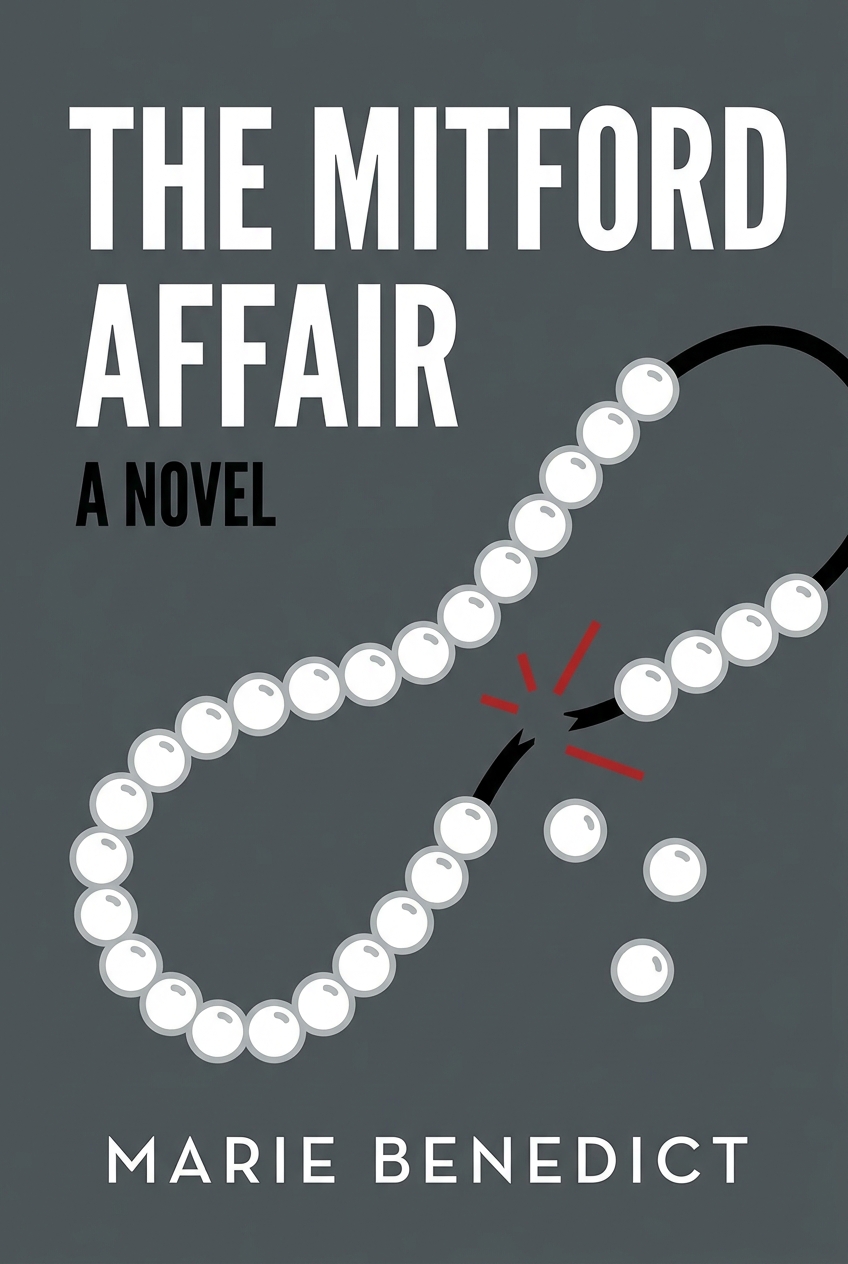
The Mitford Affair book cover

The Script

In 1997, when Princess Diana’s brother, Charles Spencer, delivered her eulogy, he spoke of her as ‘the most hunted person of the modern age.’ It was a stunning indictment of the media’s relentless pursuit, a phenomenon that turned a woman's life into a global spectacle. We understand this dynamic now; we see the intense pressure, the impossible choices between public duty and private happiness. We've watched modern royals navigate this same treacherous terrain, where every gesture is scrutinized and every relationship becomes public property. But what happens when the glare of the spotlight isn't just about celebrity, but about ideology? What happens when a family, already living under a microscope, finds itself at the heart of a global political crisis, with sisters choosing opposing sides in the lead-up to a world war?

This exact dilemma—the explosive intersection of family loyalty, fame, and fascist ideology—is what captivated historical novelist Marie Benedict. She came across the story of the Mitford sisters, a glamorous and aristocratic British family who became darlings of the press in the 1930s. But beneath the society pages, a dangerous schism was forming. Two of the sisters, Diana and Unity, became enthralled with Hitler and the rising Nazi party, while another, Nancy, a novelist herself, grew horrified and began secretly feeding information to British intelligence. Benedict, known for unearthing the hidden stories of influential women in history, saw a chilling and profoundly relevant drama. She felt compelled to explore how a family so close could be torn apart by the siren song of powerful, dangerous ideas, forcing one sister to make an unthinkable choice between her country and her blood.

Module 1: The Seduction of Charisma and Ideology

The story opens in the 1930s, a world of aristocratic glamour and deep social anxiety. The Mitford sisters are at the center of this world. They are beautiful, wealthy, and bored. This combination proves to be a dangerous vulnerability. The first major theme is how personal magnetism and a search for meaning can lead people down dark paths.

We see this through Diana Mitford. She has a perfect life. A wealthy husband, beautiful children, and social adoration. Yet, she confesses to a "deep sense of aimlessness and unrest." She is terribly bored. This is a critical insight. Privilege and boredom create a vacuum that dangerous ideas can fill. Diana isn't looking for political theory. She's looking for a spark. She finds it in Sir Oswald Mosley, the charismatic leader of the British Union of Fascists. He is her escape from the mundane. His radical vision gives her a sense of purpose she desperately craves.

This leads to a second key point. Charismatic leaders offer a sense of belonging that can override traditional loyalties. Mosley's power isn't just political; it's personal. Diana is drawn to his strength, his certainty. Her sister Unity feels a similar pull, but her obsession is with Adolf Hitler. She feels like an awkward outsider in her own family. She lacks Diana's beauty or Nancy's wit. So, she seeks validation elsewhere. Fascism gives her an identity. It makes her feel special. When Hitler gives her a pin, she feels seen and important for the first time.

And it doesn't stop there. The sisters' political choices create a deep fracture within the family. Nancy, a writer with a sharp, satirical mind, is horrified. She sees Mosley as a philandering political creature. She watches with alarm as Diana and Unity fall under his spell. This introduces the final core idea of this module. Ideological divides are personal and create deep, painful rifts in families. The sisters' differing political paths set the stage for a devastating conflict, turning love into suspicion and loyalty into a weapon.

Module 2: The Performance of Power

Now, let's explore how these ideologies took hold. The book masterfully shows that 1930s fascism wasn't just a set of policies. It was a performance. It was theater, designed to create an emotional, almost religious, fervor.

The British Union of Fascists, or BUF, didn't win followers with policy papers. They won them with spectacle. Benedict describes a BUF rally at Albert Hall. It's a sea of black shirts. The music is orchestrated. Mosley's entrance is timed for maximum dramatic effect. He struts and stomps, his voice rising to a crescendo. For followers like Diana and Unity, it’s an electric, sacred experience. This reveals a crucial element of these movements. Extremist politics rely on theatricality and a cult of personality to create emotional buy-in. It bypasses rational thought and appeals directly to a desire for strength and order.

But the performance extends beyond the rally. It infiltrates personal lives. When Diana and Unity travel to Germany, they learn to perform for a new audience: the Nazi elite. This is where we see a second powerful insight. Adherence to an ideology requires conforming to its aesthetic and social codes. At a Nazi rally in Nuremberg, an official advises Unity to wipe off her lipstick. Hitler, he explains, prefers a more "natural" Aryan look. Unity complies instantly. She is adopting an entire identity, right down to her appearance, to gain acceptance.

Here’s the thing, though. This performance masks a terrifying reality. At the BUF rally, protestors interrupt the spectacle. The black-shirted members don't just escort them out. They systematically and brutally assault them. The glamour and order of the performance instantly give way to organized violence. This is the book’s stark warning. The polished facade of extremist movements is designed to conceal a violent core. The black shirts are the uniform of a paramilitary force ready to crush dissent. The theatricality is a tool of intimidation, and the violence is a central feature.

Read More