All Books
Self-Growth
Business & Career
Health & Wellness
Society & Culture
Money & Finance
Relationships
Science & Tech
Fiction
Topics
Blog
Download on the App Store

We Met Like This

A Novel

13 minKasie West

What's it about

What if the perfect summer romance started with a case of mistaken identity? Imagine finding a mysterious list of romantic scavenger hunt clues—and deciding to follow them, hoping to meet the guy who wrote it. That's exactly what happens to Chloe, who's ready for an unforgettable adventure before college. As you follow Chloe's journey, you'll see her team up with an unlikely, and admittedly annoying, new neighbor to solve the puzzle. Discover how their reluctant partnership blossoms into something more amidst quirky challenges and unexpected twists. This story explores how sometimes, the love you're looking for finds you when you least expect it, and not at all in the way you planned.

Meet the author

Kasie West is a bestselling author of over twenty young adult novels, celebrated for her ability to capture the heartwarming and awkward moments of first love. Growing up in a large family in central California, she was surrounded by the kind of lively, chaotic, and loving dynamics that fill the pages of her books. This real-life inspiration allows her to craft relatable characters and swoon-worthy romances that resonate deeply with readers, making her a beloved voice in contemporary YA fiction.
Listen Now

Opens the App Store to download Voxbrief

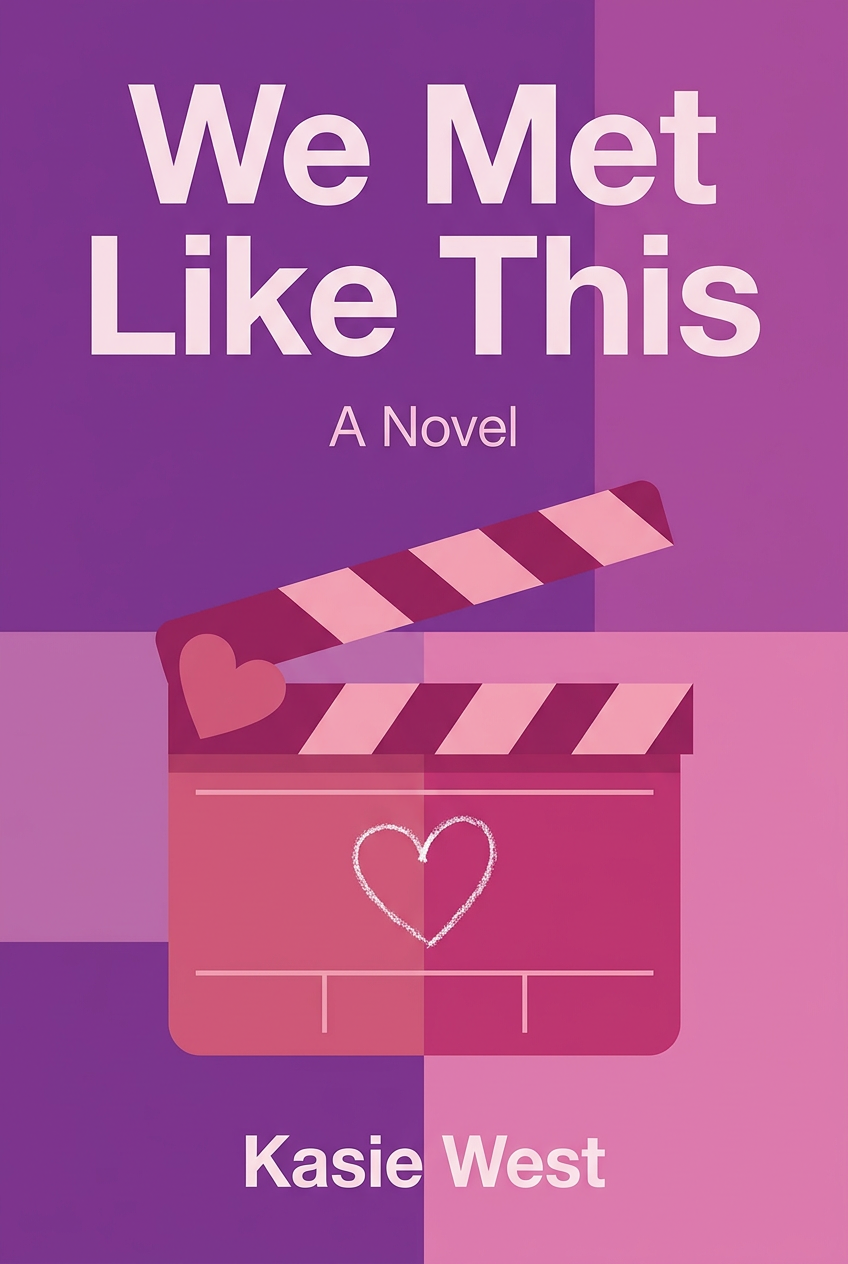
We Met Like This book cover

The Script

You’re in a new city, a place where every face is a stranger and every street corner is a blank page. You’re navigating by instinct, following the hum of the crowd toward a film festival you’ve been dreaming of attending. Then, a sudden jolt. Your bag is gone—wallet, phone, everything. Panic sets in, cold and sharp. Just as the weight of your isolation threatens to crush you, a voice cuts through the noise. A boy, holding your bag, looking just as bewildered as you feel. He found it a block away. You stammer your thanks, relief washing over you, and you both go your separate ways, two ships passing in the urban night, the moment already fading into a quirky travel story you might tell one day. But what if that wasn't the end of it? What if, the next day, you see him again, this time working at the very festival you came for? The city suddenly feels smaller, the encounter less random. It starts to feel like the universe is playing a little game, nudging two people together, testing to see if a single, fleeting moment of chaos and kindness can become the first line of a much longer story.

This exact scenario—the lost bag, the chance reunion, the spark of a 'what if'—is the seed from which Kasie West's novel, We Met Like This, grew. West has built a career crafting stories that capture the delightful, often awkward, and surprisingly profound moments that define young love. She finds her inspiration in the small, relatable collisions of everyday life that feel touched by fate. For West, a young adult fiction author known for her contemporary romances, exploring these near-misses and second chances is a way to answer a question that fascinates her: How many of life's most important relationships begin with a simple, unplanned event that could have easily gone another way? The book is her exploration of that happy accident, turning a moment of travel-disaster into the beginning of an unforgettable connection.

Module 1: The Modern Dating Paradox

The first major theme explores the frustrating gap between our romantic ideals and the pragmatic reality of modern dating. We often crave an organic "meet-cute," that spontaneous, movie-like encounter. But the reality is often swiping through apps, enduring awkward dates, and feeling like we're giving up on romance itself.

The protagonist, Margot, embodies this conflict perfectly. She's deeply skeptical of dating apps, calling them an "unromantic scam." She believes true connection happens through shared experiences, not algorithms. Yet, her roommate Sloane argues that avoiding apps is just "narrowing your field of potentials." This sets up a core tension. So the first insight here is that you must reconcile your romantic ideals with practical dating strategies. It's about recognizing that modern tools, while imperfect, expand your opportunities. Margot reluctantly uses the apps, viewing it as a chore. But this pragmatic step is what keeps her in the game, preventing her from falling back into unhealthy patterns.

This leads to a second, more subtle insight. Sometimes, the connections we dismiss are the ones with the most potential. Margot's recurring match is a man named Oliver. Their first date was a disaster. He was arrogant, she was bored, and their conversation was nonexistent. Yet, their physical chemistry was undeniable. Over three years, they keep matching on apps, developing a witty, text-based friendship. They aren't trying to date each other, and that freedom allows for an authentic connection to grow. So, re-evaluate connections that failed in one context but thrive in another. A bad first date doesn't always mean zero compatibility. The pressure of a formal "date" can kill a connection that might flourish in a more casual, low-stakes environment like texting. Their banter becomes a safe space, free from the expectations that doomed their first meeting.

And here's the thing. This digital back-and-forth highlights another truth about modern connection. The book suggests that consistent, low-pressure communication can build a stronger foundation than a single high-pressure date. Margot and Oliver’s text exchanges are humorous and honest. They discuss terrible app messages, self-sabotage, and even past heartbreaks. This slow burn of vulnerability, happening in the background of their lives, builds a level of trust and intimacy that their in-person date completely lacked. It’s a powerful reminder. The most meaningful relationships often build slowly through consistent, authentic conversation.

Module 2: Career Stagnation and the Art of Self-Advocacy

Now, let's turn to the professional side of Margot's life. This module is about navigating career frustrations, especially when you feel undervalued and stuck. Margot is a junior literary agent, a role she's held for four years with no promotion in sight. She’s competent and ambitious, but her boss, Rob, keeps dangling the promotion just out of reach.

The first hard truth the book presents is that passively waiting for recognition is a losing strategy. Margot is doing the work. She’s finding promising authors in the slush pile. She’s contributing to the agency’s success. But she avoids direct confrontation with Rob about her promotion. She hints. She hopes. She tries to use flirtation to gain an edge. None of it works. Rob easily deflects her requests, using his charm and power to maintain the status quo. Her sister, Audrey, gives her a list of negotiation tactics. But Margot realizes these tactics are useless when the other person holds all the power and isn't negotiating in good faith. This is a critical lesson for anyone feeling stuck. You can't just hope your hard work will be noticed. You have to create the conversation.

This brings us to a darker, more complex point. Unresolved personal relationships in the workplace are career poison. Margot’s stagnation stems from her past secret relationship with Rob. This history blurs every professional boundary. When she tries to talk about her career future, he makes it about their future. He uses their past intimacy as a tool of manipulation, derailing her professional goals. Margot’s lingering hope for a romantic reconciliation is a form of self-sabotage. It keeps her loyal to a man who is actively holding her back. The book is ruthless here. You cannot advance your career while entangled in a power-imbalanced workplace romance. It creates a conflict of interest that will almost always benefit the person with more power.

So what's the solution? The book suggests a powerful shift in mindset. When the system is rigged, sometimes you have to create your own system. After a final, humiliating confrontation, Margot quits. The move is terrifying. She's jobless and her savings are limited. But it's also liberating. She realizes her only real option is to start her own literary agency. This entrepreneurial leap is born from crisis. It’s a declaration that she will no longer wait for someone else to validate her worth. Instead of fighting for a seat at a table where she's not respected, she decides to build her own. This is the ultimate act of self-advocacy. It’s about betting on yourself when no one else will.

Read More