All Books
Self-Growth
Business & Career
Health & Wellness
Society & Culture
Money & Finance
Relationships
Science & Tech
Fiction
Topics
Blog
Download on the App Store

Your Lonely Nights Are Over

14 minAdam Sass

What's it about

Ever feel like everyone's in on a secret about dating except you? If you're tired of swiping left on your love life and ready to finally find a real connection, this summary is your new playbook. Get ready to trade lonely nights for legendary dates. You'll discover how to transform your dating profile into a magnet for your perfect match and master the art of the first message. Learn the secrets to planning unforgettable dates that lead to genuine sparks, build rock-solid confidence, and navigate the queer dating world with style and heart.

Meet the author

Adam Sass is a two-time winner of the prestigious Lambda Literary Award, recognized for his poignant and authentic storytelling for young adults. Growing up queer in a small town, Adam channeled his own experiences with loneliness and the search for community into his writing. His unique perspective provides a powerful roadmap for readers navigating similar feelings, transforming personal struggle into a message of hope and connection for a new generation.
Listen Now

Opens the App Store to download Voxbrief

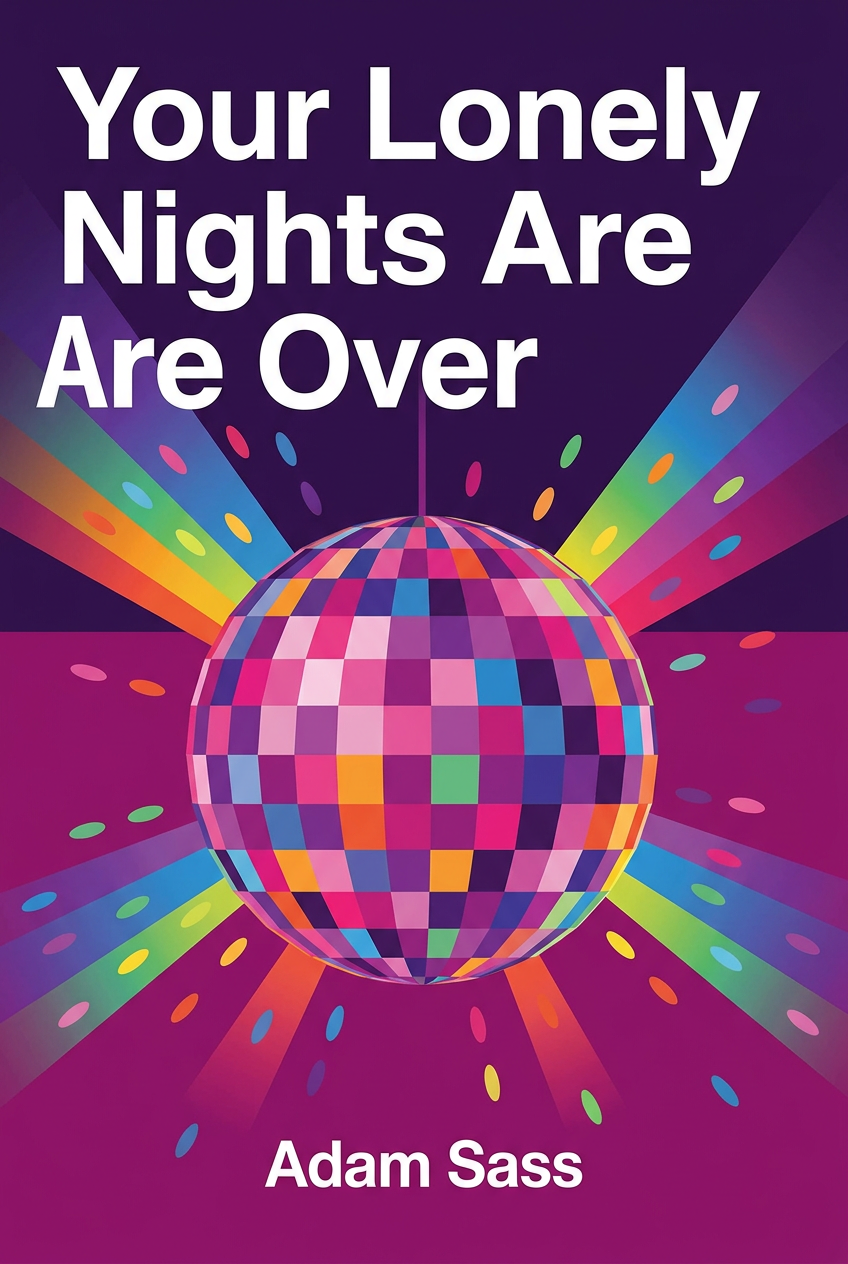
Your Lonely Nights Are Over book cover

The Script

The senior prom is a strange kind of ghost story. It haunts high school hallways for years, a shimmering promise whispered from upperclassmen to freshmen. It’s a night that’s supposed to be perfect, cinematic, the culmination of a four-year social marathon. Yet, for so many, the reality is less like a movie and more like a poorly lit, off-key karaoke performance. The dream of the grand entrance, the slow dance with a secret crush, the after-party that cements lifelong friendships—it all gets tangled in the awkward reality of a borrowed tuxedo, a corsage that’s already wilting, and the crushing weight of unspoken expectations. The night arrives, and for every person living their fairytale, there's another standing by the punch bowl, feeling more invisible than ever, watching the story they were promised unfold for someone else. It's a specific kind of loneliness, the kind that hits hardest when you're surrounded by people who are supposed to be your people, in a place that's supposed to be your place.

That feeling of being on the outside of a celebration meant for you is a familiar one for Adam Sass. Growing up queer, he felt like he was perpetually watching the world’s prom from a locked window, never quite invited to the party. He saw the classic high school rom-coms as artifacts from a parallel universe he couldn't access. Sass, an author celebrated for his witty and heartfelt young adult fiction, decided to stop waiting for an invitation and throw his own party. He wrote "Your Lonely Nights Are Over" to give the kids in the corner—the queer kids, the outcasts, the ones who felt like their own main-character energy was being overlooked—the ridiculous, high-stakes, and deeply romantic adventure they always deserved. It’s a book born from a desire to rewrite the script, transforming the loneliness of the punch bowl into the thrilling centerpiece of the story.

Module 1: The Weaponization of Loneliness

The story's entire threat system is built on a single, powerful idea. Mr. Sandman, the serial killer, doesn’t choose victims at random. He targets the lonely. This creates an atmosphere where being single isn't just undesirable; it's potentially fatal. The community responds with a desperate, almost primal urge to couple up.

This leads to the first core insight. Fear drives performative relationships as a survival mechanism. People are seeking an alibi against loneliness. After a murder, the school’s social media explodes with fake engagements. Students post old photos and announce engagements they have no intention of honoring. They do it because "everyone else was doing it." It's a desperate, collective signal to the killer: "I'm not lonely. Don't look at me." The characters even develop a mantra they chant at social events: "STAY TOGETHER." It’s a plea for survival, not a celebration of unity.

This brings us to a crucial point. The author shows how this fear-based coupling is ultimately toxic. Pity-dating and relationships built on fear only deepen isolation. The main character, Frankie Dearie, reflects on his own past relationship with Grover. He realizes he stayed with Grover partly out of a misguided sense of protection. He believed his presence could shield Grover from the killer. But Dearie concludes that "dating someone just to protect the other person makes you both lonelier." It creates a hollow connection, an illusion of safety that masks a profound, shared isolation. The book argues that these relationships are just another form of loneliness.

From this foundation, we see how the killer weaponizes this social dynamic. The killer exploits community psychology by making loneliness a public vulnerability. Mr. Sandman’s method is terrifyingly simple and effective. It’s built on a rhyme that spreads through the community: "Don't frown, don't pout, don't ever cry. If he hears your lonely heart, then you're the next to die." This rhyme is a psychological weapon. It forces everyone to perform happiness and connection. It creates an environment where showing vulnerability is like painting a target on your back. The killer is systematically dismantling the community’s ability to be authentic, forcing everyone into a state of constant performance.

Module 2: The Anatomy of a Modern Friendship

At the heart of this story is the deep, complex friendship between Frankie Dearie and Cole Cardoso. Their bond is the narrative's emotional anchor, a stark contrast to the fear-driven relationships around them. Sass uses their friendship to explore loyalty, identity, and what it means to truly have someone's back.

Their relationship is built on a foundation of radical honesty and shared history. A true friendship provides a safe harbor in a world of performative connection. Dearie and Cole have a shorthand, an intimacy that others constantly misinterpret. People assume they are a couple, but their bond is something different, something platonic but profoundly deep. When the murders begin and suspicion falls on them, their friendship becomes their primary defense. They trust each other when no one else will. In a world where everyone is faking connection for survival, their genuine bond is a revolutionary act.

Now, let's turn to how the book addresses the complexities within this friendship. It doesn't shy away from the fact that even the strongest bonds are tested by external pressures and internal differences. Systemic biases create unequal experiences that can strain even the closest friendships. Dearie is white, and Cole is Latine. When they become suspects, they are treated very differently by law enforcement. Cole recounts a past incident, "the Slap," where he was interrogated for hours after acting in self-defense, while the white student who started the fight was sent home immediately. This history repeats itself. Cole faces a level of scrutiny and suspicion that Dearie does not. Dearie, at times, forgets this. He has to be reminded that his experience of the world is not Cole's. Their friendship survives because they are willing to have these difficult conversations and acknowledge their different realities.

And here's the thing. The book suggests that navigating these challenges is what ultimately strengthens their bond. True loyalty is the commitment to work through conflict. Their friendship isn't perfect. They argue. They hurt each other's feelings. At one point, Dearie dates Grover, Cole's bully, in a misguided attempt to protect everyone. Cole sees this as a profound betrayal. He confronts Dearie, forcing him to see how his actions have rehabilitated a bully and hurt their friendship. The turning point comes when Dearie recognizes his mistake, breaks up with Grover, and chooses his loyalty to Cole. Their reconciliation comes from acknowledging the conflict and reaffirming their commitment to each other, making their bond even stronger.

Read More