Books About Capitalism
Capitalism shapes our lives, yet for many, its inner workings remain a mystery. To help you grasp what is capitalism and its real-world impact, we've compiled a definitive list of recommendations. These range from guides on capitalism for beginners to profound critiques of market systems. This collection of the best books on capitalism offers a full spectrum of ideas, from advocates of free markets to those questioning economic inequality. Explore these diverse perspectives to build a smarter, more informed worldview. Curated by the VoxBrief team.
Principles for Dealing with the Changing World Order
Understand the historical cycles of empires to see where the world is heading next.
- Empires rise and fall in a predictable 'Big Cycle.'
- A nation's power depends on 8 key metrics, including education and trade.
- High debt and internal conflict signal an empire's potential decline.
Investors and leaders seeking to navigate long-term geopolitical shifts.
Understand the historical cycles of empires to see where the world is heading next.
How Fascism Works
Learn the ten tactics authoritarians use to dismantle democracy from within.
- Fascism weaponizes a mythical, heroic past to justify current actions.
- It creates a sense of 'us vs. them' by demonizing outsider groups.
- Propaganda and anti-intellectualism are used to erode a shared reality.
Citizens concerned about democratic erosion and political polarization.
Learn the ten tactics authoritarians use to dismantle democracy from within.
Talking to My Daughter About the Economy
Finally understand why economic inequality is a built-in feature of capitalism.
- Wealth inequality isn't an accident; it's a result of the system's design.
- Markets are not natural forces but are created and shaped by power.
- Debt is a powerful tool used to control economies and populations.
Anyone who finds economics confusing and wants a simple, clear explanation.
Finally understand why economic inequality is a built-in feature of capitalism.
Capitalism and Freedom
Discover the classic argument that economic freedom creates individual liberty.
- Government intervention often hinders prosperity more than it helps.
- Free-market capitalism is the most effective engine for solving social problems.
- Individual choice in a free market is the ultimate form of liberty.
Believers in free markets and limited government looking for a core text.
Discover the classic argument that economic freedom creates individual liberty.
Economic Facts and Fallacies, 2nd edition
Use hard data to debunk popular (but wrong) economic arguments you hear daily.
- Widely held economic beliefs often crumble when tested against real evidence.
- Focus on the unintended consequences of policies, not just their intentions.
- Statistical manipulation is often used to support weak political arguments.
Skeptical thinkers who want to challenge common narratives with solid facts.
Use hard data to debunk popular (but wrong) economic arguments you hear daily.
23 Things They Don't Tell You about Capitalism
Uncover the 23 biggest myths about free markets and how the economy really works.
- The 'free market' doesn't really exist; all markets have rules and limits.
- Making rich people richer does not automatically benefit everyone else.
- Corporate decisions are often driven by short-term gain, not long-term health.
Anyone who suspects the rules of the economic game are rigged against them.
Uncover the 23 biggest myths about free markets and how the economy really works.
Imperialism the Highest Stage of Capitalism
See how global finance and monopolies drive nations toward conflict and control.
- Capitalism naturally evolves toward monopoly formation over time.
- Banks and financial capital come to dominate industrial capital.
- Exporting capital becomes the primary motive of powerful nations.
Readers interested in the Marxist critique of globalism and economic power.
See how global finance and monopolies drive nations toward conflict and control.
What Went Wrong with Capitalism
Find out why today's capitalism feels broken and how to fix it for everyone.
- Government bailouts have socialized risk while privatizing profits for the rich.
- The system now favors rent-seeking billionaires over genuine innovators.
- True capitalism requires creative destruction, where failing businesses fail.
Frustrated citizens who feel the current economic system is unfair and stagnant.
Find out why today's capitalism feels broken and how to fix it for everyone.
American Educational Excellence
A bold plan to fix American schools, the bedrock of a competitive economy.
- A nation's economic strength depends on the quality of its education system.
- Technology and AI can be used to personalize learning and empower teachers.
- A culture of excellence must be integrated with new leadership in schools.
Educators, policymakers, and business leaders invested in building human capital.
A bold plan to fix American schools, the bedrock of a competitive economy.
Capital in the Twenty-First Century
Uncover the simple formula that proves why the rich get richer, faster.
- When return on capital (r) is greater than economic growth (g), inequality rises.
- Inherited wealth often grows faster than wages, concentrating riches over time.
- Without intervention, capitalism naturally leads to extreme wealth concentration.
Anyone seeking a data-driven explanation for modern wealth inequality.
Uncover the simple formula that proves why the rich get richer, faster.
The Wealth of Nations
Go to the source of modern economics and learn how free markets create wealth.
- Individual self-interest, guided by an 'invisible hand,' can benefit all of society.
- The division of labor is the primary driver of productivity and growth.
- A nation's wealth is the total of its production, not its gold reserves.
Students of economics or anyone who wants to understand capitalism's foundations.
Go to the source of modern economics and learn how free markets create wealth.
Atlas Shrugged
What happens to the world when its most brilliant creators and innovators strike?
- Individual achievement and rational self-interest are presented as high moral virtues.
- Society relies utterly on its 'men of the mind' to function and prosper.
- Excessive regulation and collectivism are portrayed as destructive social forces.
Fans of philosophy and fiction exploring themes of individualism vs. collectivism.
What happens to the world when its most brilliant creators and innovators strike?
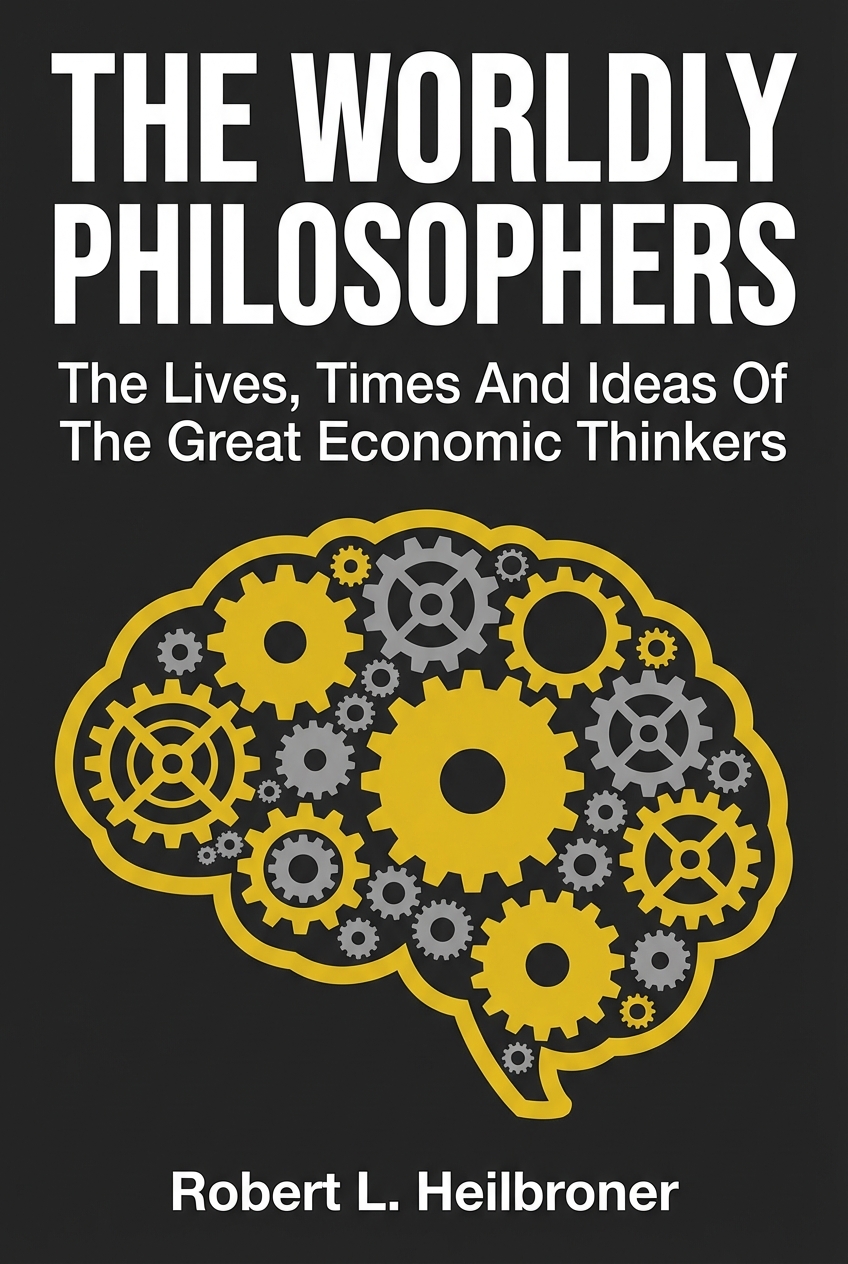
The Worldly Philosophers
Meet the great thinkers who invented economics and shaped our modern world.
- Economic systems are not natural laws but ideas conceived by influential thinkers.
- The story of economics is humanity's quest to survive and prosper.
- Thinkers from Adam Smith to Karl Marx defined the debates we still have today.
Curious minds who want to understand the history of economic ideas, not just data.
Meet the great thinkers who invented economics and shaped our modern world.
Frequently Asked Questions
Capitalism is inherently risky due to competition, market fluctuations, and the possibility of business failure. However, supporters argue this 'creative destruction' drives innovation and efficiency. The level of risk can be managed through personal financial strategies and certain government safety nets.
For individuals, a strong strategy is to focus on acquiring valuable skills (human capital), saving and investing consistently, and understanding personal finance. Learning about concepts like compound interest and diversification from the books about capitalism on this list is a crucial first step.
You don't need vast wealth. Start by investing in yourself through education or training to increase your earning power. You can also start a small side business with low overhead or begin investing small, regular amounts into index funds through modern, accessible apps.
Capitalism is often criticized for leading to significant wealth inequality, where a small part of the population holds a disproportionate amount of wealth. Other critiques, explored in many books on this list, focus on market failures, environmental costs, and the potential for labor exploitation.