Critical Thinking Books
Understanding why critical thinking and problem solving is important is the first step to making better decisions. If you're wondering how to build critical thinking and problem solving skills, this collection offers a clear path forward. We've gathered some of the best books on critical thinking to help you spot flawed logic, overcome cognitive biases, and structure clearer arguments. This list of must-read critical thinking and problem solving books provides actionable techniques for any situation. Curated by the VoxBrief team.
Thinking, Fast and Slow
Uncover the two systems of thinking that govern your mind and lead to irrational choices.
- Your mind uses two systems: fast, intuitive System 1 and slow, deliberate System 2.
- Cognitive biases and mental shortcuts often lead to significant errors in judgment.
- Recognizing these biases is the first step toward making more rational decisions.
Anyone looking to understand the hidden biases that affect their daily decisions.
Uncover the two systems of thinking that govern your mind and lead to irrational choices.
101 Essays That Will Change The Way You Think
Uncover the self-sabotaging behaviors holding you back from personal evolution.
- Chasing happiness directly can paradoxically lead to more misery.
- Negative emotions and thoughts can be powerful catalysts for personal growth.
- Your perception of reality, not external events, shapes your life experience.
Individuals feeling stuck and seeking a major shift in their life perspective.
Uncover the self-sabotaging behaviors holding you back from personal evolution.
The Fallacy Detective
Learn to spot 38 common logical fallacies in everyday arguments and media.
- A logical fallacy is an error in reasoning that weakens or invalidates an argument.
- Common fallacies include red herrings, straw men, and ad-hominem attacks.
- Identifying fallacies helps you avoid being misled and strengthen your own logic.
Students and parents wanting a fun, practical introduction to logical reasoning.
Learn to spot 38 common logical fallacies in everyday arguments and media.
The Thinking Toolbox
Master 35 simple lessons to dissect claims, spot propaganda, and build airtight cases.
- Effective thinking involves both dismantling bad arguments and constructing good ones.
- Distinguish between valid evidence, scientific claims, and mere opinion.
- Use tools like Occam's Razor to evaluate competing explanations.
Aspiring debaters and sharp thinkers who want to build persuasive arguments.
Master 35 simple lessons to dissect claims, spot propaganda, and build airtight cases.
The 4 Pillars of Critical Thinking
Master 103 practical techniques to improve your strategic thinking and decision-making.
- Critical thinking rests on strategy, logic, decision-making, and bias avoidance.
- Learn to detect logical fallacies and manipulation in everyday communication.
- Apply structured models to make more objective and effective choices.
Professionals seeking a structured system to improve their analytical abilities.
Master 103 practical techniques to improve your strategic thinking and decision-making.
Thinking with Type
Master the hidden rules of typography to make your written communication powerful.
- Typography is a key part of clear communication, not just decoration.
- Hierarchy, scale, and grid systems guide the reader's eye effectively.
- Choosing the right typeface can dramatically alter the tone of your message.
Designers, writers, and marketers who want their words to command attention.
Master the hidden rules of typography to make your written communication powerful.
Asking the Right Questions
Learn a powerful framework of questions to dissect any argument and spot fake news.
- Don't passively accept information; actively question it.
- Identify an argument's core issue, conclusion, and supporting reasons.
- Uncover hidden assumptions, ambiguous language, and flaws in evidence.
Students and citizens wanting to become more discerning consumers of information.
Learn a powerful framework of questions to dissect any argument and spot fake news.
Critical Thinking for Strategic Intelligence
Learn the structured analytic techniques used by the CIA to anticipate future events.
- Structured Analytic Techniques (SATs) help overcome cognitive biases in analysis.
- Challenge core assumptions to avoid being blindsided by unexpected outcomes.
- Transform raw data into actionable intelligence for strategic decision-making.
Analysts, leaders, and strategists in competitive, high-stakes environments.
Learn the structured analytic techniques used by the CIA to anticipate future events.
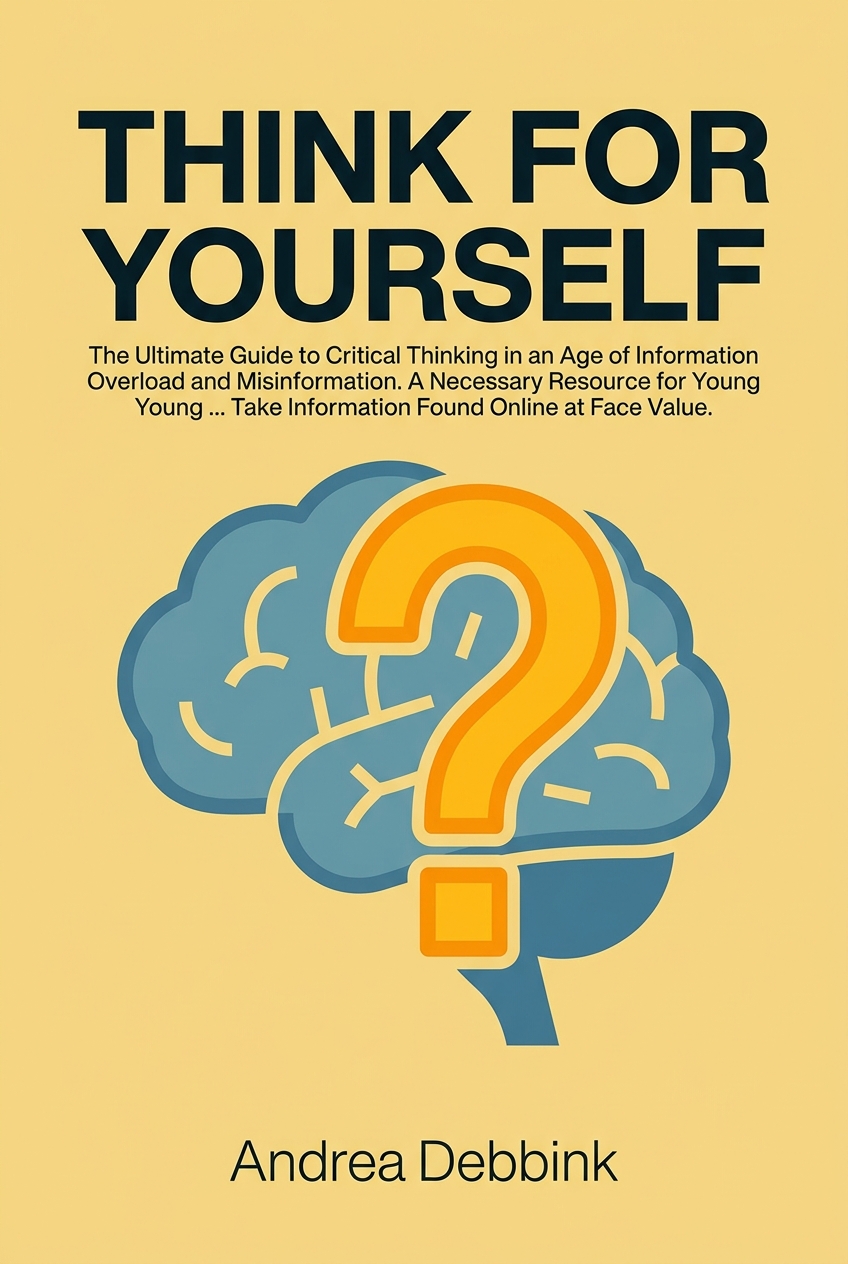
Think for Yourself
Get the tools to spot misinformation and navigate the digital world with confidence.
- Learn to check sources and verify the credibility of online information.
- Recognize how emotional appeals and biases can cloud your judgment online.
- Build a mental framework for separating fact from fiction in a digital age.
Young adults and digital natives seeking to develop strong media literacy skills.
Get the tools to spot misinformation and navigate the digital world with confidence.
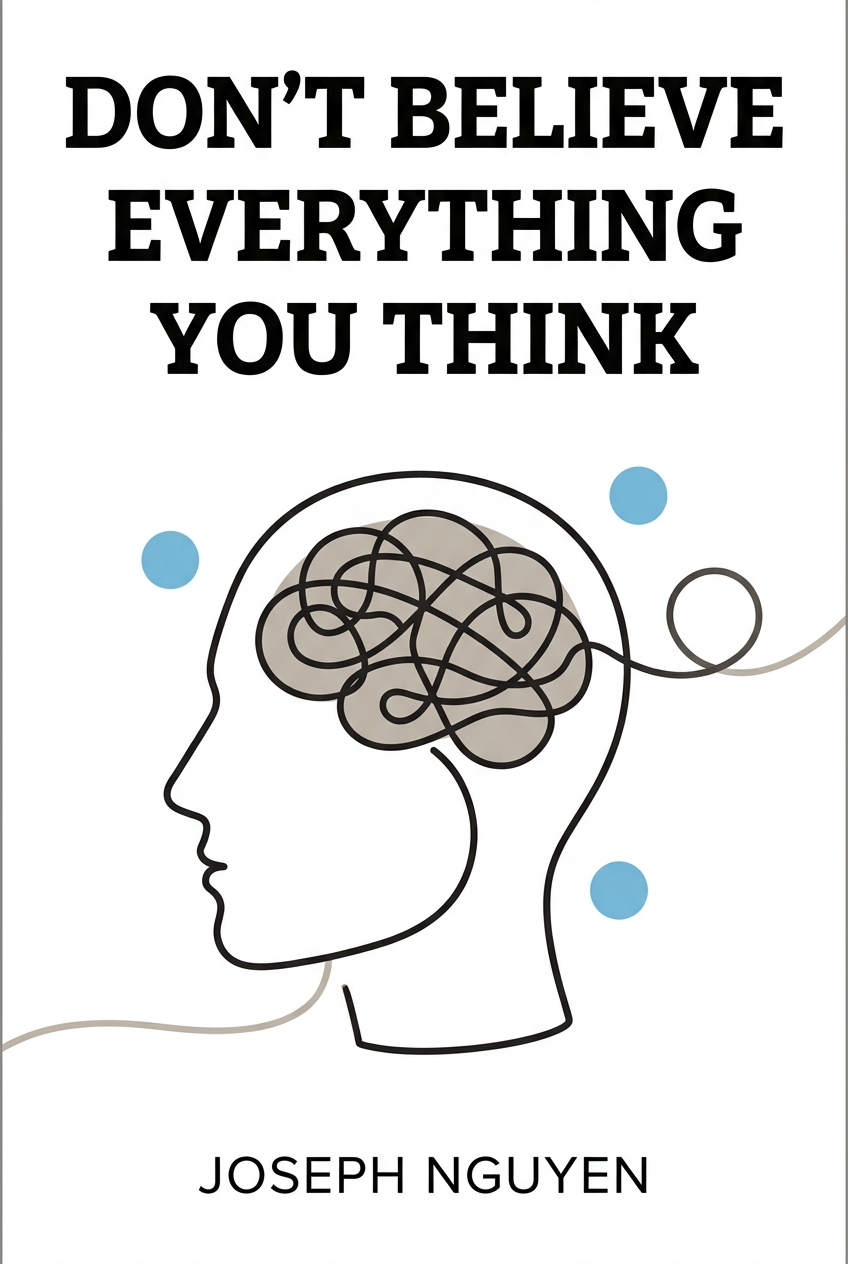
Don't Believe Everything You Think
Discover how to end anxiety by understanding how your thinking creates your reality.
- Your feelings are generated by your thoughts, not external circumstances.
- You can find peace by realizing thoughts are transient and not necessarily true.
- Letting go of anxious thoughts is more effective than trying to manage them.
Anyone struggling with overthinking, anxiety, or negative thought loops.
Discover how to end anxiety by understanding how your thinking creates your reality.
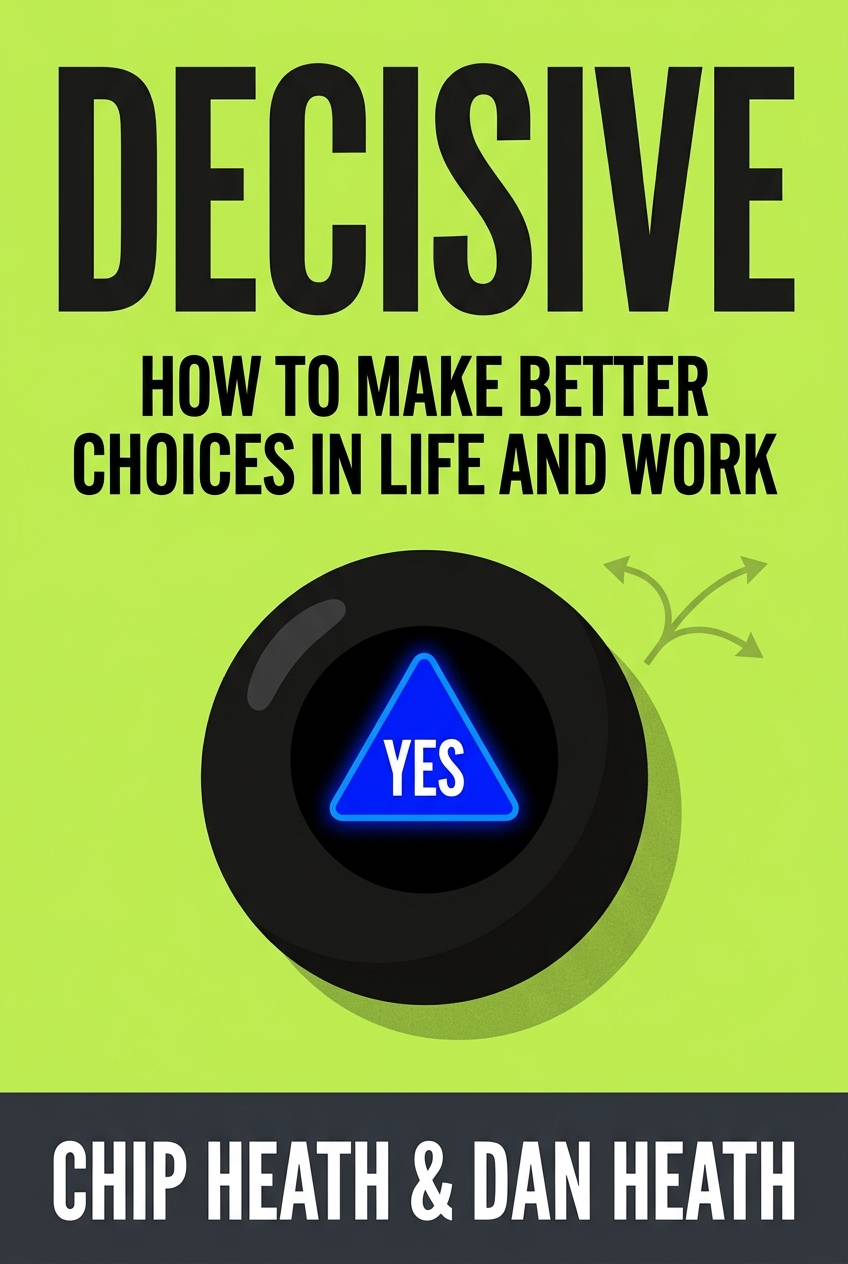
Decisive
Use the four-step WRAP method to overcome indecision and make better choices with confidence.
- Break free from narrow framing by widening your options before choosing.
- Reality-test your assumptions with small experiments before committing.
- Attain distance from short-term emotions to make a clearer long-term choice.
People facing major life or career decisions who feel paralyzed by their choices.
Use the four-step WRAP method to overcome indecision and make better choices with confidence.
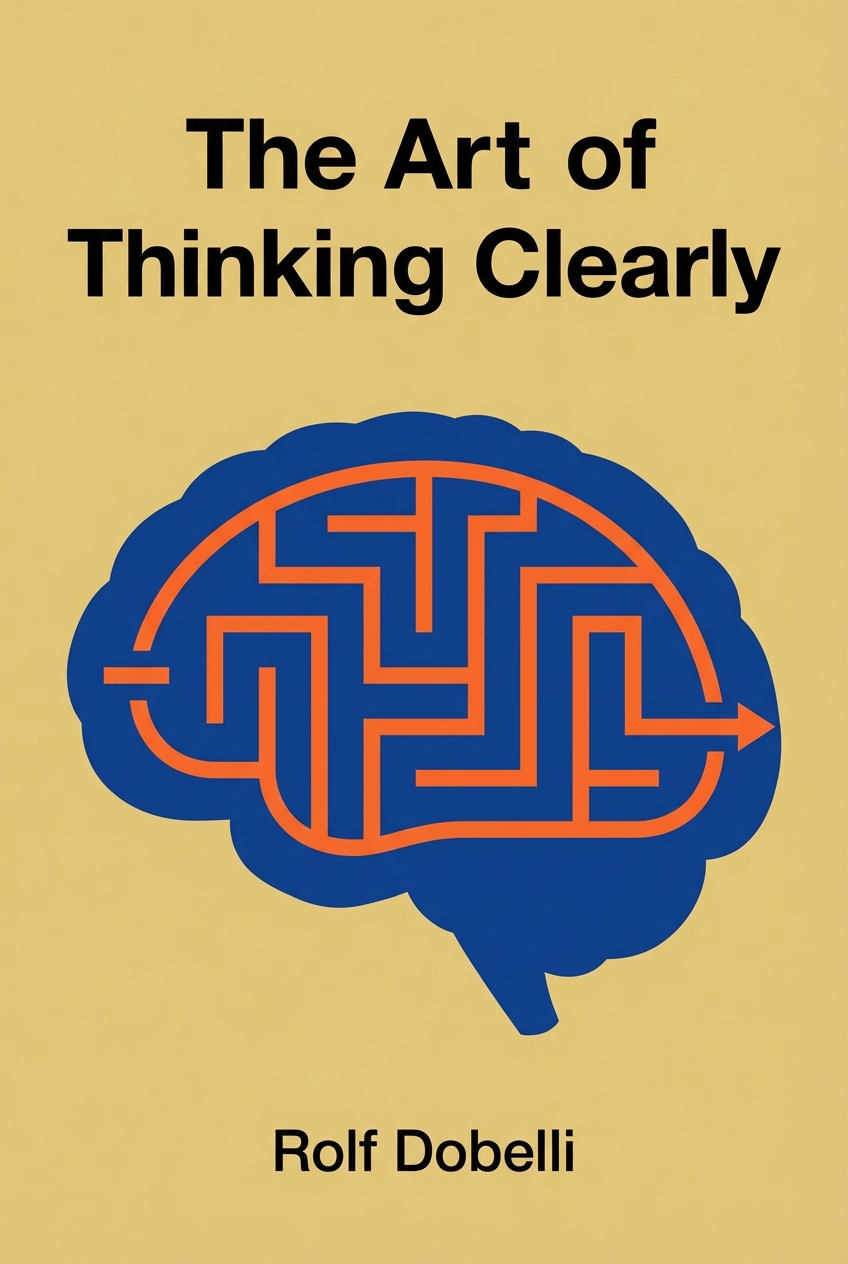
The Art of Thinking Clearly
Learn to spot 99 hidden cognitive biases that trip you up in daily decisions.
- Our brains use mental shortcuts (heuristics) that systematically lead to errors.
- Biases like survivorship bias and confirmation bias distort our view of reality.
- Recognizing these common thinking traps is the first step to avoiding them.
Decision-makers who want a quick reference guide to common mental errors.
Learn to spot 99 hidden cognitive biases that trip you up in daily decisions.
Frequently Asked Questions
It can be difficult because our brains are wired for efficiency, often relying on mental shortcuts and cognitive biases. Critical thinking requires deliberate, conscious effort to override these automatic processes, question assumptions, and evaluate evidence, which is more mentally demanding than intuitive thinking.
Consistency comes from building habits. Start by practicing daily critical thinking and problem solving techniques. For example, question one news article a day, identify the main argument in a meeting, or reflect on a recent decision. The more you practice these habits, the more it becomes second nature.
Talent often refers to a natural aptitude, whereas critical thinking is a learned discipline that can be improved by anyone. While some people may have a natural inclination for analytical thinking, everyone can develop and strengthen their critical thinking skills through deliberate practice and learning new mental models.
For a great starting point, consider 'The Fallacy Detective' to learn the basics of spotting bad arguments in a fun way. 'Asking the Right Questions' also offers a practical, step-by-step framework that is highly effective for beginners building their foundational skills.