Daniel Kahneman Books
Daniel Kahneman revolutionized our understanding of the human mind, revealing the invisible biases that shape our choices. The profound insights from his work offer timeless knowledge for anyone looking to make better decisions. This curated reading list goes beyond his own masterpieces to include authors he influenced and those who explore similar themes of rationality, bias, and judgment. Dive into these summaries to master the art of thinking clearly and avoid common mental traps. Curated by the VoxBrief team.
Thinking, Fast and Slow
Discover the two systems of thinking that govern your mind and the biases they create.
- Your mind has two systems: an intuitive, fast System 1 and a logical, slow System 2.
- Cognitive biases like anchoring and loss aversion lead to consistently irrational choices.
- Slowing down to engage System 2 is key to overcoming bias and making better judgments.
Anyone looking to understand their own mind and improve their decision-making process.
Discover the two systems of thinking that govern your mind and the biases they create.
Think Again
Learn why the secret to success is knowing what you don't know and being wrong.
- Embrace a "rethinking cycle" to regularly update your beliefs and opinions.
- Adopt a scientific mindset by treating your views as hypotheses to be tested.
- Improve persuasion skills by listening and asking questions, not just arguing.
Leaders and individuals who want to become more adaptable and open-minded.
Learn why the secret to success is knowing what you don't know and being wrong.
The Undoing Project
Discover the story of the two psychologists who changed our understanding of the mind.
- This book details the groundbreaking intellectual partnership of Kahneman and Amos Tversky.
- Their collaboration birthed the field of behavioral economics and key bias concepts.
- Understanding their friendship provides deep context for their revolutionary ideas.
Readers who love origin stories and the history behind groundbreaking ideas.
Discover the story of the two psychologists who changed our understanding of the mind.
Thinking in Bets
Learn how a former poker champion turns any uncertain decision into a smart bet.
- Separate decision quality from outcome quality; a good process can have a bad result.
- Embrace uncertainty by thinking in probabilities rather than absolute certainties.
- Form a "truth-seeking" group to challenge your own biases and perspectives.
Investors, entrepreneurs, and anyone making high-stakes decisions with incomplete information.
Learn how a former poker champion turns any uncertain decision into a smart bet.
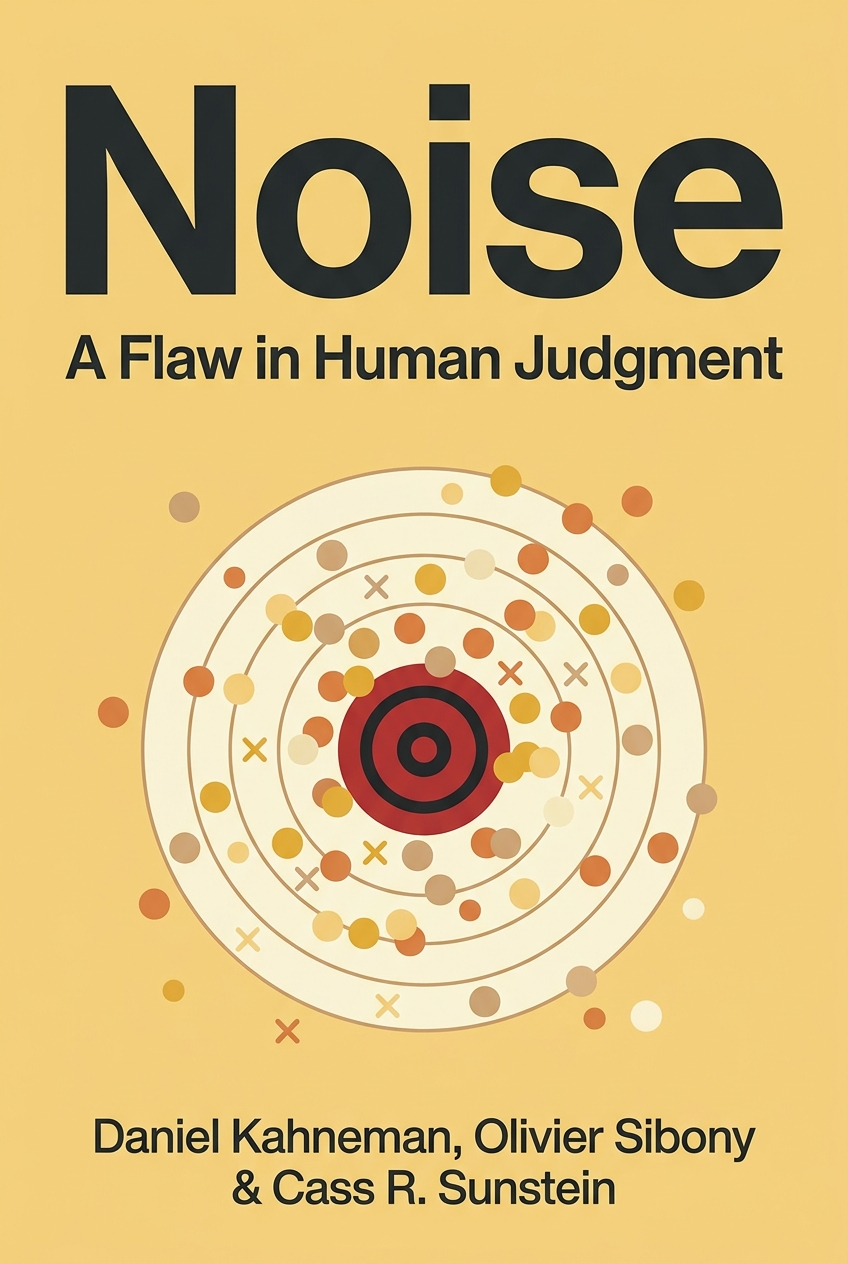
Noise
Spot and silence the hidden, random static that sabotages your professional judgments.
- Noise is the unwanted, random variability in judgments that should be identical.
- It is a distinct and equally costly problem as cognitive bias in organizations.
- Implementing "decision hygiene" and noise audits can improve consistency and accuracy.
Leaders and managers aiming to improve consistency in team decisions.
Spot and silence the hidden, random static that sabotages your professional judgments.
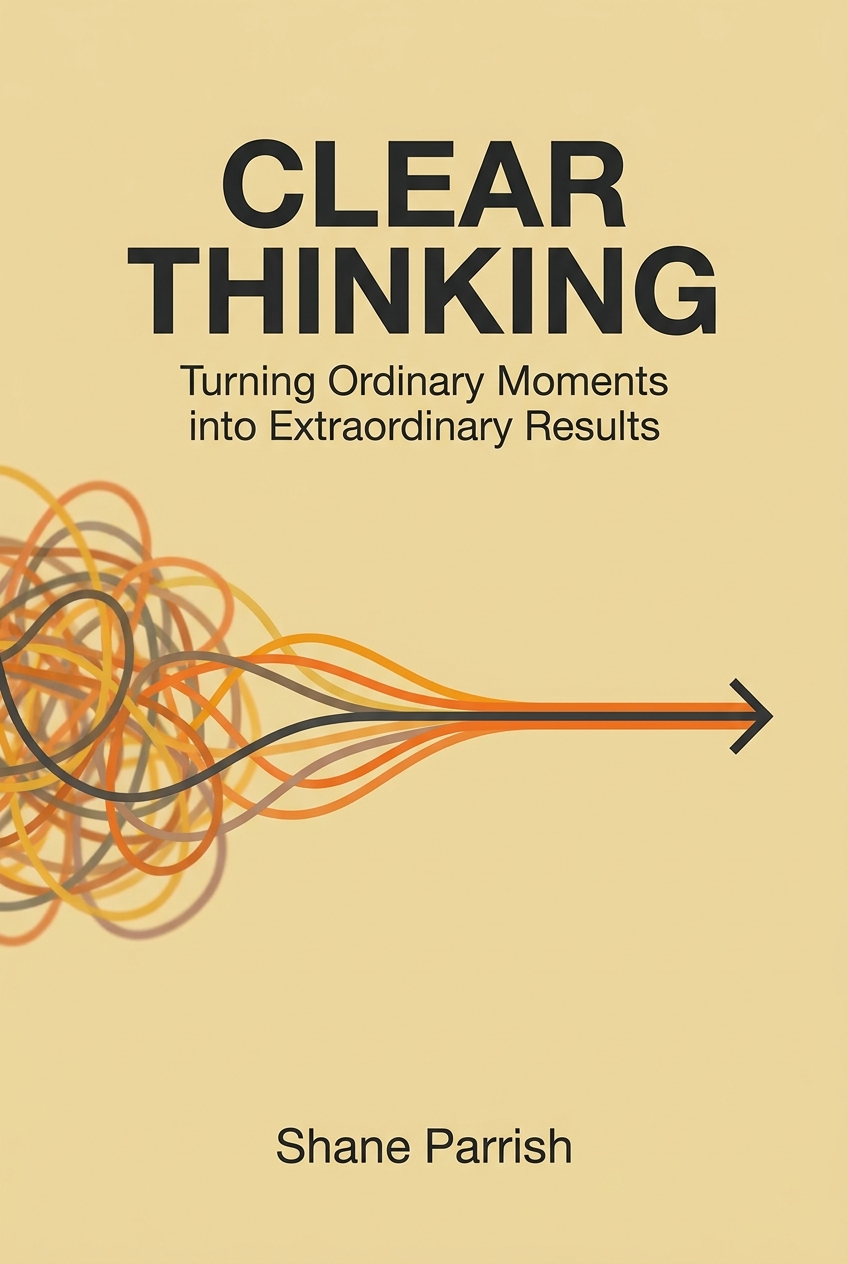
Clear Thinking
Cut through the noise of emotion and bias to make better decisions when it matters.
- Position yourself for success by mastering self-accountability and awareness.
- Recognize and avoid the four main cognitive roadblocks that lead to bad decisions.
- Use mental models to see reality clearly instead of what you wish to be true.
Professionals looking for practical mental frameworks to improve their judgment.
Cut through the noise of emotion and bias to make better decisions when it matters.
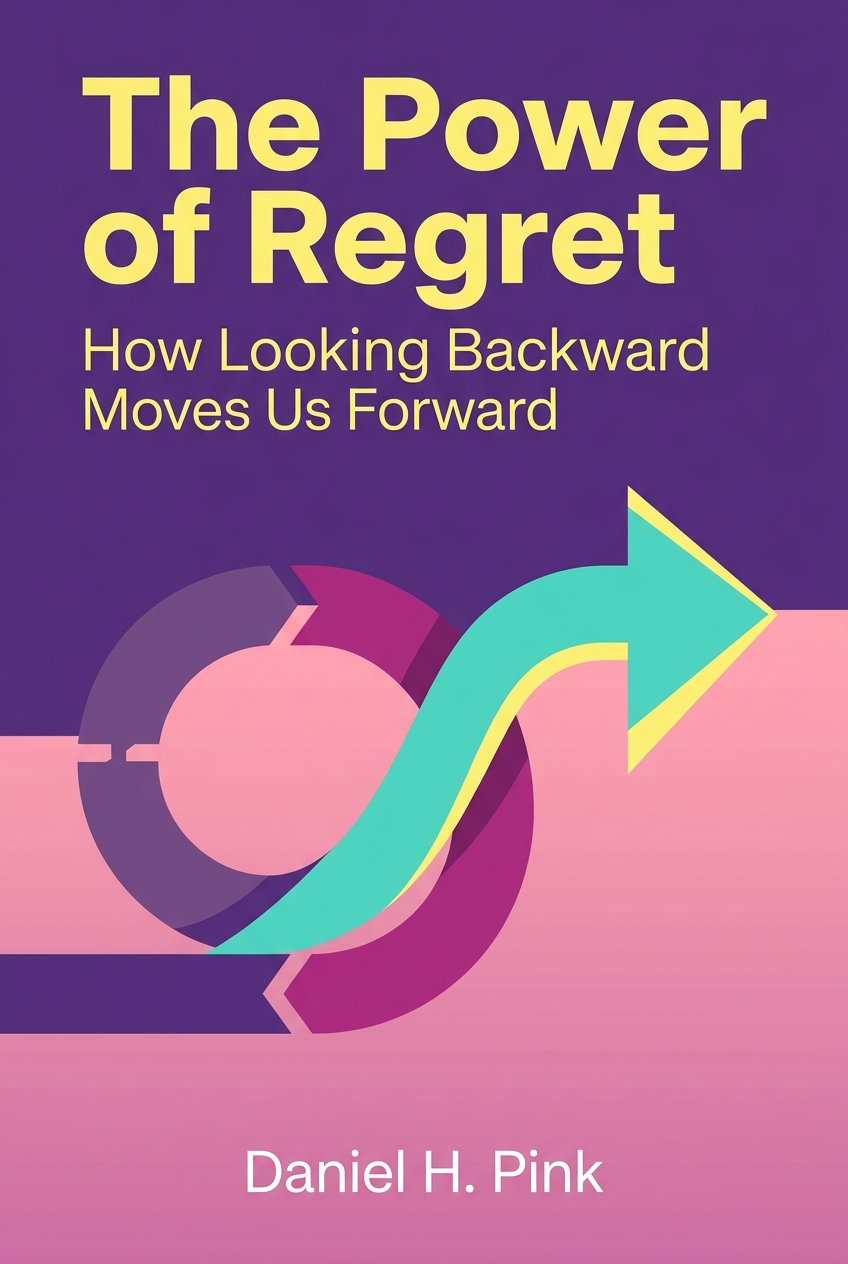
The Power of Regret
Stop avoiding regret and start using it to make smarter decisions for your future.
- Regret is not a negative emotion to be ignored, but a useful signal for improvement.
- Our regrets consistently fall into four core categories that reveal our values.
- Use a three-step process to transform regret into valuable future insight.
Individuals seeking to learn from past mistakes and live with more intention.
Stop avoiding regret and start using it to make smarter decisions for your future.
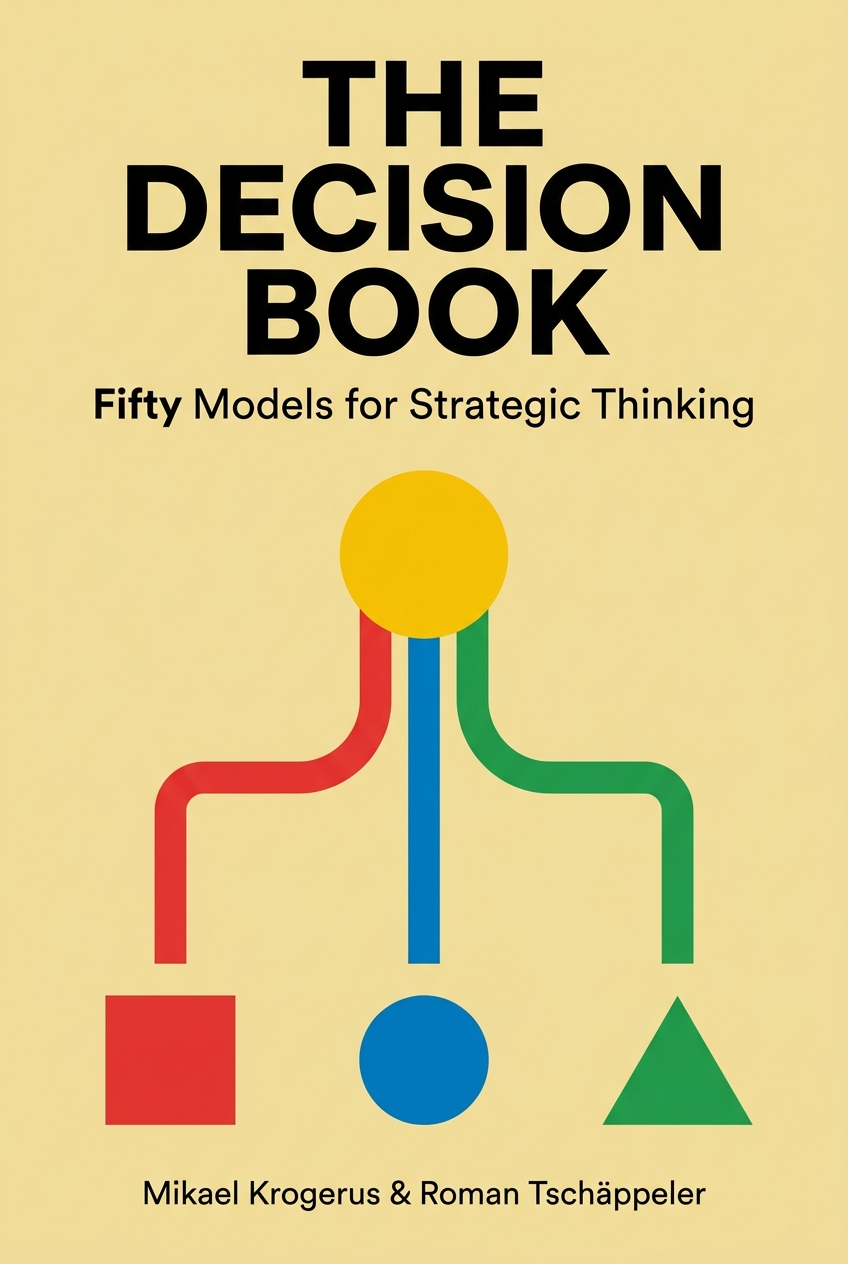
The Decision Book
Learn fifty proven models for better decision-making used by top strategists.
- Use frameworks like the Eisenhower Matrix to prioritize what's truly important.
- Understand yourself and others better using models like the Johari Window.
- Apply strategic models like the SWOT analysis to both personal and professional goals.
Consultants, managers, or anyone needing a toolkit of mental models for problem-solving.
Learn fifty proven models for better decision-making used by top strategists.
The Upside of Irrationality
Discover how your seemingly irrational behaviors can be predictable, powerful forces.
- Irrationality isn't random; it can be understood and even leveraged.
- Factors like a big bonus can paradoxically decrease performance on cognitive tasks.
- We overvalue our own creations, a bias known as the "IKEA effect."
Marketers, managers, and anyone curious about the quirky logic of human behavior.
Discover how your seemingly irrational behaviors can be predictable, powerful forces.

How to Love Better
Move beyond fleeting romance and cultivate a deep, authentic romantic connection.
- True love requires deep self-awareness and healing from past emotional wounds.
- Healthy boundaries are not walls, but necessary structures for mutual respect.
- Transform conflict into an opportunity for closeness by communicating with compassion.
Individuals and couples who want to build a more conscious and lasting partnership.
Move beyond fleeting romance and cultivate a deep, authentic romantic connection.
Dollars and Sense
Reveal the hidden psychological forces that secretly sabotage your financial decisions.
- The "pain of paying" explains why you spend more easily with credit cards than cash.
- We fall victim to relative pricing, assessing value based on comparisons, not absolutes.
- Assigning specific purposes to your money (mental accounting) can lead to poor choices.
Anyone who wants to understand the psychology of money to improve their spending habits.
Reveal the hidden psychological forces that secretly sabotage your financial decisions.
Reset
Break free from career or personal ruts with a powerful four-step framework.
- Being stuck often involves a conflict between your heart and your mind.
- Find a "bright spot"—a small moment of success—and figure out how to clone it.
- Build a path to your goal by shrinking the change and taking small, concrete steps.
Anyone feeling stuck in a career, relationship, or personal habit.
Break free from career or personal ruts with a powerful four-step framework.
Dream Big and Win
Learn the billion-dollar mindset and strategies to achieve massive professional success.
- Adopt a "no limits" mentality to overcome fear and self-doubt in business.
- Build an unstoppable company culture by treating your team like family.
- Focus relentlessly on customer service as your ultimate competitive advantage.
Aspiring entrepreneurs and founders who want to scale their company into an empire.
Learn the billion-dollar mindset and strategies to achieve massive professional success.
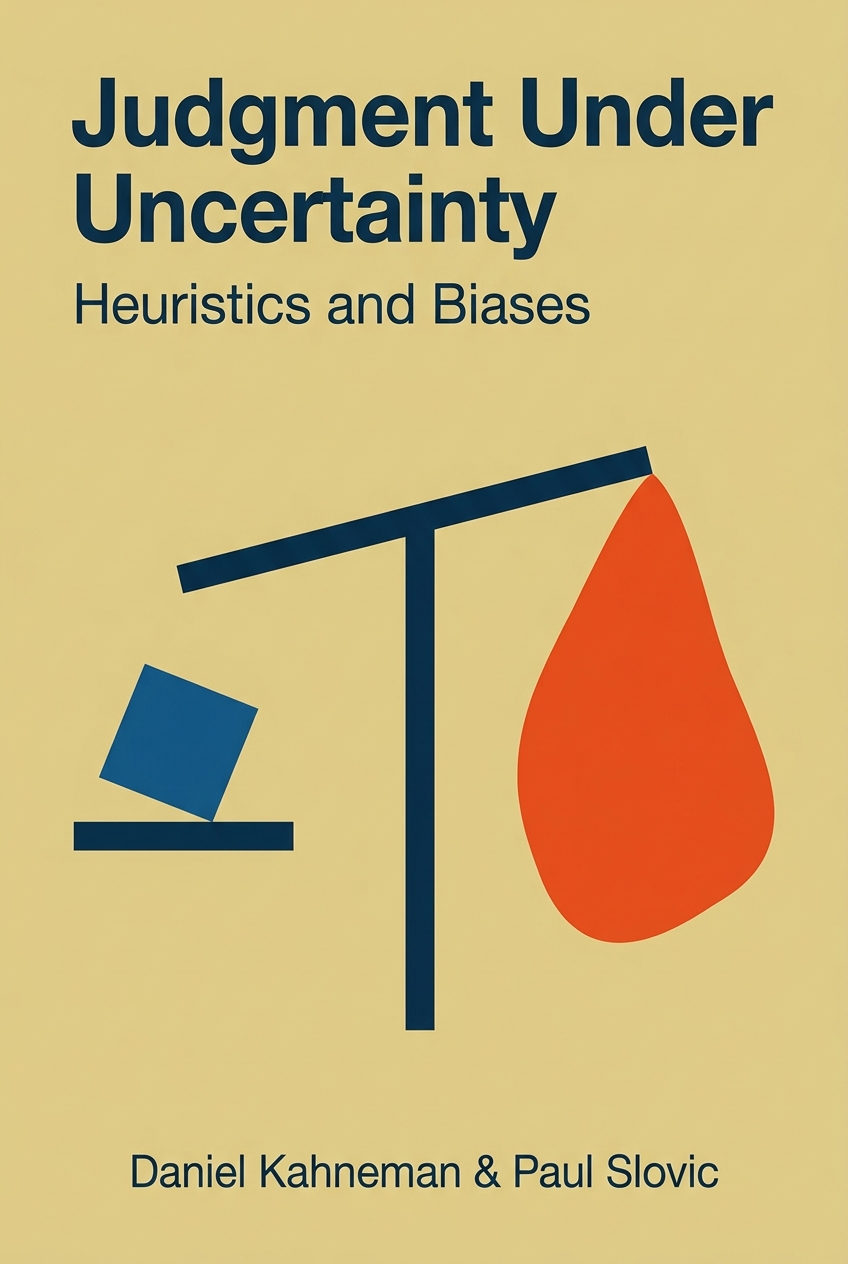
Judgment Under Uncertainty
Learn about the hidden mental shortcuts, or heuristics, that secretly guide your mind.
- People rely on a limited number of heuristics to simplify complex judgments.
- Key heuristics include representativeness, availability, and anchoring.
- These mental shortcuts systematically lead to predictable errors and biases.
Academics, researchers, and students of psychology or economics.
Learn about the hidden mental shortcuts, or heuristics, that secretly guide your mind.
Frequently Asked Questions
Daniel Kahneman, a psychologist and economist, is best known for his groundbreaking work on the psychology of judgment and decision-making. He won the 2002 Nobel Memorial Prize in Economic Sciences for his work with Amos Tversky, which established a cognitive basis for common human errors and birthed the field of behavioral economics.
The main idea of 'Thinking, Fast and Slow' is that our thinking is governed by two distinct systems. System 1 is fast, intuitive, and emotional, while System 2 is slower, more deliberate, and logical. The book explores how the interplay and biases of these systems affect our choices in everything from finance to personal happiness.
The best place to start is with 'Thinking, Fast and Slow.' It is his most comprehensive and accessible work, summarizing decades of his research for a general audience. After that, you can explore 'Noise' to understand his more recent work or 'The Undoing Project' for the story behind his discoveries. This list of Daniel Kahneman books and related reads offers a complete guide.
According to Kahneman, bias is a predictable, systematic error in judgment—like a scale that is always off by five pounds. Noise, on the other hand, is random, unwanted variability in judgments that should be identical—like a scale that gives a different reading every time. Both lead to poor decisions, but they require different strategies to fix.