A Beginner's Guide: The Automatic Millionaire Summary
By VoxBrief Team··6 min read
Financial advice often feels complicated. It's filled with complex budgets, stressful spreadsheets, and a constant feeling that you’re not doing enough. If you've ever felt overwhelmed by the idea of managing your money, David Bach’s The Automatic Millionaire offers a powerful and refreshing alternative. The book’s central promise is simple: you can build serious wealth without a budget, without complex financial knowledge, and without needing superhuman willpower. This comprehensive the automatic millionaire summary will break down the core principles of Bach’s system, showing you how to put your financial life on autopilot and build the future you desire, one automatic step at a time.
The Core Philosophy: Why Automation Beats Willpower
At its heart, The Automatic Millionaire is a book about behavioral psychology as much as it is about finance. Bach’s core argument is that traditional budgeting fails for most people for the same reason most diets fail: they rely on constant, conscious effort and deprivation. Willpower is a finite resource. When you’re tired, stressed, or just having a bad day, it’s easy to make a poor financial decision, breaking your budget and derailing your progress.
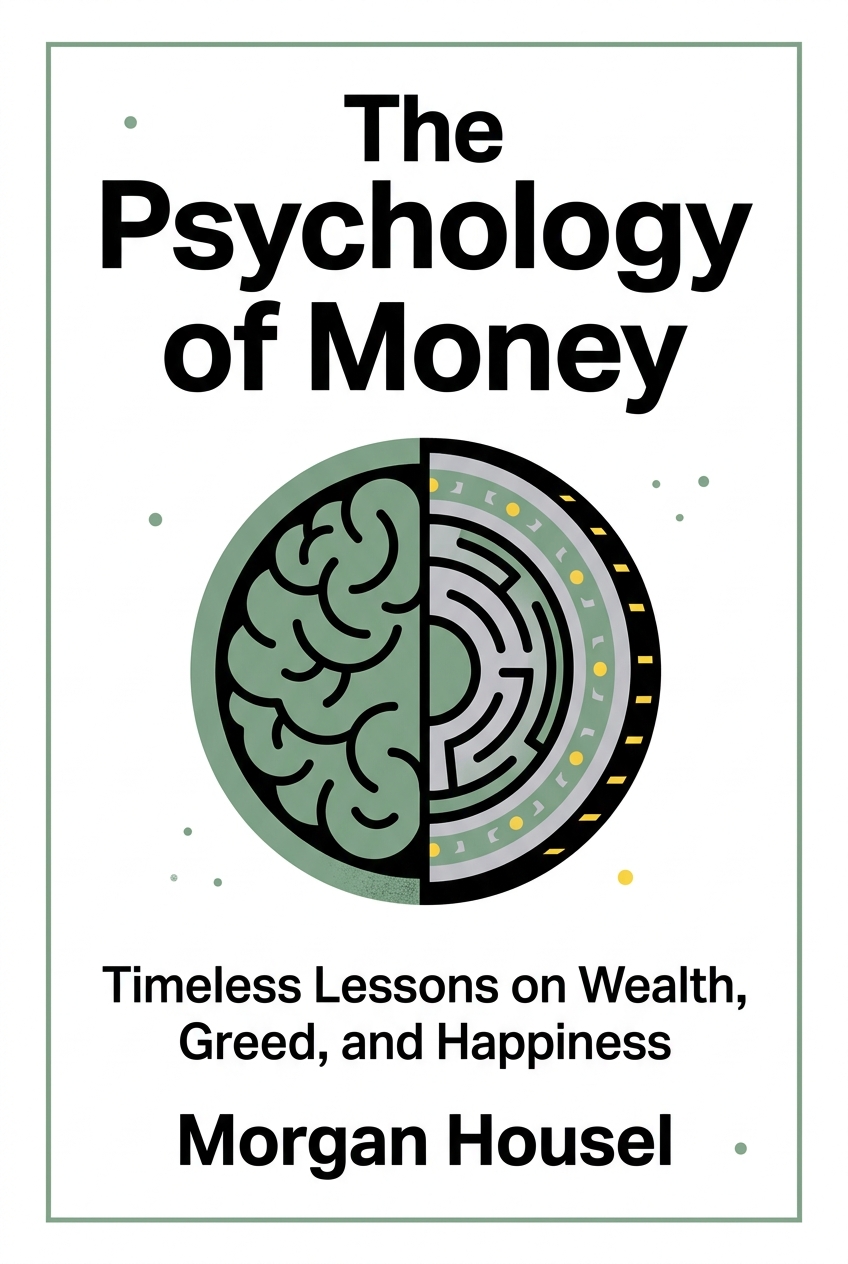
This aligns perfectly with insights from other modern financial thinkers. In The Psychology of Money, Morgan Housel argues that financial success is driven by behavior, not intelligence. You don't need to be a genius to get rich; you need to develop good habits. Bach’s system is designed to create the ultimate wealth-building habit by taking your flawed, emotional decision-making out of the equation entirely.
To understand why this is so effective, we can look at the framework described by Nobel laureate Daniel Kahneman in Thinking, Fast and Slow. Kahneman explains that our brains operate with two systems: System 1 is fast, intuitive, and automatic, while System 2 is slow, deliberate, and requires effort. Budgeting forces you to constantly engage the difficult and easily drained System 2. Automation, on the other hand, sets up a beneficial financial pathway that runs on the effortless System 1. Once the system is in place, saving money becomes as automatic as breathing—you don't have to think about it; it just happens.
By creating a system where you “pay yourself first” automatically, you remove the temptation and the daily struggle. The money is routed to your investment and savings accounts before it ever hits your checking account. You learn to live on the rest, effectively making saving the default, not an option you have to choose over and over again.
The Automatic Millionaire Summary: Key Steps to Financial Freedom
David Bach outlines a clear, step-by-step process to automate your financial life. It's not a rigid list where you must complete one before the next, but rather a set of pillars to build a stable, automated financial structure. The goal is to make these actions one-time decisions that pay dividends for the rest of your life.
Step 1: Discover Your Latte Factor
This is perhaps the most famous concept from the book. The "Latte Factor" is a metaphor for the small, recurring expenses that we barely notice but which drain our financial potential over time. It could be a daily $5 latte, a premium cable package, frequent takeout meals, or subscription services you no longer use.
Bach isn't saying you can't enjoy life's small pleasures. Instead, he’s encouraging a moment of awareness. The exercise is to track your spending for a few days to identify your personal "Latte Factor." Once you find it, ask yourself: Is this small expense bringing you more joy than the financial freedom that money could build if invested?
The math is staggering. A $5 daily expense adds up to $150 per month, or $1,825 per year. Invested over 30 years with a modest return, that sum could grow into hundreds of thousands of dollars. The point is not about deprivation but about conscious trade-offs. By identifying and redirecting just one or two of these small leaks, you can fund your entire automated investment plan without drastically changing your lifestyle.
Step 2: Pay Yourself First, Automatically
This is the engine of the entire system. The principle of "Pay Yourself First" means that the first bill you pay every month is to your future self. Before you pay rent, groceries, or any other expense, a portion of your income should be directed toward your long-term goals. The key is to make this automatic.
Here's how it works in practice:
Workplace Retirement Plan (401(k), 403(b)): This is the easiest place to start. Set up an automatic contribution from your paycheck to your company's retirement plan, especially if they offer a match. A company match is free money and the best return on investment you will ever get.
Individual Retirement Account (IRA): Whether you have a workplace plan or not, you should set up an automatic transfer from your checking account to an IRA (Traditional or Roth). Decide on a monthly amount—even if it's just $50 to start—and schedule the transfer to occur the day after you get paid.
General Savings & Emergency Fund: Set up another automatic transfer to a separate high-yield savings account. This is for your emergency fund (3-6 months of living expenses) and other short-term savings goals like a down payment or a vacation.
By automating these transfers, you never have to make a decision. The money is gone before you have a chance to miss it or spend it. You simply adjust your lifestyle to what remains, which is surprisingly easy to do.
Step 3: Automate Your Debt and Bill Payments
Once you’ve automated your savings, the next step is to automate your outflows. Late fees are a completely avoidable wealth killer. Setting up automatic bill pay for all your recurring expenses—mortgage/rent, utilities, car payments, insurance—ensures you never pay a late fee again. It also simplifies your financial life and reduces stress.
For high-interest debt like credit cards, automation is a powerful tool for paying it down. Set up an automatic payment that is higher than the minimum required. This consistent, extra payment will accelerate your debt-free journey without you having to think about it. The goal is to create a waterfall: automate savings first, then automate debt repayment to free up future cash flow for more savings.
Step 4: Make Homeownership Automatic
Bach is a strong proponent of homeownership, viewing it as a form of "forced savings." Every mortgage payment you make builds equity, which is a key component of net worth for most millionaires. He suggests automating your mortgage payments to ensure they are always on time.
To supercharge this, Bach recommends making bi-weekly mortgage payments instead of monthly ones. By paying half your mortgage every two weeks, you end up making one extra full payment per year. This simple strategy can shave years off your loan term and save you tens of thousands of dollars in interest, all on autopilot.
Step 5: Automate Your Charitable Giving
For many people, giving back is an important part of a fulfilling life. Just like your savings, your charitable contributions can be put on autopilot. Setting up a recurring monthly donation to your favorite charity ensures your values are consistently reflected in your financial plan. This final step helps align your money with your life goals, creating a holistic and intentional financial system.
Putting the System into Practice: Overcoming Irrationality
While Bach's system is beautifully simple, implementing it requires overcoming our own psychological hurdles. This is where the work of behavioral economists like Dan Ariely, author of Predictably Irrational, becomes incredibly relevant. Ariely's research shows how our decisions are consistently swayed by hidden forces, making us act against our own best interests.
We procrastinate on setting up retirement accounts because the future feels distant and abstract. We feel the pain of a loss (saving money) more acutely than the joy of a future gain (compound growth). We are easily swayed by the allure of immediate gratification. The Automatic Millionaire system is a practical antidote to these irrational tendencies. It works because it's a one-time decision that removes thousands of future decisions—and thousands of opportunities to make a mistake.
By setting up an automatic transfer to your 401(k), you bypass the procrastination and the emotional debate that happens every payday. You no longer have to choose between saving money and buying something you want right now. The choice has already been made for you, by a more rational version of yourself.
This is the ultimate financial “hack.” You are using a simple system to protect yourself from your own predictable irrationality. You are creating an environment where the path of least resistance leads directly to wealth accumulation.
Conclusion: Your Simple Path to Wealth
The Automatic Millionaire strips away the noise and complexity that paralyzes so many people. Its message is empowering: building wealth isn’t reserved for financial experts or those with iron-clad discipline. It’s available to anyone willing to make a few simple, one-time decisions to put a powerful system in motion.
By front-loading your savings, automating your bills, and letting the system run in the background, you free up your time and mental energy to focus on what truly matters. You stop managing money and start living your life, confident that your financial future is being built automatically, day by day. This isn't about getting rich quick; it's about getting rich for sure.
Master key ideas in 15 minutes
Listen to audio summaries of these books on VoxBrief
The core idea is that you don't need a restrictive budget or immense willpower to build wealth. The book advocates for creating an automated system that directs your money to savings and investments before you can even spend it, making wealth-building effortless.
The 'Latte Factor' is a concept that illustrates how small, seemingly insignificant daily expenses, like a fancy coffee, can add up to a substantial amount over time. By identifying and redirecting this spending into automated investments, you can accumulate significant wealth without feeling deprived.
Absolutely. Its principles are timeless, and the focus on automating savings is even easier to implement with modern banking and fintech apps. This approach removes emotional decision-making, a key point in our the automatic millionaire summary, making it highly effective for anyone seeking a simple path to financial security.
David Bach suggests aiming to save at least 10% of your gross income, but he strongly emphasizes starting with whatever you can, even just 1%. The key is to start immediately, automate the process, and then gradually increase the percentage over time as you get comfortable.