Analysis paralysis. We’ve all been there—stuck between options, agonizing over pros and cons, terrified of making the wrong choice. In a world that demands quick, effective action, indecisiveness can feel like a critical weakness. The good news is that decisiveness isn't an innate talent; it's a skill that can be developed. To understand how, we can turn to some of the most insightful books on decisiveness and behavioral science, which reveal the hidden forces shaping our choices and provide practical tools to improve them.
This guide will explore the fundamental question, "What is decision making?" by drawing on principles from groundbreaking works. We'll uncover the psychological traps that lead to poor judgment and introduce proven strategies to help you make better, more confident choices in life and work.
Understanding Decision Making and Its Challenges
Before we can improve our decision making, we must first understand what it is and what makes it so difficult. At its core, decision making is the cognitive process of selecting a course of action from among several alternative options. But as anyone who has been stuck choosing a new hire, a marketing strategy, or even just a restaurant for dinner knows, it's rarely that simple.
Why Is Decision Making Important?
Every day is a series of decisions, from the small and trivial to the large and life-altering. The quality of our lives and the success of our organizations are a direct reflection of these choices. In business, the stakes are particularly high. Why is decision making important in business? Because a single strategic choice can determine the future of a company. It influences resource allocation, product development, market positioning, and team morale. Strong decision making skills are arguably the most critical asset for leaders and entrepreneurs.
The Hidden Villains: Cognitive Biases
So why do we so often get it wrong? According to decades of research in psychology and behavioral economics, our brains are wired with mental shortcuts and biases that consistently lead us astray. We think we are being logical, but we are often victims of invisible forces.
In his Nobel Prize-winning work, summarized in Thinking, Fast and Slow, Daniel Kahneman reveals that our minds are governed by two systems. System 1 is fast, intuitive, and emotional, while System 2 is slow, deliberate, and logical. The problem is that our lazy System 2 often defers to the quick-but-error-prone System 1, making us susceptible to a host of cognitive biases. These biases are systematic patterns of deviation from norm or rationality in judgment.
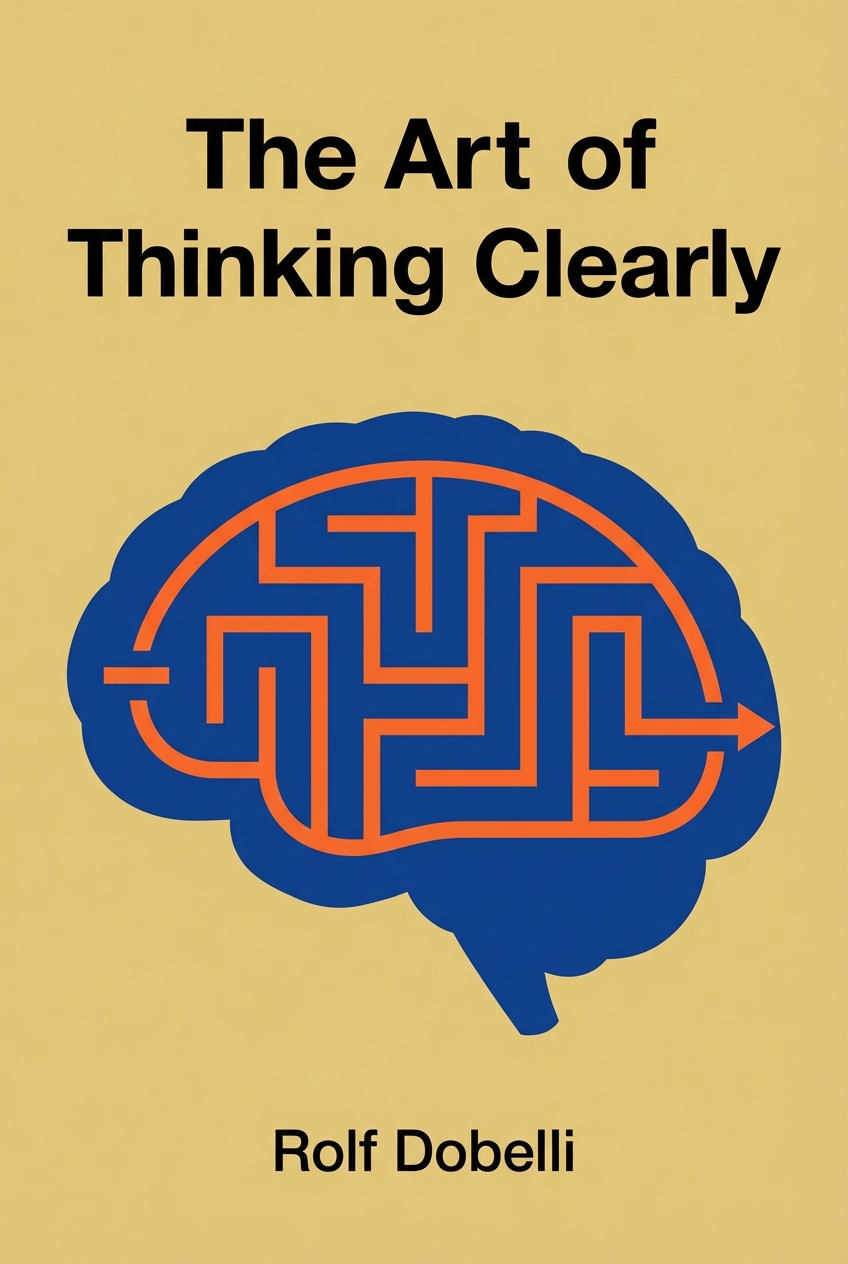
As Rolf Dobelli catalogs in The Art of Thinking Clearly, there are dozens of these traps, such as survivorship bias (focusing only on successes), confirmation bias (seeking information that supports our existing beliefs), and availability heuristic (overestimating the importance of information that is easily accessible). Recognizing these biases is the first step toward clearer, more rational thinking.
Learning from Key Books on Decisiveness
Understanding the problem is one thing; solving it is another. Luckily, several landmark books offer concrete frameworks and strategies to counteract our flawed mental programming. They provide battle-tested decision making frameworks that move us from simply knowing about our biases to actively fighting them.
The WRAP Process: A System for Better Choices
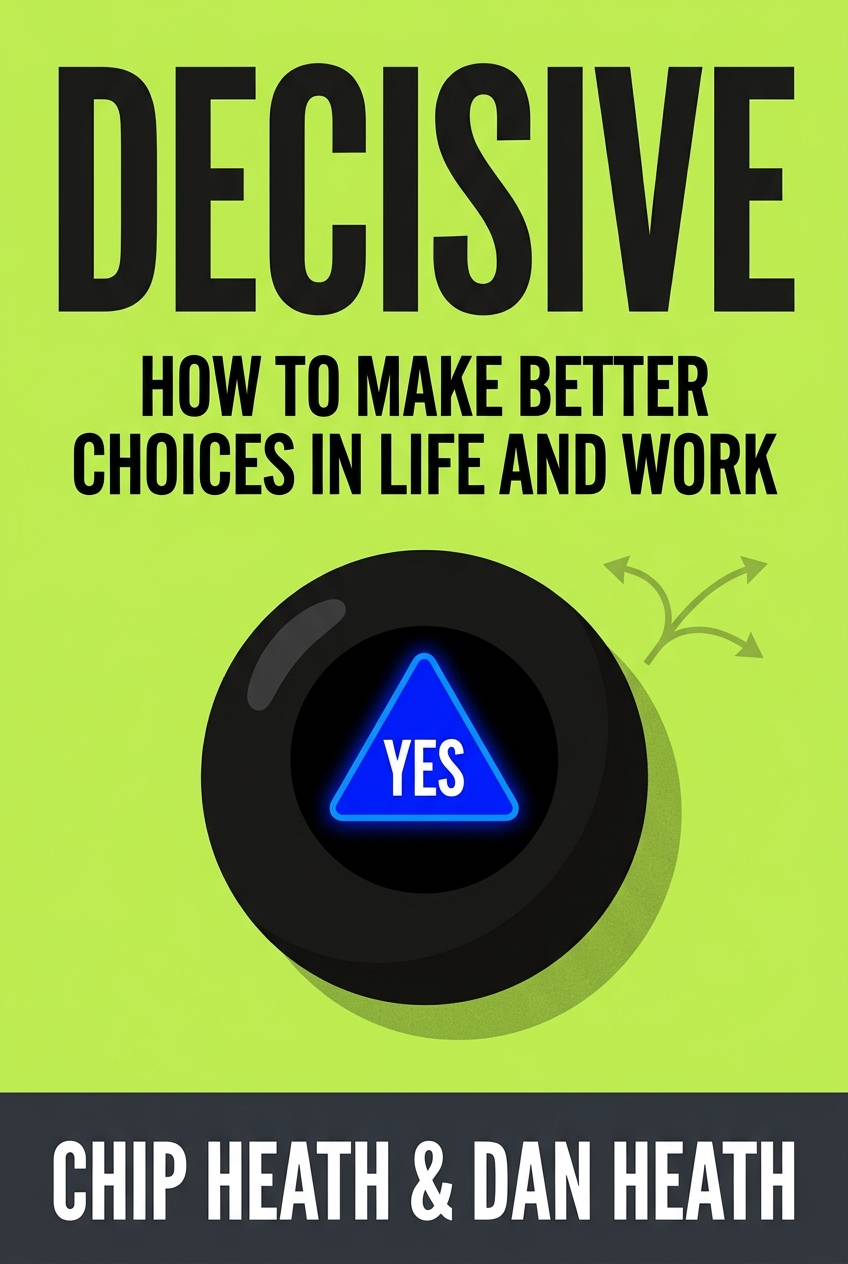
In Decisive: How to Make Better Choices in Life and Work, authors Chip and Dan Heath identify what they call the "Four Villains of Decision Making." These are narrow framing (seeing a choice in binary terms), confirmation bias, short-term emotion, and overconfidence. To defeat these villains, they introduce a powerful four-step process called WRAP.
The WRAP process is a practical tool designed to upgrade your thinking:
- Widen Your Options: This step counters narrow framing. Instead of asking "whether or not" to do something, ask how you could do "this AND that." Avoid a choice between A and B by searching for a C.
- Reality-Test Your Assumptions: To fight confirmation bias, you must actively seek out disconfirming evidence. A powerful technique is to ask, "What would have to be true for this option to be the very best choice?" Then, go find data to support or refute that.
- Attain Distance Before Deciding: Short-term emotion is a terrible advisor. To gain perspective, the Heath brothers suggest using the 10/10/10 rule: how will you feel about this decision in 10 minutes, 10 months, and 10 years? This simple risk assessment tool helps separate you from fleeting feelings.
- Prepare to Be Wrong: To guard against overconfidence, plan for both failure and success. A "premortem" asks your team to imagine the project has failed and brainstorm all the reasons why. This surfaces risks you might otherwise ignore.
System 1 vs. System 2: The Two Minds We Use
While the WRAP process provides an external checklist, Daniel Kahneman's Thinking, Fast and Slow takes us inside our own heads. Understanding the dynamic between the intuitive System 1 and the deliberate System 2 is crucial for anyone looking to how to improve decision making. Since System 1 is automatic and always on, you can't just turn it off. The key is to recognize the situations where it's most likely to make mistakes—like when facing complex statistics or long-term predictions—and consciously engage the more effortful System 2.
This is especially important for leaders. For instance, a manager's gut feeling about a candidate (System 1) might be influenced by the halo effect, where one positive trait colors their entire judgment. A better strategy would be to create a structured interview process with a consistent scorecard (System 2), forcing a more objective comparison between applicants.
Choice Architecture and Nudging
Sometimes, the best way to improve decisions is to change the environment in which they are made. This is the central idea of Nudge: Improving Decisions about Health, Wealth, and Happiness by Richard Thaler and Cass Sunstein. They introduce the concept of "choice architecture," which refers to how options are presented.
As choice architects, we can design environments that make it easier for people to make better choices without restricting their freedom. A simple example is a cafeteria placing healthy food at eye level. This "nudge" doesn't forbid anyone from buying junk food, but it makes the better choice the easier choice. For small businesses or startups, this could mean setting the default option for a software subscription to the most value-packed tier or designing a project management template that encourages decision making best practices from the start.
How to Improve Your Decision Making Skills
Armed with these insights, we can move toward a more deliberate and effective approach to making choices. Improving your skills isn't about finding the perfect answer every time; it's about establishing a better process for getting there.
Adopt Proven Decision Making Strategies
Becoming a better decision-maker requires practice. Start by integrating these decision making strategies into your workflow:
- Always Add One More Option: Never settle for a choice between two options. As the Heath brothers show in Decisive, just the act of generating a third alternative dramatically improves outcomes. This simple habit breaks you out of a narrow frame.
- Appoint a Devil's Advocate: To fight confirmation bias, formally ask someone on your team to argue against a proposed decision. This institutionalizes dissent and forces you to confront opposing viewpoints, strengthening your final choice.
- Fight Decision Fatigue: Our capacity to make good choices is finite. When we are mentally depleted, we tend to make easy, short-sighted decisions. Recognize the signs of decision fatigue and schedule your most important choices for times when you are fresh, like in the morning.
Applying Decisiveness in Business and Startups
These principles are not just theoretical; they are immensely practical for professionals in any field. For decision making for managers, using frameworks like WRAP creates a transparent and fair process. When teams understand how a decision was made—even if they disagree with the outcome—they are far more likely to buy into its execution. This concept, known as procedural justice, is a cornerstone of effective leadership.
In the fast-paced world of decision making for startups and decision making for small business, founders often have to make high-stakes choices with incomplete information. The temptation is to rely on gut instinct. However, creating lightweight processes—like a pre-launch checklist, a culture of running small experiments (reality-testing), and regular pre-mortems—can install the discipline of good decision-making without creating bureaucratic drag.
Ultimately, mastering the art of decisiveness is a journey of self-awareness and systematic thinking. By understanding our inherent biases and adopting structured processes to counteract them, we can move from being victims of our own minds to architects of better choices. The knowledge contained within the world's best books about decision making provides a clear roadmap to get there.
Master key ideas in 15 minutes
Listen to audio summaries of these books on VoxBrief
Download Free