All Books
Self-Growth
Business & Career
Health & Wellness
Society & Culture
Money & Finance
Relationships
Science & Tech
Fiction
Topics
Blog
Download on the App Store

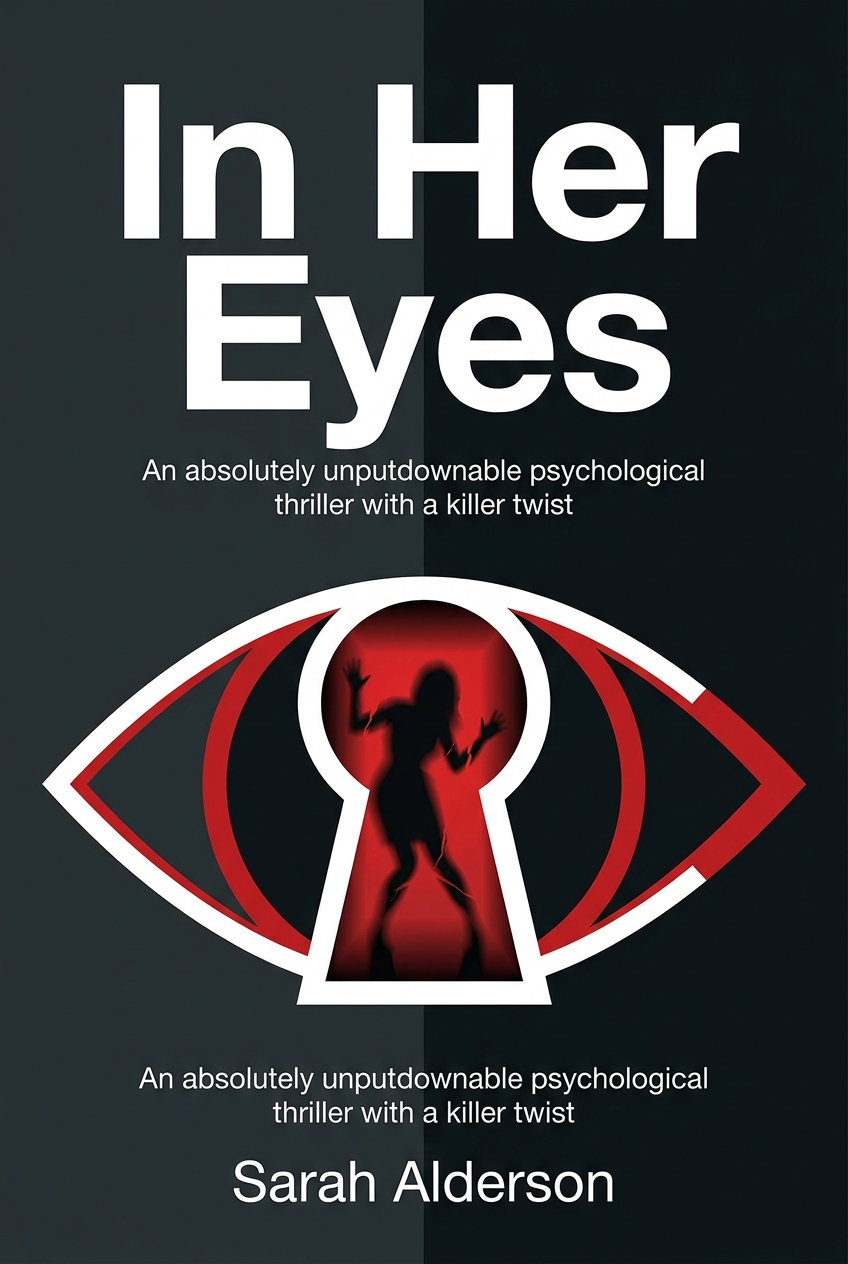
In Her Eyes

An absolutely unputdownable psychological thriller with a killer twist

13 minSarah Alderson

What's it about

What if the person you trust most is the one you should fear? Imagine your best friend goes missing, and you're the last person to see her alive. Now, her husband is pointing the finger straight at you, and the perfect life you built is starting to crumble. This gripping psychological thriller plunges you into a web of secrets and lies between two lifelong friends. You'll follow the desperate search for answers as buried resentments and shocking betrayals surface. Uncover the dark truths hiding in plain sight and question everything you thought you knew about friendship, loyalty, and the terrifying reality lurking just beneath the surface.

Meet the author

Sarah Alderson is a bestselling author of more than twenty books, including the hit Netflix film The Weekend Away, which she also wrote the screenplay for. Her passion for travel and living in exciting locations like Bali and Portugal infuses her twisty, globe-trotting thrillers with an authentic sense of place and adventure. Alderson's unique experiences abroad provide the perfect inspiration for crafting addictive stories about secrets, lies, and the dark side of paradise.
Listen Now

Opens the App Store to download Voxbrief

In Her Eyes book cover

The Script

The idyllic holiday villa is perfect. The sun is warm, the pool is a splash of turquoise against the terracotta tiles, and the laughter of the children echoes through the garden. For one woman, this is a much-needed escape, a chance to reconnect with her best friend and let the kids run wild. For the other woman, it’s a trap. She watches the first woman’s husband, a man she knows better than his own wife does. She sees the casual affection, the easy smiles, and knows the truth that lies beneath. Every shared glance is a coded message, every light touch a reminder of a secret that could shatter this perfect family portrait. It’s a holiday built on a lie, and only one of them knows the foundation is about to give way.

This suffocating tension—the feeling of being an imposter in someone else’s life while hiding a devastating truth—is the engine that drives so many of Sarah Alderson’s psychological thrillers. A prolific author and screenwriter, Alderson has a gift for placing ordinary people in extraordinary, high-stakes moral dilemmas. She was drawn to write “In Her Eyes” from a fascination with the dark side of friendship and the terrifying question of how well we can ever truly know the people we trust the most. Alderson wanted to explore what happens when loyalty and betrayal are two sides of the same coin, forcing a character—and the reader—to question every motive until the final, shocking revelation.

Module 1: The Cracks in the Facade

We meet Ava, a woman living a seemingly perfect life in Santa Barbara. She has a successful husband, Robert, two daughters, and a beautiful home. But beneath this glossy surface, fractures are already showing. Her friendship with Laurie reveals the subtle tensions that money and lifestyle differences can create. Laurie, struggling financially, makes pointed remarks about Ava’s privilege. Ava, in turn, feels self-conscious about her wealth, carefully navigating conversations to avoid causing offense. This initial tension introduces a core theme of the book. Perception is dangerously unreliable, especially in our closest relationships.

Ava believes she knows her husband inside and out. She’s confident she would know if he were cheating. Yet, she also acknowledges his emotional withdrawal since their daughter June’s cancer diagnosis years ago. He has retreated into his work, creating a distance between them. This emotional gap serves as a crucial blind spot. When Laurie suspects her own husband, Dave, of having an affair, Ava is quick to rationalize his behavior. She suggests innocent explanations, dismissing Laurie’s fears. This instinct to smooth over discomfort is a natural human tendency. But here, it reveals a deeper truth. We often rationalize away uncomfortable truths to maintain our own comfort and stability.

This module establishes the fragile foundation of Ava’s world. Her relationships are managed, not truly intimate. Her perception is clouded by her own desire for normalcy. She operates from a place of assumed knowledge, a dangerous position when reality is about to be violently upended. The book suggests that the most stable-seeming lives are often the most brittle, ready to shatter with a single, unforeseen impact. The initial chapters are a masterclass in foreshadowing, laying the groundwork for the betrayals to come.

Module 2: The Weight of the Past

We now pivot to the emotional core of the family: the lasting impact of trauma. Six years prior, Ava’s younger daughter, June, battled a life-threatening illness. This experience has permanently reshaped the family's dynamics. Past trauma continuously shapes present behavior and parental anxiety. Ava’s life is governed by a "gnawing anxiety" whenever June is out of sight. A simple phone call from her daughter sends a jolt of dread through her system. This hyper-vigilance is a scar left by years spent in hospitals, a time when fear "fused with my DNA."

This past trauma creates a stark contrast in Ava’s relationships with her two daughters. Her older daughter, Hannah, is independent and self-contained, leaving Ava feeling almost "redundant." But her bond with June is intensely close, forged in the crucible of illness. June was the family’s "clown," using jokes to bring light to their darkest days. So when June enters her teenage years and becomes withdrawn and secretive, Ava’s anxiety skyrockets. The silence is deafening precisely because it’s so unlike the resilient, talkative child she fought so hard to save.

And here’s the thing. This dynamic extends to the blended family. Ava’s stepson, Gene, is a source of constant frustration. He’s a college dropout living at home, seemingly without ambition. Ava sees her husband, Robert, as being far too lenient with him. But she also understands why. Robert is wracked with guilt. He was largely absent during Gene’s childhood and was completely consumed by June’s illness when Gene was a teenager. Unresolved guilt from past decisions profoundly shapes current parenting approaches. Robert’s inability to be firm with Gene is a direct consequence of his past perceived failures as a father. These complex emotional undercurrents set the stage for the crisis to come, showing how old wounds and hidden resentments can fester, waiting for a moment to erupt.

Module 3: The Invasion

The story takes a violent turn with a brutal home invasion. Two masked men break into the family’s home, shattering their sense of safety in an instant. This event serves as a catalyst, accelerating the collapse of their carefully constructed world. In this moment of terror, we see one of the book's most powerful themes emerge. A mother’s protective instinct can override all rational fear in a crisis. Ava’s initial reaction is terror. But the moment she sees an intruder grab June, her fear is replaced by a primal urge to attack. She doesn’t think. She acts.

The intruders use psychological manipulation to maintain control. They use June as a lever, forcing Robert and Ava to comply by threatening their daughter’s safety. This dynamic strips Ava of her agency, forcing her into a state of horrified complicity. But that state doesn't last. When she sees an opportunity, she seizes it. She grabs a carving knife from the kitchen. It’s a desperate, improvised act of resistance. This is the raw, unthinking response of a parent pushed to the absolute limit. Under extreme duress, a victim can transform into an agent of resistance.

The aftermath is a blur of physical pain and mental fog. Ava wakes up in the hospital, her memory fragmented. She is tormented by one question: "Where’s June?" The immediate aftermath of trauma is characterized by this agonizing uncertainty. The physical wounds are one thing. But the psychological torment of not knowing the fate of a loved one is a unique form of torture. This module is a visceral depiction of how quickly a life can unravel. The violence isn't just an external event. It’s an internal one, shattering memory, identity, and the very perception of reality. The family’s safe haven has become a crime scene, and nothing will ever be the same.

Read More