Murder Between Friends
What's it about
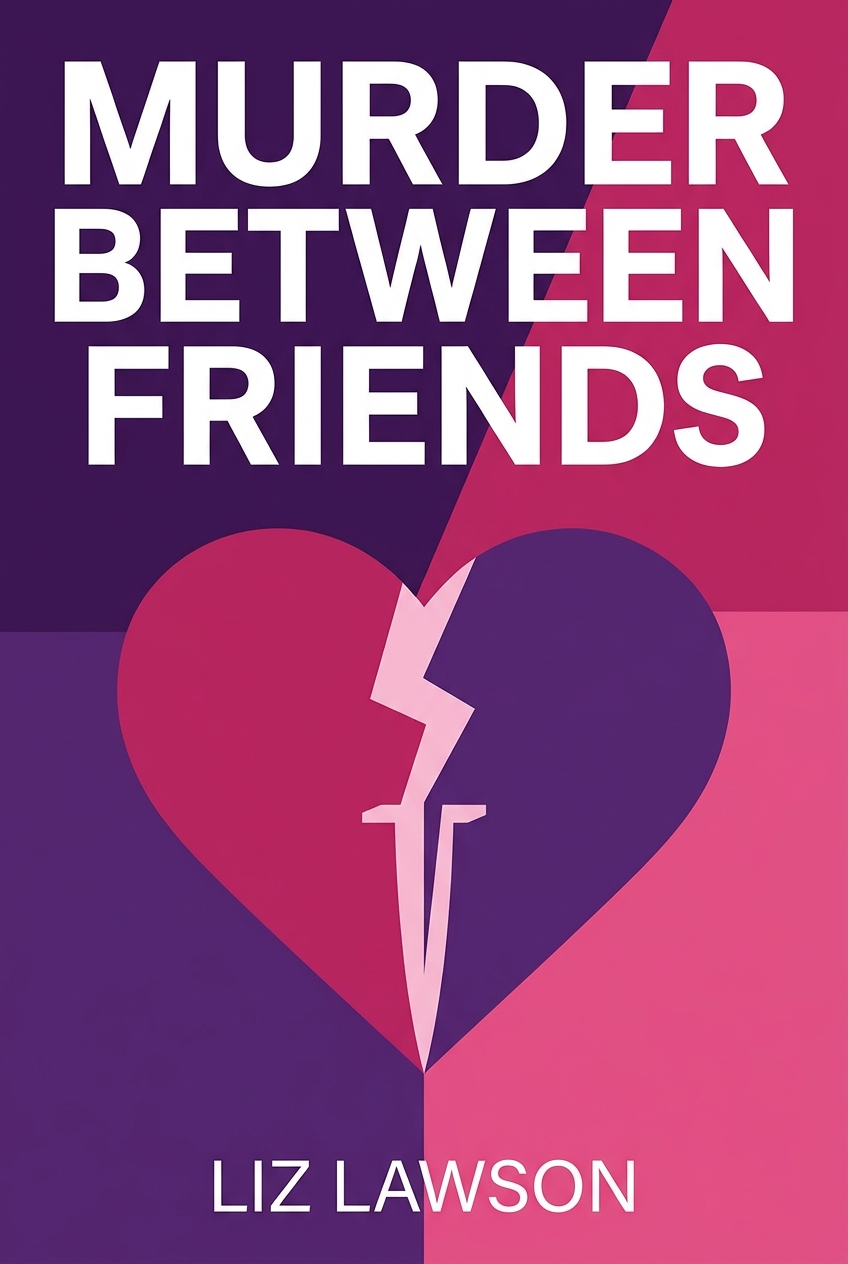
What if the person you trust most is the one you should fear? In the aftermath of a shocking murder, Dani and her best friend, Lottie, are pulled into a dark web of secrets and lies, forcing them to question everything they thought they knew about their tight-knit group. As the investigation unfolds, you'll discover how quickly loyalty can shatter and how the pressure to keep up appearances can have deadly consequences. Uncover the hidden motives, shocking betrayals, and the final, devastating truth that proves even the closest friendships can hide the most dangerous secrets.
Meet the author
Liz Lawson is a seasoned criminal psychologist and jury consultant who has advised on over fifty high-profile homicide cases, lending her expertise to both prosecution and defense teams. Her career, dedicated to understanding the intricate psychologies of both criminals and their social circles, provided the direct inspiration for her gripping debut novel. This unique vantage point allows her to explore the hidden dynamics of friendship and the shocking betrayals that can turn deadly, offering readers a chillingly authentic look inside a murder investigation.
Opens the App Store to download Voxbrief

The Script
Imagine a high school friendship, the kind forged in the fluorescent lights of a biology classroom and sealed over shared fries in the cafeteria. It’s a universe of inside jokes, unspoken promises, and a fierce, almost primal loyalty. Now, imagine one of those friends is found dead. Suddenly, that shared universe implodes. The inside jokes become cryptic clues, the promises feel like lies, and the loyalty curdles into suspicion. The very person who knew all your secrets is now a secret themselves, and the people you trusted most are the only ones who could have been responsible. Every memory becomes a potential piece of evidence, every shared glance a possible motive. The friendship is weaponized, turned into the very crime scene you're forced to investigate from the inside.
This chilling transformation of friendship into a forensic puzzle is exactly what fascinated Liz Lawson. As a long-time fan of classic whodunits and a writer deeply interested in the intense, often volatile dynamics of teenage relationships, she noticed a gap. She wanted to explore what happens when the person you'd normally turn to for help is the one you're running from. Drawing from her own memories of the powerful bonds and betrayals of high school, Lawson decided to write a story about surviving the psychological fallout when your closest confidante becomes your primary suspect. The result is a thriller that treats the death of a friendship as a tragedy equal to the murder itself.
Module 1: The Fracture Point — When Public Opinion Becomes the Verdict
The story opens with a central, brutal reality. Jake Hanson is free, but he's not innocent in the eyes of his town. The legal system’s failure creates a vacuum, and public opinion rushes in to fill it. This module explores how a community’s collective certainty can become more powerful than any court ruling.
First, public perception, fueled by media, creates an inescapable prison of guilt. Jake's conviction may be gone, but the narrative of "Jake the Killer" is stronger than ever. Reporters ambush his friend Ally, framing his release as a danger to the community. A local news site, BrawnerNow.com, runs editorials declaring him a "violent psychopath." This is a relentless campaign that shapes reality for everyone involved. In the school hallways, students mutter "Killer fucker." The family home is vandalized. This demonstrates a core tension: the official legal process is over, but the social trial has just begun, and its verdict is guilty.
This leads to the next crucial point. Those who dissent from the public narrative are ostracized and isolated. Ally and Jake’s brother, Henry, are unwavering in their belief in his innocence. Ally tells a reporter point-blank, "Jake Hanson is innocent. You can quote me." Henry internally affirms that his brother is many things, but a murderer is not one of them. Their loyalty is based on personal history. They remember Jake as the boy who saved spiders and helped an injured bird. But their conviction puts them on an island. Ally’s mother loses her friends. Henry’s locker is vandalized with crime scene photos. The book makes it clear: in a town that needs a villain, defending the accused makes you an accomplice in the eyes of your neighbors.
So what's the takeaway here? It's that personal loyalty is tested and ultimately fractured by the weight of public accusation. The most devastating example is Grace Topham. She was once Ally and Henry's best friend. But she was also the key witness whose testimony put Jake in prison. Now, two years later, the foundation of her certainty is cracking. She’s haunted by the possibility that she made a mistake. She recalls learning in psychology class that eyewitness testimony is notoriously unreliable, a fact that now torments her.
But flip the coin. While Grace questions her role, Ally’s hatred for her former friend has crystallized. She sees Grace as a traitor who destroyed their lives. Their relationship, once a cornerstone of their youth, is now a casualty of the case. This module shows us that the first victim of a public crime is often the truth, and the second is the trust that holds a community together.
Module 2: The Amateur Investigation — When Teenagers Fill the Void
With Jake out but not cleared, and the town baying for his blood, a new phase begins. The official channels have failed. The adults—the lawyers, the police, the parents—are either ineffective or part of the problem. This is where the teenagers step in, driven by a mix of guilt, loyalty, and desperation.
Their investigation is born from a critical insight: official systems are often too rigid to uncover nuanced truths. When Henry and Ally take new information to Jake's lawyer, Mr. Kakova, he dismisses it. He's focused on legal strategy and managing public perception, telling Henry that searching for other suspects would make them "appear weak." The police are no better. They’re seen as having bungled the initial investigation by focusing exclusively on Jake. Ally argues, "They screwed it all up." The kids realize that if they want real answers, they can’t rely on the adults. The system is broken. They have to work outside of it.
This brings us to their strategy. To find the truth, you must be willing to bend the rules and adopt a morally flexible approach. Ally, frustrated by the lawyer's inaction, declares that she and Henry will investigate themselves. She frames their youth as an advantage. "No one will suspect we’re looking into the case," she argues. They decide to use their school newspaper as a cover story, pretending to write a memorial piece on the victim, Ms. Appelbaum. This gives them a pretext to interview people. It’s a brilliant, simple deception. They lie, they disguise themselves—Henry wears fake glasses to avoid being recognized—and they play roles to get the information they need. They are amateur investigators operating in the gray.
And here’s the thing. Their amateur methods start to work, because piecing together the truth requires re-examining personal histories and small, forgotten details. They start with Grace, the witness who now doubts her own testimony. Her confession that she’s "not sure what [she] saw anymore" is the crack that lets the light in. It forces Henry and Ally to reconsider everything. They revisit old alibis, question established facts, and start building a new timeline.
They interview Ms. Appelbaum's sister, Gabrielle, and uncover a new suspect: Matt Clark. His parents tried to get the teacher fired over a bad grade. Could that be a motive? Then, they discover an even bigger secret. Their English teacher, Mr. Berkeley, lied to the police. He claimed he barely knew Ms. Appelbaum, but they discover the two had a secret romantic relationship. This lie becomes a powerful new lead. It proves their fundamental thesis: the adults are hiding things, and only by digging into these personal secrets can they find the truth. The official investigation failed because it looked for a simple story. The kids succeed because they embrace the messy, complicated reality of human relationships.