All Books
Self-Growth
Business & Career
Health & Wellness
Society & Culture
Money & Finance
Relationships
Science & Tech
Fiction
Topics
Blog
Download on the App Store

The Marriages between Zones Three, Four, and Five

13 minDoris Lessing

What's it about

Have you ever felt stuck in your ways, unable to embrace change even when you know it's necessary? What if a forced alliance with a total opposite could unlock your greatest potential? This allegorical tale explores how stepping outside your comfort zone can lead to profound personal and societal transformation. You'll discover how the dutiful Queen of Zone Three and the vibrant King of Zone Four are commanded to marry, forcing their vastly different worlds to collide. This reluctant union challenges their deepest beliefs about leadership, love, and progress. Learn how their struggles and eventual understanding offer powerful insights into breaking down your own rigid boundaries and fostering growth in every area of your life.

Meet the author

Doris Lessing was a towering figure of twentieth-century literature, awarded the Nobel Prize in Literature in 2007 for her profound and skeptical examination of civilization. Her early life in colonial southern Africa and her later immersion in Sufi mysticism gave her a unique perspective on societal structures and spiritual evolution. These experiences directly informed the allegorical landscapes and explorations of gender, consciousness, and collective identity that define her visionary work in this novel.
Listen Now

Opens the App Store to download Voxbrief

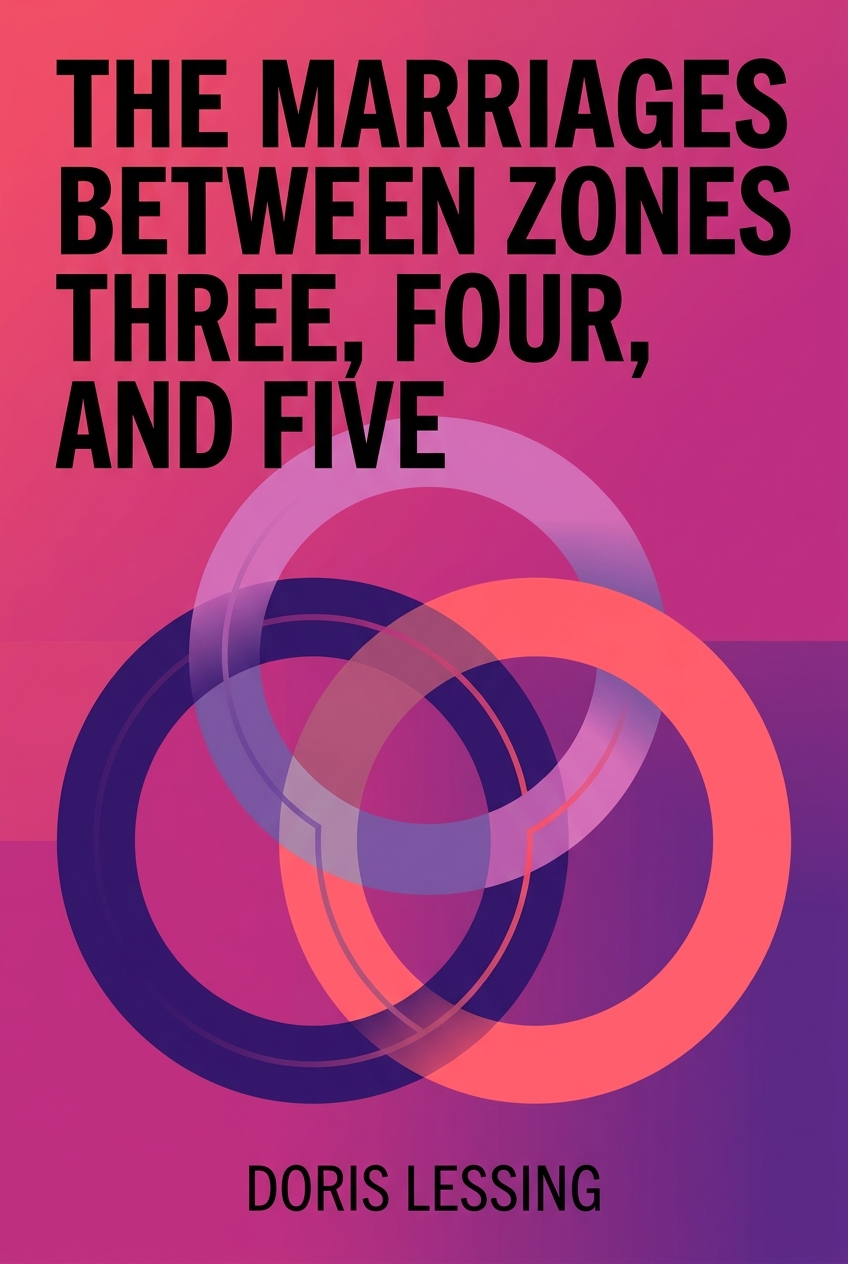
The Marriages between Zones Three, Four, and Five book cover

The Script

We treat societal virtues like a fixed menu, believing that if our community perfects 'order,' it need not bother with 'passion,' and that a culture mastering 'logic' can safely ignore 'intuition.' This specialization feels efficient. It allows for the development of pure, high-functioning systems where everyone understands the rules and plays their part flawlessly. Yet, this pursuit of cultural purity, of perfecting a single way of being, creates an invisible sterility. The perfectly ordered society becomes brittle, incapable of change. The passionately chaotic one burns itself out. The coldly logical one cannot inspire loyalty or love. The real engine of growth is the messy, uncomfortable, and often resisted contamination from a completely alien one.

This very dilemma—the forced cross-pollination of seemingly incompatible worlds—was the allegorical landscape Doris Lessing set out to explore. Having already won acclaim for works that dissected the political and psychological landscapes of the 20th century, Lessing turned her focus inward, toward the mythic. Written in a stunningly rapid three-week burst of inspiration, this novel was a distillation of her lifelong inquiry into how rigid systems, whether political or personal, must either adapt through unwelcome change or face inevitable decay. It became the centerpiece of her 'Canopus in Argos' series, a grand cosmic experiment where the sterile perfection of one world is deliberately disrupted by the chaotic vitality of another.

Module 1: The Clash of Worlds and the Mandate for Change

The story ignites with a shocking, non-negotiable order. The benevolent Queen Al·Ith of Zone Three must marry the warrior King Ben Ata of Zone Four. This is a divine mandate from the unseen "Providers," cosmic forces that govern the zones. This forced union serves as the catalyst for the entire narrative, forcing two completely alien cultures into a collision course.

First, recognize that cultural stagnation is often invisible from within. Zone Three is a paradise. It’s a realm of gentle harmony, deep empathy with nature, and egalitarian relationships. Leadership is based on mutual respect. But beneath the surface, something is wrong. Birth rates are declining. A strange sadness pervades the animals. Al·Ith, a beloved and effective ruler, is completely blind to this decay until the mandate forces her to look. She has become too comfortable, too wrapped in the smooth functioning of her world to notice its slow decline. Her journey to the harsh, militaristic Zone Four is a forced awakening.

Next, understand that rigid hierarchies are built on control and fear. In stark contrast to Zone Three, Zone Four is a world of pure function. It’s a flat, dull landscape dedicated to military readiness. Ben Ata rules with unquestioned authority. Emotions are suppressed. Looking at the mountains of Zone Three, a symbol of aspiration, is forbidden. Soldiers wear heavy helmets to force their gaze downward. Animals are tools, not companions. When Al·Ith arrives and shows empathy for a horse, the soldiers see it as childish rebellion. They can't comprehend a relationship with nature that isn't based on domination. This hyper-masculine, hierarchical world is just as stagnant as Zone Three, but its decay manifests as pointless aggression and spiritual emptiness.

Finally, the narrative shows that true change requires the painful integration of opposites. The marriage between Al·Ith and Ben Ata is a disaster at first. He treats her like a prisoner of war. She sees him as a barbarian. Their initial interactions are a study in miscommunication. Her emotional openness is weakness to him; his rigid command is tyranny to her. Yet, the Providers’ order holds. They are forced to find common ground. Their relationship becomes the crucible where the feminine, empathetic energy of Zone Three and the masculine, disciplined energy of Zone Four must blend. It's a messy, painful process, but it's the only way for both zones to break out of their respective ruts and begin to heal.

Module 2: The Unraveling of Identity and the Rediscovery of Purpose

Once the union is forced, the real work begins. It’s about the profound personal transformation of its leaders. Both Al·Ith and Ben Ata are pushed so far out of their comfort zones that their very identities begin to fray. This unraveling is precisely the point. It's only by losing themselves that they can find what their societies have lost.

Here's the key idea: Personal crisis is often the gateway to collective awareness. As Al·Ith spends time in Zone Four, she starts to change. She feels emotions that are alien to her people: jealousy, suspicion, possessiveness. She feels a "heavy, disquiet" connection to Ben Ata that feels unhealthy but also undeniable. When she eventually returns to Zone Three, she is no longer the same. Her people don't recognize her. She feels like an "impostor" in her own land. This painful alienation is what finally allows her to see the stagnation she was blind to before. Her personal crisis becomes a diagnostic tool for her entire culture. She realizes her zone's purpose was to strive for something more—a connection to the higher, aspirational Zone Two.

And it doesn't stop there. Ben Ata undergoes a parallel transformation. Exposure to a different worldview can dismantle your most cherished assumptions. Influenced by Al·Ith, he starts to question the very foundation of his kingdom. Why does Zone Four exist only to prepare for a war that never happens? He tours his own land and sees, as if for the first time, the poverty and emptiness caused by its singular focus on the military. He begins to feel empathy, a foreign and destabilizing emotion for a warrior king. He cancels a pointless military campaign against Zone Five, an act his soldiers see as weakness. Like Al·Ith, his identity as an unquestioning leader shatters, forcing him to ask a terrifying question: "What are we for?"

This leads to a fascinating insight. Suppressed knowledge often survives in cultural fragments. While the leaders are lost, forgotten truths linger in the margins. In Zone Three, children play games with half-remembered verses about "the blue," a reference to the forgotten spiritual goal of reaching Zone Two. In Zone Four, it's the women who secretly preserve the culture's lost soul. They hold clandestine ceremonies, singing forbidden songs about the mountains of Zone Three. These rituals are a quiet rebellion against the zone's downward-looking, militaristic dogma. They represent a hidden well of wisdom, suggesting that even in the most repressive environments, the memory of a higher purpose can endure.

Read More