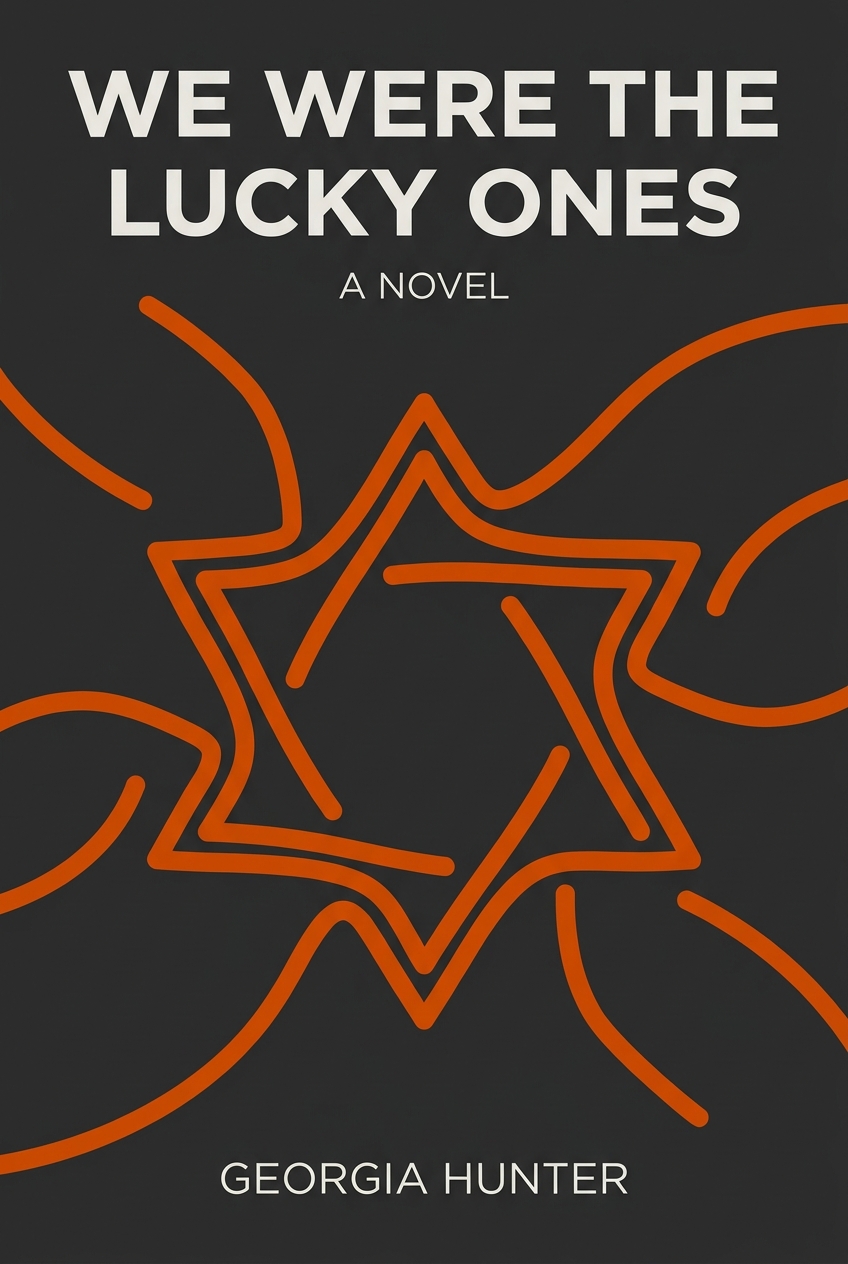
We Were the Lucky Ones
A Novel
What's it about
Could you survive if your family was scattered across the globe by war, with no way to know if they were alive or dead? Discover the incredible true story of one Jewish family's fight for survival and their desperate, years-long quest to find each other again. You'll follow the Kurc siblings as they endure the horrors of the Holocaust, from the ghettos of Poland to the labor camps of Siberia and even the shores of Brazil. Experience their harrowing journeys and witness the unbelievable resilience of the human spirit in the face of impossible odds.
Meet the author
Georgia Hunter is the New York Times bestselling author of We Were the Lucky Ones, a novel inspired by her grandfather’s astonishing story of survival during the Holocaust. It was her discovery of this family history at age fifteen that launched a decade-long journey of research and travel to unearth the incredible, harrowing, and ultimately uplifting story of her relatives. Her dedication to honoring her family’s legacy provides the powerful, authentic heart of her celebrated debut, which is now a Hulu Original series.
The Script
At the start of a long holiday weekend, a family matriarch gathers her children and their spouses for a Passover Seder. They are young, ambitious, and blissfully unaware that this meal will be the last time they are all together. Outside their door, the world is holding its breath. The year is 1939, and the city is Radom, Poland. Soon, this family will be scattered across continents by the winds of war, their bonds stretched to a breaking point over thousands of miles of hostile territory. Each will face an impossible journey alone, armed only with the memory of a life that no longer exists and a desperate, perhaps foolish, hope of seeing their loved ones again. Their story is one of quiet, stubborn survival in the face of overwhelming odds—a testament to the question of whether a family, once atomized, can ever truly find its way back to being whole.
This exact question haunted Georgia Hunter for years. Growing up, she knew vaguely of her grandfather's Jewish heritage and his escape from Europe during the war, but the details were a closed book. It wasn't until after her grandfather's death, at a family reunion, that she discovered the full, staggering truth: he was not the only survivor. He was one of five siblings, all of whom had survived the Holocaust against all odds, their individual stories of endurance and escape scattered like lost puzzle pieces. Hunter, a freelance writer, felt an immediate, compelling need to put the pieces together. She embarked on a decade-long journey of research, traveling the globe and interviewing family members to reconstruct the history that had been buried by time and trauma, transforming a personal quest for answers into a powerful narrative for the world.
Module 1: The Illusion of Normalcy and the Creeping Threat
The story begins with a slow, creeping dread. It's 1938, and the Kurc family is scattered but connected. Some are in Radom, Poland, a city that feels like the center of their universe. Others are abroad, like Addy, an engineer and aspiring composer living in Paris.
The first major insight here is that distance creates a dangerous illusion of safety. Addy hears news from Germany and Poland. He sees swastika graffiti. His bosses whisper about him being a liability. But he rationalizes it all. These are distant problems, isolated incidents. They won't touch his life in cosmopolitan France. His mind defaults to memories of home—family dinners, laughter, music. These memories act as a psychological buffer, making the escalating danger feel abstract and unreal. This is a cognitive trap many of us fall into. We see alarming data points, but if they don't directly impact our daily lives, we mentally file them away as someone else's problem.
This denial shatters with a single, personal trigger. The author shows how emotional connection is a more powerful catalyst for action than impersonal data. Addy receives a letter from his mother, Nechuma. Her tone is different. It's filled with a fear he has never heard from her before. She tells him not to come home for Passover. For a family that cherishes tradition, this is a seismic shift. The abstract threat of Nazism suddenly has a face: his mother's fear. The news of family friends losing their businesses is no longer a statistic; it’s a personal blow. The letter makes the crisis real. It forces him to act.
So what does he do? This leads to a powerful lesson on priorities. In times of crisis, familial duty often overrides individual ambition. Addy had built a life for himself in Paris. He had a career, a social life, and dreams of moving to America to pursue music. Returning to Poland meant giving all that up. But his decision is instant and absolute. He quits his job and arranges to go home immediately. The pull of family, the need for solidarity, becomes the only thing that matters. This is a story about the fundamental human instinct to protect one's own, even at great personal cost.