Language Books
Language is the very fabric of human connection, yet few of us stop to consider how does language work? From the words we choose to the grammar that structures them, understanding its mechanics can transform how we think and communicate. This curated list of the best books on language explores everything from etymology and style to learning new tongues. Our language book recommendations offer a gateway to becoming a more persuasive speaker, a clearer writer, and a more engaged global citizen. Curated by the VoxBrief team.
The Well-Spoken Thesaurus
Elevate your vocabulary and sound more articulate in any situation.
- Replace overused words with sophisticated alternatives.
- Structure sentences for greater impact and persuasion.
- Choose the right word to convey precise meaning and tone.
Writers and speakers aiming to sound more persuasive and intelligent.
Elevate your vocabulary and sound more articulate in any situation.
Italian All-in-One For Dummies
Master Italian grammar, vocabulary, and conversation for real-life use.
- Grasp core grammar rules and essential verb conjugations.
- Learn practical vocabulary for travel and daily life.
- Understand cultural context to communicate effectively.
Beginners looking for a comprehensive guide to start speaking Italian.
Master Italian grammar, vocabulary, and conversation for real-life use.
Comparative Grammar of Spanish, Portuguese, Italian and French
Learn the core grammar of four Romance languages simultaneously.
- Identify shared grammatical structures across Romance languages.
- Learn a unified system instead of four separate rule sets.
- Accelerate your learning of Spanish, Portuguese, Italian, and French.
Aspiring polyglots who want to efficiently learn Romance languages.
Learn the core grammar of four Romance languages simultaneously.
Code
Understand the secret language of computers, from circuits to software.
- Demystify how hardware and software communicate with each other.
- Learn the fundamentals of binary, logic gates, and microprocessors.
- Trace the evolution from simple code to complex programming languages.
Curious minds who want to understand how technology works fundamentally.
Understand the secret language of computers, from circuits to software.
Easy French Phrase Book NEW EDITION
Master over 700 essential French phrases for confident conversations.
- Learn practical phrases for real-world travel situations.
- Go beyond basic greetings to have natural conversations.
- Handle ordering food, asking for directions, and making friends.
Travelers and beginners who need to start speaking French quickly.
Master over 700 essential French phrases for confident conversations.
The Power of Babel
Discover how languages constantly mix, mutate, and evolve over time.
- Understand that the concept of language "purity" is a myth.
- Learn how dialects, creoles, and slang are formed through contact.
- See how migration and conquest have shaped modern languages.
Anyone curious about the messy, fascinating history of how we speak.
Discover how languages constantly mix, mutate, and evolve over time.
The Language Lover’s Puzzle Book
Solve 100 clever puzzles to decode the world's diverse languages.
- Train your brain to spot patterns in unfamiliar writing systems.
- Learn the hidden logic behind different alphabets and scripts.
- Develop the skills of a linguistic detective and polyglot.
Puzzle enthusiasts and language lovers who enjoy a mental challenge.
Solve 100 clever puzzles to decode the world's diverse languages.
The Language-Lover's Lexipedia
Uncover the strange and fascinating stories behind everyday words.
- Explore the surprising etymologies of common words and phrases.
- Discover the historical origins of bizarre idioms.
- Learn about quirky punctuation and other linguistic curiosities.
Word nerds and trivia fans curious about the origins of language.
Uncover the strange and fascinating stories behind everyday words.
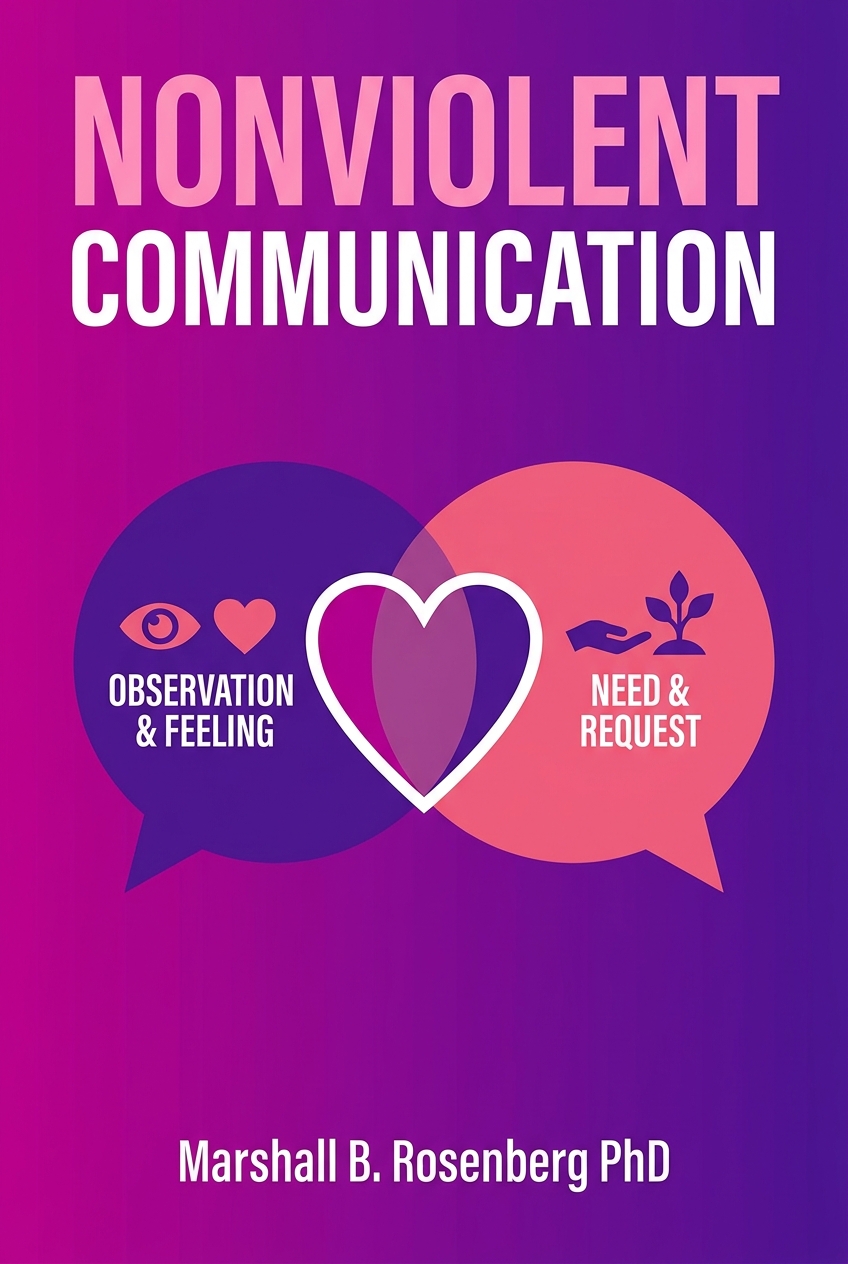
Nonviolent Communication
Turn conflict into connection with a simple communication framework.
- Express your needs clearly without using blame or judgment.
- Listen with empathy to understand others' true feelings and needs.
- Use a four-step process to de-escalate difficult conversations.
Individuals seeking to improve their personal and professional relationships.
Turn conflict into connection with a simple communication framework.
The Language of Trust
Master the language of trust to sell ideas and gain instant credibility.
- Avoid trigger words that create skepticism and distrust.
- Frame your message to align with your audience's values.
- Speak with empathy and authenticity to earn buy-in and agreement.
Leaders, salespeople, and persuaders who need to win over tough audiences.
Master the language of trust to sell ideas and gain instant credibility.
The Sense of Style
Write with clarity and grace by understanding how the human mind reads.
- Focus on classic, clear style over outdated prescriptive grammar rules.
- Use syntax and word choice to create prose with rhythm and emphasis.
- Avoid the "curse of knowledge" to connect with any reader.
Writers who want their prose to be modern, clear, and impactful.
Write with clarity and grace by understanding how the human mind reads.
Words That Work
Craft persuasive messages that inspire action and win arguments.
- Use simple, clear language for maximum impact and memorability.
- Choose words that create a specific and intended emotional response.
- Frame your message within a compelling context for your audience.
Marketers, communicators, and anyone who needs to be more persuasive.
Craft persuasive messages that inspire action and win arguments.
Frequently Asked Questions
Language is the primary tool for human communication, allowing us to share complex ideas, build relationships, and preserve culture. It structures our thoughts, shapes our perception of reality, and is fundamental to cooperation and societal progress.
Language affects every aspect of daily life, from simple interactions like ordering coffee to complex negotiations at work. The words we choose can build trust, create conflict, persuade others, and express our identity, profoundly influencing our relationships and opportunities.
Recent discoveries explore how AI models learn language, revealing insights into human cognition. There's also growing understanding of neurodiversity's impact on language processing and the rapid evolution of digital slang and "internet speak" as new linguistic forms.